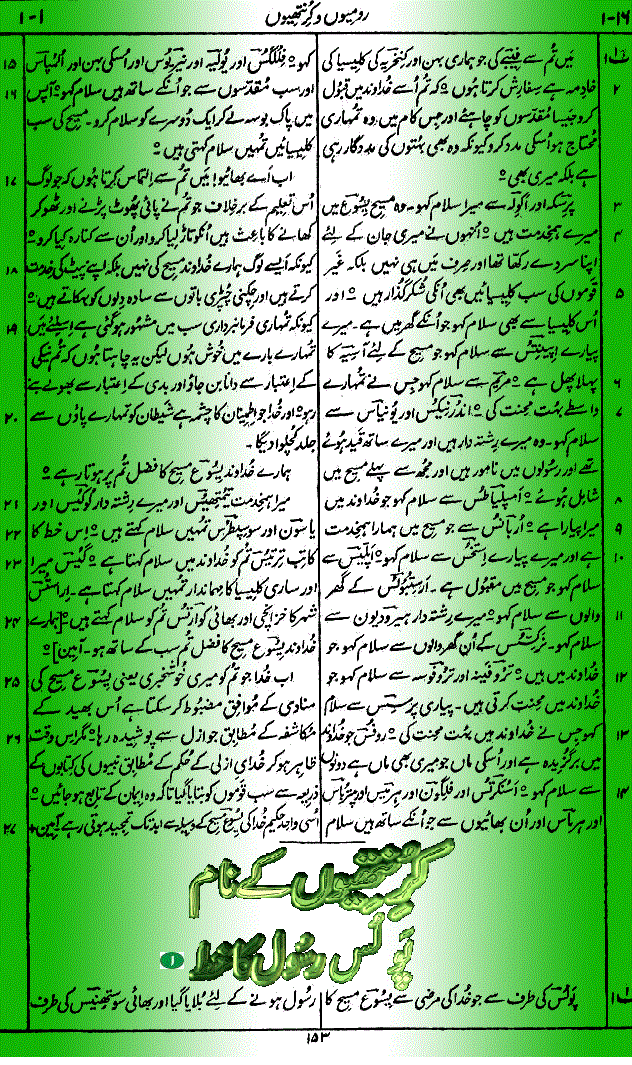
Verse-by-Verse Commentary and Explanation (Romans 16:2-27)
Verse 2
Verse: That ye receive her in the Lord as becometh saints and that ye assist her in whatsoever business she hath need of you for she hath been a succourer of many and of myself also
English Explanation
Paul commends Phoebe, a deaconess from the church in Cenchrea. He urges the Roman church to welcome her with the respect and hospitality that fittingly belongs to God’s holy people (“saints”). They are instructed to help her in whatever business matters she is attending to. Paul highlights her character by calling her a “succourer” (a helper or protector) to many, including Paul himself, indicating her vital financial and logistical support for early Christian missionaries.
Urdu Explanation
پال یہاں کینکریا کی کلیسیا کی خادمہ فیبے (Phoebe) کی تعریف کرتے ہیں۔ وہ رومی کلیسیا پر زور دیتے ہیں کہ وہ خُداوند میں پاک لوگوں (مقدسین) کی طرح اُن کا استقبال کریں اور جس بھی کاروباری یا ذاتی معاملے میں انہیں مدد کی ضرورت ہو، ان کا ہاتھ بٹائیں۔ پال ان کی خدمات کا اعتراف کرتے ہوئے بتاتے ہیں کہ وہ نہ صرف بہت سے دوسرے لوگوں کی بلکہ خود پال کی بھی مددگار اور سرپرست رہی ہیں۔
Verse 3
Verse: Greet Priscilla and Aquila my helpers in Christ Jesus
English Explanation
Paul sends greetings to Priscilla and Aquila, a married couple who were his close friends and co-workers in the ministry. They worked alongside Paul in tentmaking and were instrumental in teaching and establishing early house churches in Corinth, Ephesus, and now Rome.
Urdu Explanation
پال یہاں پرِسکلا اور اکولہ کو سلام بھیجتے ہیں، جو مسیح یسوع میں ان کے قریبی ساتھی اور خادم تھے۔ یہ میاں بیوی نہ صرف خیمہ سازی کے کام میں پال کے شراکت دار تھے بلکہ انہوں نے مختلف شہروں میں کلیسیاؤں کو قائم کرنے اور ایمان کی تعلیم دینے میں اہم کردار ادا کیا۔
Verse 4
Verse: Who have for my life laid down their own necks unto whom not only I give thanks but also all the churches of the Gentiles
English Explanation
Paul highlights the incredible devotion of Priscilla and Aquila, noting that they risked their own lives (“laid down their own necks”) to save him from danger. This deep sacrifice earned them gratitude not just from Paul, but from all the non-Jewish (Gentile) Christian communities who benefited from Paul’s ongoing mission.
Urdu Explanation
پال پرِسکلا اور اکولہ کی عظیم قربانی کا ذکر کرتے ہیں کہ انہوں نے پال کی جان بچانے کے لیے اپنی جانیں خطرے میں ڈال دیں۔ ان کی اس بہادری اور وفاداری کے لیے نہ صرف پال بلکہ غیر اقوام (غیر یہودی) کی تمام کلیسیائیں بھی ان کی شکر گزار ہیں۔
Verse 5
Verse: Likewise greet the church that is in their house Salute my wellbeloved Epaenetus who is the firstfruits of Achaia unto Christ
English Explanation
In the first century, Christians met in private homes. Paul greets the congregation that gathered at Priscilla and Aquila’s residence. He also greets Epaenetus, calling him “wellbeloved” and identifying him as the very first convert to Christianity in the region of Achaia (southern Greece), making him a symbolic spiritual “firstfruit.”
Urdu Explanation
پہلی صدی میں مسیحی اپنے گھروں میں عبادت کے لیے جمع ہوتے تھے۔ پال اس کلیسیا کو سلام کہتے ہیں جو پرِسکلا اور اکولہ کے گھر میں جمع ہوتی تھی۔ اس کے ساتھ ہی وہ اپنے عزیز اپینتس (Epaenetus) کو سلام بھیجتے ہیں، جو اخیہ (Achaia) کے علاقے میں مسیح پر ایمان لانے والے پہلے شخص تھے، یعنی وہاں کی پہلی روحانی فصل۔
Verse 6
Verse: Greet Mary who bestowed much labour on us
English Explanation
Paul acknowledges a woman named Mary, emphasizing her hard work and dedication. She didn’t just serve casually; she “bestowed much labour” to assist Paul and his apostolic team, showing the vital and active role women played in supporting the early church.
Urdu Explanation
پال مریم نامی ایک خاتون کو سلام کہتے ہیں اور ان کی سخت محنت کی تعریف کرتے ہیں۔ انہوں نے پال اور ان کی ٹیم کی خدمت کے لیے بہت زیادہ مشقت اٹھائی، جو اس بات کی علامت ہے کہ ابتدائی کلیسیا میں خواتین کا کردار کتنا فعال اور اہم تھا۔
Verse 7
Verse: Salute Andronicus and Junia my kinsmen and my fellowprisoners who are of note among the apostles who also were in Christ before me
English Explanation
Paul greets Andronicus and Junia, whom he identifies as fellow Jews (“kinsmen”) and companions who shared prison time with him for the gospel. He notes that they are highly respected (“of note”) among the apostles and highlights their spiritual maturity, as they became Christians even before Paul did.
Urdu Explanation
پال اندرونیکس اور یونیاس کو سلام بھیجتے ہیں، جو ان کے ہم قوم (یہودی) تھے اور انجیل کی خاطر ان کے ساتھ قید میں بھی رہے۔ وہ رسولوں کے درمیان معزز اور ممتاز مقام رکھتے تھے، اور وہ پال سے بھی پہلے مسیح پر ایمان لا کر ایمان میں پختہ ہو چکے تھے۔
Verse 8
Verse: Greet Amplias my beloved in the Lord
English Explanation
Amplias is greeted warmly as someone Paul deeply loves in the bond of Christian fellowship. This brief mention reflects the deep personal affection and spiritual equality shared among early believers, regardless of social status.
Urdu Explanation
پال امپلیاس کو سلام کہتے ہیں، جنہیں وہ خُداوند کے رشتے میں اپنا عزیز اور پیارا قرار دیتے ہیں۔ یہ مختصر سلام ظاہر کرتا ہے کہ ابتدائی مسیحیوں کے درمیان آپسی محبت اور تعلق کتنا گہرا تھا۔
Verse 9
Verse: Salute Urbane our helper in Christ and Stachys my beloved
English Explanation
Paul sends greetings to Urbane, recognizing him as a valuable co-worker (“helper”) in the ministry of Christ, and to Stachys, whom he holds in high personal regard as a beloved friend.
Urdu Explanation
پال اوربانس کو سلام بھیجتے ہیں، جو مسیح کی خدمت میں ان کے مددگار تھے، اور اس کے ساتھ ہی اپنے عزیز ستخیس (Stachys) کو بھی محبت بھرا سلام دیتے ہیں۔
Verse 10
Verse: Salute Apelles approved in Christ Salute them which are of Aristobulus’ household
English Explanation
Apelles is commended as someone “approved in Christ,” meaning his faith had tested true through trials and perseverance. Paul also extends greetings to the family, servants, and associates belonging to the household of Aristobulus.
Urdu Explanation
پال اپلیس (Apelles) کو سلام کہتے ہیں جنہیں “مسیح میں مقبول” یا آزمایا ہوا خادم کہا گیا ہے، یعنی جن کا ایمان آزمائشوں میں سچا ثابت ہوا۔ اس کے ساتھ ہی وہ ارستبولوس کے گھرانے کے تمام لوگوں اور خادموں کو سلام بھیجتے ہیں۔
Verse 11
Verse: Salute Herodion my kinsman Greet them that be of the household of Narcissus which are in the Lord
English Explanation
Paul greets Herodion, another Jewish believer (“kinsman”). He then greets the members of the household of Narcissus, specifically specifying those among them who are believers (“in the Lord”), indicating that some in that household may not yet have converted.
Urdu Explanation
پال ہیرودیون کو سلام کہتے ہیں جو ان کے ہم قوم (یہودی) تھے۔ اس کے بعد وہ نرکسس کے گھرانے کے ان لوگوں کو سلام بھیجتے ہیں جو خُداوند پر ایمان لا چکے ہیں، جس سے ظاہر ہوتا ہے کہ اس گھرانے کے کچھ لوگ ایمان دار تھے اور کچھ نہیں۔
Verse 12
Verse: Salute Tryphena and Tryphosa who labour in the Lord Salute the beloved Persis which laboured much in the Lord
English Explanation
Tryphena and Tryphosa (likely sisters or twins) are greeted for their active work in ministry. Paul then highlights Persis, another woman, noting with deeper gratitude that she has laboured “much” in service to Christ.
Urdu Explanation
پال تریفینا اور تریفوسا (جو غالباً دو بہنیں تھیں) کو سلام کہتے ہیں جو خُداوند میں محنت کرتی ہیں۔ پھر وہ پرِسس نامی خاتون کو سلام بھیجتے ہیں اور ان کی تعریف میں کہتے ہیں کہ انہوں نے خُداوند کی راہ میں بہت ہی زیادہ مشقت اٹھائی ہے۔
Verse 13
Verse: Salute Rufus chosen in the Lord and his mother and mine
English Explanation
Rufus (possibly the son of Simon of Cyrene, who carried Jesus’ cross) is greeted as an outstanding Christian (“chosen in the Lord”). Paul also sends tender greetings to Rufus’ mother, who had shown Paul such maternal care that he lovingly considers her a mother to himself as well.
Urdu Explanation
پال روِفس کو سلام بھیجتے ہیں جنہیں وہ خُداوند میں “برگزیدہ” یا چنا ہوا کہتے ہیں۔ اس کے ساتھ ہی وہ روِفس کی والدہ کو بھی سلام کہتے ہیں، جنہوں نے پال کی اس طرح دیکھ بھال کی تھی کہ پال انہیں اپنی ماں کی مانند عزیز رکھتے تھے۔
Verse 14
Verse: Salute Asyncritus Phlegon Hermas Patrobas Hermes and the brethren which are with them
English Explanation
Paul lists a group of believers—Asyncritus, Phlegon, Hermas, Patrobas, and Hermes—along with the rest of the Christian community (“the brethren”) who met together with them, likely forming another small house church in Rome.
Urdu Explanation
پال یہاں ایمان داروں کے ایک گروہ—اسنکرِٹس، فلگون، ہرماس، پتروباس اور ہرمیس—کو سلام بھیجتے ہیں، اور ان کے ساتھ جمع ہونے والے دیگر بھائیوں (مسیحی برادری) کو بھی یاد کرتے ہیں، جو غالباً روم میں ایک اور گھریلو کلیسیا تھے۔
Verse 15
Verse: Salute Philologus and Julia Nereus and his sister and Olympas and all the saints which are with them
English Explanation
Another house church network or community group is greeted here, including Philologus, Julia, Nereus and his sister, and Olympas. Paul addresses all of them collectively as “saints,” emphasizing their holy standing in Christ.
Urdu Explanation
پال یہاں ایک اور گھریلو گروپ یا کلیسیا کو سلام کہتے ہیں جس میں فلوالوگس، یولیا، نیریوس اور ان کی بہن، اور المپاس شامل ہیں۔ وہ ان سب کو “مقدسین” کہہ کر پکارتے ہیں، جو مسیح میں ان کے پاک رتبے کو ظاہر کرتا ہے۔
Verse 16
Verse: Salute one another with an holy kiss The churches of Christ salute you
English Explanation
The “holy kiss” was a cultural expression of deep affection, equality, and familial unity practiced by the early church. Paul encourages them to express their unity openly and sends broad greetings to Rome on behalf of all the various Gentile churches he represents.
Urdu Explanation
“مقدس بوسہ” ابتدائی کلیسیا میں ایک دوسرے کے لیے گہری محبت، برابری اور خاندانی یگانگت کا ثقافتی اظہار تھا۔ پال انہیں اس اتحاد کا اظہار کرنے کی ترغیب دیتے ہیں اور ان تمام کلیسیائوں کی طرف سے رومی ایمان داروں کو سلام بھیجتے ہیں جہاں انہوں نے خدمت کی تھی۔
Verse 17
Verse: Now I beseech you brethren mark them which cause divisions and offences contrary to the doctrine which ye have learned and avoid them
English Explanation
Paul abruptly shifts from warm greetings to a serious pastoral warning. He urges the believers to watch out for (“mark”) individuals who create factions, divisions, and moral obstacles that contradict the sound apostolic doctrine they received. His instruction is clear: stay away from them to preserve church unity.
Urdu Explanation
پال یہاں محبت بھرے سلام کے بعد ایک دم سنجیدہ تنبیہ کرتے ہیں۔ وہ ایمان داروں پر زور دیتے ہیں کہ وہ ایسے لوگوں پر نظر رکھیں (“نشان دہی کریں”) جو کلیسیا میں تفرقے اور ٹھوکر کا باعث بنتے ہیں اور اس سچی تعلیم کے خلاف کام کرتے ہیں جو انہوں نے پائی ہے۔ پال کا حکم واضح ہے کہ ایسے لوگوں سے دور رہو۔
Verse 18
Verse: For they that are such serve not our Lord Jesus Christ but their own belly and by good words and fair speeches deceive the hearts of the simple
English Explanation
Paul exposes the motives of false teachers: they do not truly serve Jesus Christ, but rather their own selfish, carnal desires (“their own belly”). They use flattering words, eloquent speech, and deceptive arguments to trick innocent or undiscerning believers (“the simple”).
Urdu Explanation
پال جھوٹے استادوں کے اصل عزائم کو بے نقاب کرتے ہیں کہ وہ خُداوند یسوع مسیح کی نہیں، بلکہ اپنے پیٹ (ذاتی مفاد اور نفسانی خواہشات) کی بندگی کرتے ہیں۔ وہ چکنی چپڑی باتوں اور خوشامد آمیز تقریروں کے ذریعے بھولے بھالے اور معصوم ایمان داروں کے دلوں کو بہکا دیتے ہیں۔
Verse 19
Verse: For your obedience is come abroad unto all men I am glad therefore on your behalf but yet I would have you wise unto that which is good and simple concerning evil
Explanation
Paul commends the Roman church because their faithfulness and obedience to the gospel are famous throughout the Christian world, bringing him great joy. However, he advises them to remain vigilant: they must be brilliant and mature (“wise”) when practicing what is good, while remaining pure and uncorrupted (“simple”) by wickedness.
Urdu Explanation
پال رومی کلیسیا کی تعریف کرتے ہیں کیونکہ ان کی فرمانداری اور ایمان کی شہرت ہر جگہ پھیل چکی ہے، جس سے پال کو دلی خوشی ہے۔ تاہم، وہ انہیں نصیحت کرتے ہیں کہ وہ اچھائی کے معاملے میں دانا (عقلمند) بنیں، لیکن برائی کے معاملے میں معصوم اور پاک صاف رہیں۔
Verse 20
Verse: And the God of peace shall bruise Satan under your feet shortly The grace of our Lord Jesus Christ be with you Amen
English Explanation
Paul provides immense comfort by promising that the “God of peace” will grant ultimate victory over spiritual opposition, crushing Satan under the feet of the church soon—a direct echo of Genesis 3:15. He closes this warning section with a prayer for the sustaining grace of Jesus Christ to remain with them.
Urdu Explanation
پال ایمان داروں کو تسلی دیتے ہیں کہ “اطمینان کا خُدا” بہت جلد شیطان کو ان کے پاؤں تلے کچلوا دے گا، جو کہ پیدائش 3:15 کی پیشگوئی کی یاد دلاتا ہے۔ وہ اس حصے کا اختتام خُداوند یسوع مسیح کے فضل کی دعا کے ساتھ کرتے ہیں۔
Verse 21
Verse: Timotheus my workfellow and Lucius and Jason and Sosipater my kinsmen salute you
Explanation
Paul passes along greetings from his close ministry companions who are with him in Corinth. This includes Timothy, his spiritual son and trusted co-worker (“workfellow”), as well as Lucius, Jason, and Sosipater, whom he identifies as fellow Jewish believers (“kinsmen”).
Urdu Explanation
پال اپنے ان ساتھیوں کی طرف سے سلام بھیجتے ہیں جو کرنتھس میں ان کے ساتھ تھے۔ ان میں تیمتھیس، جو ان کے بیٹے کی مانند اور معتمد ساتھی تھے، اور لوکیوس، یاسون اور سوسیپترس شامل ہیں، جو ان کے ہم قوم (یہودی) تھے۔
Verse 22
Verse: I Tertius who wrote this epistle salute you in the Lord
English Explanation
This verse features a rare personal note from Paul’s amanuensis (scribe), Tertius. While Paul dictated the profound theological arguments of Romans, Tertius wrote them down physically on parchment and takes a brief moment to personally greet the Roman congregation as a brother in Christ.
Urdu Explanation
اس آیت میں ایک منفرد اندراج ہے جو پال کے کاتب (لکھنے والے) ترتیوس کی طرف سے ہے۔ اگرچہ رومیوں کا خط پال نے لکھوایا تھا، لیکن ترتیوس نے اسے اپنے ہاتھ سے تحریر کیا، اور وہ خود بھی خُداوند کے نام پر رومی ایمان داروں کو سلام بھیجتے ہیں۔
Verse 23
Verse: Gaius mine host and of the whole church saluteth you Erastus the chamberlain of the city saluteth you and Quartus a brother
English Explanation
Greetings continue from prominent Corinthian believers. Gaius is noted for his immense hospitality, hosting Paul and the entire local church. Erastus is highlighted as the city’s treasurer (“chamberlain”), showing that early Christianity reached influential municipal officials. Quartus is simply and lovingly introduced as a brother in faith.
Urdu Explanation
کرنتھس کے ممتاز ایمان داروں کی طرف سے سلام کا سلسلہ جاری ہے۔ گایوس اپنی مہمان نوازی کے لیے مشہور تھے جنہوں نے پال اور پوری کلیسیا کو اپنے گھر میں جگہ دی۔ اراستس شہر کے خزانچی تھے، جس سے پتہ چلتا ہے کہ مسیحیت بااثر سرکاری عہدیداروں تک پہنچ چکی تھی، اور کوارتس کو ایک پیارے بھائی کے طور پر سلام میں شامل کیا گیا ہے۔
Verse 24
Verse: The grace of our Lord Jesus Christ be with you all Amen
English Explanation
Paul restates his benediction, emphasizing that the unmerited favor, strength, and love of Jesus Christ must continuously abide with every single member of the Roman church. It serves as a seal of his pastoral love for them.
Urdu Explanation
پال ایک بار پھر اپنی دعا دہراتے ہیں کہ خُداوند یسوع مسیح کا فضل، قوت اور محبت رومی کلیسیا کے تمام لوگوں کے ساتھ ہمیشہ بنی رہے۔ یہ ان کی چرواہی محبت مہر ہے۔
Verse 25
Verse: Now to him that is of power to stablish you according to my gospel and the preaching of Jesus Christ according to the revelation of the mystery which was kept secret since the world began
English Explanation
Paul begins his magnificent closing doxology (hymn of praise). He directs praise to God, who possesses the absolute divine power to anchor and establish the believers. This strengthening happens through the preaching of Jesus Christ and the unveiling of a great “mystery”—God’s long-term plan of salvation that was concealed for ages past but is now revealed.
Urdu Explanation
پال یہاں اپنے شاندار آخری تعریفی کلمات (حمد و ثنا) کا آغاز کرتے ہیں۔ وہ خُدا کی بڑائی کرتے ہیں جس کے پاس ایمان داروں کو مضبوط اور قائم رکھنے کی پوری قدرت ہے۔ یہ مضبوطی یسوع مسیح کی منادی اور اس عظیم “راز” (بھید) کے ظاہر ہونے سے ملتی ہے جو دنیا کے آغاز سے پوشیدہ رکھا گیا تھا لیکن اب ظاہر کر دیا گیا ہے۔
Verse 26
Verse: But now is made manifest and by the scriptures of the prophets according to the commandment of the everlasting God made known to all nations for the obedience of faith
English Explanation
This divine plan of salvation is no longer a secret; it has been made fully visible (“manifest”) through Jesus Christ and validated by the Old Testament prophetic scriptures. By the direct command of the eternal God, this gospel message is now being proclaimed globally to all nations, with the specific purpose of bringing people everywhere into the “obedience of faith.”
Urdu Explanation
نجات کا یہ الٰہی منصوبہ اب پوشیدہ نہیں رہا بلکہ یسوع مسیح کے ذریعے پوری طرح ظاہر ہو چکا ہے اور نبیوں کے صحیفوں سے اس کی تصدیق ہوتی ہے۔ ازلی خُدا کے حکم کے مطابق، یہ پیغام اب تمام قوموں میں پھیلایا جا رہا ہے تاکہ لوگ ایمان لا کر خُدا کے فرمانبردار بن سکیں۔
Verse 27
Verse: To God only wise be glory through Jesus Christ for ever Amen Written to the Romans from Corinthus and sent by Phebe servant of the church at Cenchrea
English Explanation
Paul concludes his entire epistle by giving ultimate glory to the “only wise God” through the mediation of Jesus Christ throughout eternity. The historical postscript notes that this letter was composed during Paul’s stay in Corinth and carried safely to Rome by Phoebe, the dedicated servant from Cenchrea mentioned in Verse 2.
Urdu Explanation
پال یسوع مسیح کے وسیلے سے ازل سے ابد تک “واحد دانا خُدا” کی تمجید اور جلال بیان کرتے ہوئے اپنے اس عظیم خط کا اختتام کرتے ہیں۔ تاریخی نوٹ کے مطابق یہ خط کرنتھس سے لکھا گیا تھا اور اسے کینکریا کی خادمہ فیبے کے ہاتھ رومی کلیسیا تک پہنچایا گیا تھا۔