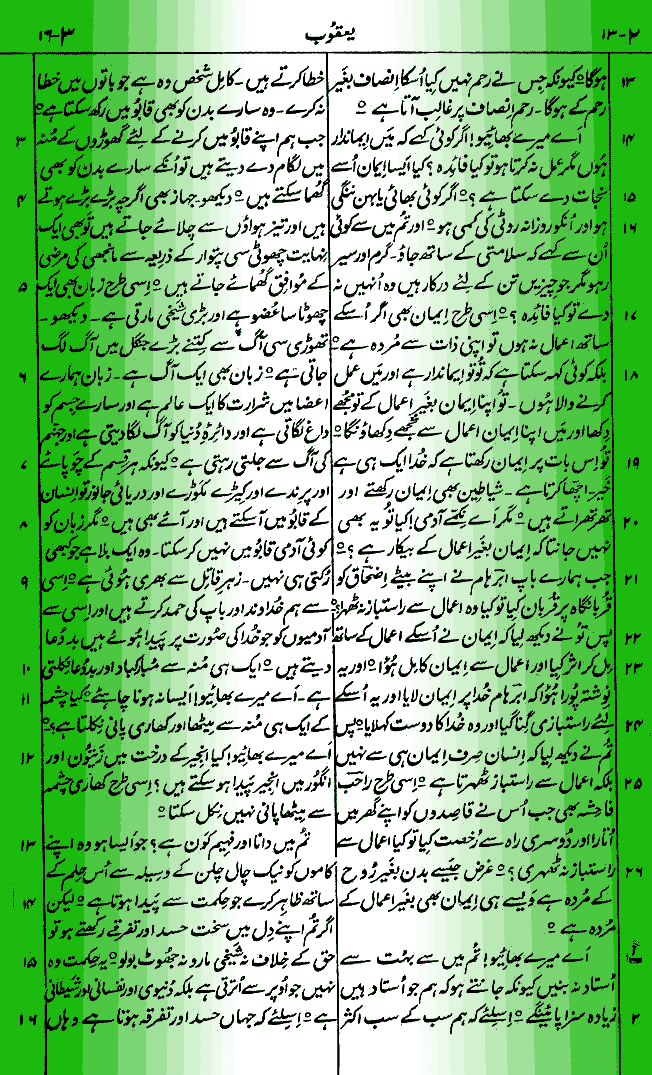
Verse-by-Verse Commentary (James 2:13 – 3:16)
James 2:13
Verse: For he shall have judgment without mercy that hath shewed no mercy and mercy rejoiceth against judgment
English Explanation
This verse serves as a crucial transition between James’s warning against favoritism and his discourse on active faith. James reminds believers that God operates on a principle of reciprocity regarding mercy. Those who live lives devoid of compassion and ruthlessness toward others will face a strict, unyielding judgment from God. However, for those who actively practice mercy, God’s mercy triumphs or “rejoiceth” over judgment, neutralizing the condemnation they would otherwise deserve.
Urdu Explanation (تفصیلی وضاحت)
یہ آیت ہمیں یہ سکھاتی ہے کہ جو انسان دوسروں پر رحم نہیں کرتا، خدا کی عدالت میں اس پر بھی رحم نہیں کیا جائے گا۔ اگر ہم دوسروں کی غلطیوں کو معاف نہیں کرتے اور ان پر ترس نہیں کھاتے، تو ہم خدا سے رحم کی امید نہیں رکھ سکتے۔ لیکن جو لوگ رحمدل ہیں، ان کے لیے خدا کا رحم عدالت پر غالب آ جاتا ہے اور وہ سزا سے بچ جاتے ہیں۔
James 2:14
Verse: What doth it profit my brethren though a man say he hath faith and have not works can faith save him
English Explanation
James challenges the concept of a purely intellectual or verbal faith. He poses a rhetorical question to highlight the uselessness of a faith that does not manifest in tangible behavior. If someone claims to believe in God but their life shows no fruit, obedience, or love, that “faith” is merely a verbal profession. James asks, “Can such a faith save him?” The implied answer is a resounding no; true saving faith inevitably transforms a person’s actions.
Urdu Explanation (تفصیلی وضاحت)
یہاں یعقوبؑ ایمان اور اعمال کے تعلق پر بحث شروع کرتے ہیں۔ وہ پوچھتے ہیں کہ اگر کوئی شخص صرف زبان سے کہے کہ میرا ایمان ہے لیکن اس کے عمل سے کچھ ظاہر نہ ہو، تو ایسے ایمان کا کیا فائدہ؟ کیا ایسا کھوکھلا ایمان کسی کو نجات دلا سکتا ہے؟ ہرگز نہیں۔ سچا ایمان انسان کی زندگی اور اس کے کردار کو بدل دیتا ہے۔
James 2:15
Verse: If a brother or sister be naked and destitute of daily food
English Explanation
To ground his argument in practical reality, James provides a vivid, real-world example. He sets up a hypothetical situation where a fellow member of the Christian community (a brother or sister) is experiencing extreme poverty, lacking basic necessities like adequate clothing and daily sustenance. This sets the stage for testing the validity of someone’s professed faith.
Urdu Explanation (تفصیلی وضاحت)
یعقوبؑ اپنی بات کو واضح کرنے کے لیے ایک عام مثال دیتے ہیں۔ وہ کہتے ہیں کہ اگر تمہارا کوئی ایمانی بھائی یا بہن ننگا ہو یا اسے روزمرہ کی خوراک میسر نہ ہو، یعنی وہ انتہائی غربت اور محتاجی کی حالت میں ہو۔ یہ مثال ظاہر کرتی ہے کہ ایمان صرف گرجا گھر تک محدود نہیں بلکہ اس کا تعلق سماجی ذمہ داریوں سے ہے۔
James 2:16
Verse: And one of you say unto them Depart in peace be ye warmed and filled notwithstanding ye give them not those things which are needful to the body what doth it profit
English Explanation
James exposes the hypocrisy of offering superficial, spiritualized well-wishes without taking any action to alleviate physical suffering. Telling a starving, freezing person to “go in peace, stay warm, and eat well” without providing food or clothing is completely useless. Religious platitudes cannot satisfy physical hunger or protect against the cold. Therefore, such words are completely profitless.
Urdu Explanation (تفصیلی وضاحت)
اگر تم میں سے کوئی اس محتاج شخص کو دیکھ کر صرف یہ کہے کہ “سلامتی کے ساتھ جاؤ، گرم رہو اور پیٹ بھر کر کھاؤ” لیکن اس کی جسمانی ضرورتیں (کپڑا اور کھانا) پوری نہ کرے، تو ایسی زبانی ہمدردی کا کیا فائدہ؟ یہ منافقت ہے کہ ہم کسی کی مدد کرنے کی بجائے صرف دعائیہ الفاظ پر اکتفا کریں۔
James 2:17
Verse: Even so faith if it hath not works is dead being alone
English Explanation
James delivers his primary thesis: faith that exists purely as an abstract theory, without producing righteous deeds, is fundamentally dead. Just as words without actions are useless to a starving person, belief without actions is useless before God. It is solitary, isolated, and devoid of the life-giving Spirit of God that naturally produces good works.
Urdu Explanation (تفصیلی وضاحت)
یہ اس پورے باب کا مرکزی نکتہ ہے۔ یعقوبؑ فرماتے ہیں کہ اسی طرح ایمان بھی، اگر اس کے ساتھ نیک اعمال نہ ہوں، تو وہ اپنے اندر مردہ ہے۔ ایسا ایمان جو انسان کے اندر کوئی تبدیلی پیدا نہ کرے اور جس سے دوسروں کا بھلا نہ ہو، وہ صرف ایک بے جان دعویٰ ہے۔
James 2:18
Verse: Yea a man may say Thou hast faith and I have works shew me thy faith without thy works and I will shew thee my faith by my works
English Explanation
James introduces an imaginary debater to show that faith and works cannot be separated into different categories of spiritual gifts. You cannot visible demonstrate faith without works, because faith is an invisible, internal reality. The only way to prove to the world that true faith exists in your heart is through the outward evidence of your actions. Works are the visible demonstration of invisible faith.
Urdu Explanation (تفصیلی وضاحت)
یعقوبؑ کہتے ہیں کہ کوئی شخص دعویٰ کر سکتا ہے کہ “تمہارے پاس ایمان ہے اور میرے پاس اعمال ہیں۔” لیکن حقیقت یہ ہے کہ تم اعمال کے بغیر اپنے ایمان کا ثبوت نہیں دے سکتے۔ ایمان ایک پوشیدہ چیز ہے، اور اسے ظاہر کرنے کا واحد طریقہ نیک اعمال ہیں۔ میں اپنے اچھے اعمال کے ذریعے اپنے سچے ایمان کو ثابت کروں گا۔
James 2:19
Verse: Thou believest that there is one God thou doest well the devils also believe and tremble
English Explanation
James delivers a sharp critique of mere intellectual assent to monotheistic theology. Believing that there is only one God is correct and orthodox, but it is not enough for salvation. Even demons possess this intellectual belief; they know God exists and recognize His absolute power, causing them to shudder in fear. If your faith does not lead to love and obedience, it is no better than the theology of demons.
Urdu Explanation (تفصیلی وضاحت)
یہ ایک بہت سخت اور چونکا دینے والی آیت ہے۔ یعقوبؑ کہتے ہیں کہ اگر تمہارا یہ عقیدہ ہے کہ خدا ایک ہے، تو یہ اچھی بات ہے۔ لیکن یاد رکھو کہ یہ یقین تو شیاطین اور جنات بھی رکھتے ہیں اور وہ خدا کے خوف سے کانپتے بھی ہیں۔ محض یہ جان لینا کہ خدا موجود ہے، نجات کے لیے کافی نہیں جب تک کہ اس خدا کی اطاعت نہ کی جائے۔
James 2:20
Verse: But wilt thou know O vain man that faith without works is dead
English Explanation
Addressing the spiritually blind or foolish reader (“O vain man”), James prepares to offer historical scriptural proof. He reinforces that a person who expects salvation based on an inactive, fruitless faith is foolish and possesses an empty understanding of God’s Word. He reiterates that faith completely disconnected from works is utterly useless.
Urdu Explanation (تفصیلی وضاحت)
یعقوبؑ یہاں نادان اور غافل انسان کو مخاطب کرتے ہوئے کہتے ہیں کہ کیا تم اب بھی یہ نہیں سمجھنا چاہتے کہ اعمال کے بغیر ایمان بالکل بے فائدہ اور مردہ ہے؟ وہ اب تاریخ سے مثالیں دے کر اس بات کو ثابت کرنے جا رہے ہیں۔
James 2:21
Verse: Was not Abraham our father justified by works when he had offered Isaac his son upon the altar
English Explanation
James points to Abraham, the patriarch of the faith, to prove his point. Abraham was not justified merely because he said he believed God, but because his belief drove him to radical obedience—even to the point of being willing to sacrifice his beloved son, Isaac, on the altar at God’s command. His actions proved the authenticity of his internal faith.
Urdu Explanation (تفصیلی وضاحت)
وہ ہمارے باپ ابراہامؑ کی مثال دیتے ہیں۔ جب خدا نے ابراہامؑ کو آزمایا اور انہوں نے اپنے بیٹے اسحاقؑ کو قربان گاہ پر چڑھانے کا عمل کیا، تو ان کا یہ عمل ان کے ایمان کی سچائی کا ثبوت بنا۔ ابراہامؑ صرف باتوں کے غازی نہیں تھے، بلکہ انہوں نے عمل کر کے دکھایا۔
James 2:22
Verse: Seest thou how faith wrought with his works and by works was faith made perfect
Explanation
This verse beautifully illustrates the synergy between internal faith and external obedience. Abraham’s faith was not passive; it was actively working right alongside his actions. Furthermore, James notes that faith is brought to its intended maturity and completion (made perfect) by works. Works are the fulfillment and natural climax of faith.
Urdu Explanation (تفصیلی وضاحت)
تم دیکھ سکتے ہو کہ ابراہامؑ کا ایمان ان کے اعمال کے ساتھ مل کر کام کر رہا تھا اور اعمال کے ذریعے ہی ان کا ایمان کامل (مکمل) ہوا۔ یعنی اعمال ایمان کو پختگی اور کمال تک پہنچاتے ہیں، ان کے بغیر ایمان ادھورا رہتا ہے۔
James 2:23
Verse: And the scripture was fulfilled which saith Abraham believed God and it was imputed unto him for righteousness and he was called the Friend of God
English Explanation
When Abraham obeyed God’s command regarding Isaac, it fulfilled Genesis 15:6, which states that Abraham’s belief was credited to him as righteousness. His ultimate act of obedience proved that the initial declaration of his righteousness was genuine. Because of this deeply intimate, active relationship of trust and obedience, Abraham earned the highly honored title of “the Friend of God.”
Urdu Explanation (تفصیلی وضاحت)
جب ابراہامؑ نے عمل کیا تو پاک صحیفے کی یہ بات سچ ثابت ہوئی کہ “ابراہام خدا پر ایمان لایا اور یہ اس کے لیے راستبازی گنا گیا۔” اپنے اس مخلصانہ ایمان اور عمل کی وجہ سے ابراہامؑ کو “خلیل اللہ” یعنی خدا کا دوست کہا گیا۔
James 2:24
Verse: Ye see then how that by works a man is justified and not by faith only
English Explanation
James summarizes his argument using Abraham’s legacy. A person is vindicated or shown to be righteous before God and man by their actions, and not by a standalone, verbalized belief system. James is not contradicting the doctrine of salvation by faith; rather, he is clarifying that the kind of faith that justifies is never a faith that remains entirely alone.
Urdu Explanation (تفصیلی وضاحت)
پس ثابت ہوا کہ انسان صرف زبانی ایمان کے دعوے سے نہیں، بلکہ اپنے اعمال سے راستباز ٹھہرایا جاتا ہے۔ ایمان وہ بیج ہے جس سے اعمال کا درخت اگتا ہے۔ اگر درخت پر پھل ہی نہ ہو، تو بیج کے ہونے کا دعویٰ جھوٹا ہے۔
James 2:25
Verse: Likewise also was not Rahab the harlot justified by works when she had received the messengers and had sent them out another way
English Explanation
To show that this principle applies universally, James contrasts the great patriarch Abraham with Rahab, a Gentile woman and a former prostitute. Despite her marginalized background, Rahab demonstrated true faith when she risked her life to protect the Israelite spies and aided their escape. Her faith was not abstract; it was demonstrated through a courageous, life-saving act of hospitality.
Urdu Explanation (تفصیلی وضاحت)
ابراہامؑ کے بعد، یعقوبؑ راحب کی مثال دیتے ہیں جو ایک غیر قوم کی عورت تھی۔ اس نے خدا کے قاصدوں (جاسوسوں) کو اپنے گھر پناہ دی اور انہیں دشمنوں سے بچا کر دوسرے راستے سے روانہ کیا۔ اس کے اس عمل نے ثابت کیا کہ وہ سچے خدا پر ایمان لا چکی ہے، اور اسی عمل کی وجہ سے وہ سرخرو ہوئی۔
James 2:26
Verse: For as the body without the spirit is dead so faith without works is dead also
English Explanation
James concludes Chapter 2 with a powerful medical and biological analogy. A human corpse is structurally intact, but without the invisible life-breath (spirit), it is lifeless and decays. In the exact same way, a theological profession of faith without the animating life of righteous actions is a spiritual corpse—lifeless, useless, and dead.
Urdu Explanation (تفصیلی وضاحت)
یہ باب کا آخری اور حتمی نتیجہ ہے۔ یعقوبؑ فرماتے ہیں کہ جیسے روح کے بغیر جسم ایک مردہ لاش ہے، ویسے ہی اعمال کے بغیر ایمان بھی ایک لاش کی مانند ہے۔ اگر ایمان میں اعمال کی روح موجود نہیں، تو وہ سڑ گل جاتا ہے اور اس کی کوئی قیمت نہیں۔
James 3:1
Verse: My brethren be not many masters knowing that we shall receive the greater condemnation
English Explanation
Moving into Chapter 3, James turns his attention to the responsibility of teaching within the church. He warns believers not to rush into becoming teachers (“masters”). Teaching God’s Word is a heavy spiritual burden because teachers are held to a much higher standard of accountability. Those who instruct others will face a stricter judgment from God if they fail to live up to what they preach.
Urdu Explanation (تفصیلی وضاحت)
باب 3 کے آغاز میں، یعقوبؑ کلیسیا کے رہنماؤں اور اساتذہ کو خبردار کرتے ہیں۔ وہ کہتے ہیں کہ تم میں سے بہت سے لوگ استاد بننے کی جلدی نہ کریں۔ کیونکہ استاد بننا بڑی ذمہ داری ہے اور خدا کی عدالت میں اساتذہ کا حساب کتاب عام لوگوں سے زیادہ سخت ہوگا۔ کیونکہ وہ دوسروں کی رہنمائی کے ذمہ دار ہوتے ہیں۔
James 3:2
Verse: For in many things we offend all If any man offend not in word the same is a perfect man and able also to bridle the whole body
English Explanation
James acknowledges human frailty: everyone stumbles and sins in various ways. However, he highlights speech as the ultimate test of self-control. If a person can perfectly master their words without sinning, it proves they possess immense spiritual maturity (“a perfect man”) and are fully capable of controlling every other physical passion and desire in their entire body.
Urdu Explanation (تفصیلی وضاحت)
وہ کہتے ہیں کہ ہم سب سے بہت سی غلطیاں ہوتی ہیں۔ لیکن جو شخص اپنی زبان کو قابو میں رکھتا ہے اور بولنے میں خطا نہیں کرتا، وہ کامل (کمیونٹی کا بالغ) انسان ہے۔ اگر کوئی اپنی زبان پر قابو پا سکتا ہے، تو وہ اپنے پورے جسم اور اپنی تمام خواہشات کو بھی لگام دے سکتا ہے۔
James 3:3
Verse: Behold we put bits in the horses’ mouths that they may obey us and we turn about their whole body
English Explanation
James utilizes a vivid illustration from nature and animal husbandry: the horse bit. A horse is a massive, incredibly powerful animal capable of overpowering a human. Yet, by placing a small piece of metal (a bit) into its mouth, a rider can master the animal’s strength and guide its entire body in any direction.
Urdu Explanation (تفصیلی وضاحت)
زبان کی طاقت کو سمجھانے کے لیے وہ گھوڑے کی مثال دیتے ہیں۔ گھوڑا ایک بڑا اور طاقتور جانور ہے، لیکن ہم اس کے منہ میں ایک چھوٹی سی لگام ڈال کر اسے اپنے تابع کر لیتے ہیں اور جس طرف چاہتے ہیں، اس کے پورے جسم کو موڑ دیتے ہیں۔
James 3:4
Verse: Behold also the ships which though they be so great and are driven of fierce winds yet are they turned about with a very small helm whithersoever the governor listeth
English Explanation
James offers a second analogy from maritime technology: the rudder of a ship. Massive ocean vessels are buffeted by powerful ocean winds and raging storms. Despite their sheer size and the immense external forces acting upon them, they are easily steered by a tiny wooden rudder (“helm”) operated by the pilot. The small instrument dictates the path of the giant ship.
Urdu Explanation (تفصیلی وضاحت)
دوسری مثال بحری جہازوں کی ہے۔ جہاز اتنے بڑے ہوتے ہیں اور تیز ہواؤں کے تھپیڑے کھاتے ہیں، لیکن ایک چھوٹا سا ملاح ایک بہت ہی چھوٹی سی پتوار (Rudder) کے ذریعے اتنے بڑے جہاز کو اپنی مرضی کے مطابق موڑ لیتا ہے۔
James 3:5
Verse: Even so the tongue is a little member and boasteth great things Behold how great a matter a little fire kindleth
English Explanation
Applying the analogies of the horse bit and the ship’s rudder, James points out that the human tongue is a tiny physical organ, yet it carries immense power and makes arrogant claims. To illustrate its destructive potential, he notes that a tiny, solitary spark of fire can set an entire, massive forest ablaze. Small causes can lead to catastrophic consequences.
Urdu Explanation (تفصیلی وضاحت)
اسی طرح ہماری زبان بھی جسم کا ایک بہت چھوٹا سا حصہ ہے، لیکن یہ بڑی بڑی شیخیان بگھارتی ہے اور بڑے اثرات رکھتی ہے۔ جیسے آگ کی ایک چھوٹی سی چنگاری پورے جنگل کو جلا کر راکھ کر سکتی ہے، ویسے ہی زبان سے نکلا ایک چھوٹا سا لفظ بڑی تباہی لا سکتا ہے۔
James 3:6
Verse: And the tongue is a fire a world of iniquity so is the tongue among our members that it defileth the whole body and setteth on fire the course of nature and it is set on fire of hell
English Explanation
James bluntly defines the unbridled tongue as a fire and a universe of corruption. It has the capacity to stain and pollute a person’s entire character and life. The damage caused by malicious words ripples outward, corrupting relationships and society (“the course of nature”). Ultimately, James traces the source of this destructive venom straight to hell itself.
Urdu Explanation (تفصیلی وضاحت)
یعقوبؑ کہتے ہیں کہ زبان ایک آگ ہے اور گناہ کا ایک جہان ہے۔ یہ ہمارے اعضاء میں رہ کر پورے جسم کو ناپاک کر دیتی ہے۔ یہ انسان کی زندگی کے پورے نظام میں آگ لگا دیتی ہے اور اس آگ کا منبع خود جہنم ہے۔ یعنی غیبت، جھوٹ اور گالی گلوچ شیطانی صفات ہیں۔
James 3:7
Verse: For every kind of beasts and of birds and of serpents and of things in the sea is tamed and hath been tamed of mankind
English Explanation
James points out a fascinating paradox in God’s creation. Humanity has successfully fulfilled the dominion mandate by taming almost every category of animal life—including wild beasts, soaring birds, venomous reptiles, and massive sea creatures. Human ingenuity has mastered the wild, untamed forces of the natural world.
Urdu Explanation (تفصیلی وضاحت)
انسان کی صلاحیتوں کا ذکر کرتے ہوئے وہ کہتے ہیں کہ دنیا کے ہر قسم کے جنگلی جانوروں، پرندوں، سانپوں اور سمندری مخلوقات کو انسان نے اپنے قابو میں کیا ہے اور انہیں سدھایا ہے۔ انسان نے فطرت کی وحشی قوتوں پر فتح پائی ہے۔
James 3:8
Verse: But the tongue can no man tame it is an unruly evil full of deadly poison
English Explanation
In sharp contrast to wild animals, James declares that no human being can completely tame the tongue through human willpower alone. It is an unstable, restless evil that constantly seeks to break free and cause harm. Like a venomous snake, it is packed with a deadly poison that ruins reputations, shatters peace, and destroys lives. It requires divine, supernatural help to control.
Urdu Explanation (تفصیلی وضاحت)
لیکن افسوس کی بات یہ ہے کہ کوئی انسان اپنی زبان کو مستقل طور پر قابو میں نہیں رکھ سکتا۔ یہ ایک ایسی برائی ہے جو کبھی چین سے نہیں بیٹھتی اور یہ مہلک زہر سے بھری ہوئی ہے۔ زبان کا زہر سانپ کے زہر سے زیادہ خطرناک ہے کیونکہ یہ روح اور رشتوں کو قتل کرتا ہے۔
James 3:9
Verse: Therewith bless we God even the Father and therewith curse we men which are made after the similitude of God
English Explanation
James exposes the shocking, hypocritical inconsistency within human speech. With the exact same tongue, believers worship, praise, and bless God the Father, and then turn around and utter bitter curses against fellow human beings. James reminds us that this is a theological contradiction because humans are created in the image and likeness (“similitude”) of God. To curse a human is to insult the Creator.
Urdu Explanation (تفصیلی وضاحت)
یہاں انسان کی منافقت کو بے نقاب کیا گیا ہے۔ ہم اسی زبان سے اپنے خدا اور باپ کی حمد و ثنا کرتے ہیں، اور اسی زبان سے ان انسانوں کو بددعا دیتے ہیں جنہیں خدا نے اپنی شبیہ (صورت) پر پیدا کیا ہے۔ یہ ایک بہت بڑا تضاد ہے کہ ہم خالق سے محبت کا دعویٰ کریں اور اس کی مخلوق سے نفرت کریں۔
James 3:10
Verse: Out of the same mouth proceedeth blessing and cursing My brethren these things ought not so to be
English Explanation
James marvels at this moral impossibility: blessings and cursings flowing simultaneously from the same lips. He directly addresses the church community, pleading with them and firmly stating that this behavior is completely unacceptable. It violates the core principles of the Christian life and indicates a fractured, unhealthy spiritual heart.
Urdu Explanation (تفصیلی وضاحت)
ایک ہی منہ سے برکت اور لعنت دونوں نکلتی ہیں۔ یعقوبؑ پیار اور سختی سے کہتے ہیں کہ “اے میرے بھائیو! ایسا ہرگز نہیں ہونا چاہیے۔” یہ ایماندار کی زندگی کی گواہی کو ختم کر دیتا ہے اور خدا کے نزدیک ناپسندیدہ ہے۔
James 3:11
Verse: Doth a fountain send forth at the same place sweet water and bitter
English Explanation
James appeals to the laws of nature to show how unnatural human hypocrisy is. He asks a rhetorical question about water springs: Can a single geyser or natural fountain produce both delicious, life-giving fresh water and contaminated, bitter water from the same opening? The answer is an absolute biological impossibility.
Urdu Explanation (تفصیلی وضاحت)
وہ فطرت سے ایک سادہ مثال دیتے ہیں کہ کیا کسی چشمے کے ایک ہی منہ سے میٹھا اور کڑوا پانی ایک ساتھ نکل سکتا ہے؟ ایسا ہونا ناممکن ہے۔ چشمے کا پانی یا تو مکمل میٹھا ہوگا یا مکمل کڑوا۔
James 3:12
Verse: Can the fig tree my brethren bear olive berries either a vine figs so can no fountain both yield salt water and fresh
English Explanation
Expanding his agricultural illustrations, James points out that a plant’s output is strictly determined by its internal nature. A fig tree cannot grow olives, and a grapevine cannot produce figs. In the same way, a salty spring cannot suddenly output pure, fresh water. The speech that comes out of a person reveals the true condition of their inner heart.
Urdu Explanation (تفصیلی وضاحت)
وہ مزید کہتے ہیں کہ کیا انجیر کے درخت میں زیتون کا پھل لگ سکتا ہے؟ یا انگور کی بیل میں انجیر پیدا ہو سکتے ہیں؟ بالکل نہیں۔ اسی طرح کھاری چشمے سے میٹھا پانی حاصل نہیں کیا جا سکتا۔ ہماری زبان وہی ظاہر کرتی ہے جو ہمارے دل کے اندر بھرا ہوتا ہے۔
James 3:13
Verse: Who is a wise man and endued with knowledge among you let him shew out of a good conversation his works with meekness of wisdom
English Explanation
James shifts his focus to true wisdom, challenging anyone who considers themselves intellectually superior or highly knowledgeable. True spiritual wisdom is not proven by winning theological arguments, but by a righteous lifestyle (“good conversation”) and godly deeds. Furthermore, these deeds must be characterized by humility and gentleness (“meekness”), which are the true hallmarks of heavenly wisdom.
Urdu Explanation (تفصیلی وضاحت)
اگر تم میں سے کوئی خود کو دانا اور عقلمند سمجھتا ہے، تو اسے چاہیے کہ وہ بحث و مباحثہ کرنے کی بجائے اپنے اچھے چال چلن اور نیک اعمال کے ذریعے اس کا ثبوت دے۔ اور یہ کام غرور سے نہیں بلکہ اس حلیمی اور عاجزی کے ساتھ ہونا چاہیے جو حقیقی حکمت سے پیدا ہوتی ہے۔
James 3:14
Verse: But if ye have bitter envying and strife in your hearts glory not and lie not against the truth
English Explanation
James warns against counterfeit wisdom. If a person’s inner heart is filled with toxic jealousy (“bitter envying”) and selfish ambition (“strife”), they have absolutely no right to boast about being spiritually wise. To claim you are wise while harboring a malicious, competitive spirit is a arrogant lie that contradicts the very truth of the Gospel.
Urdu Explanation (تفصیلی وضاحت)
لیکن اگر تمہارے دلوں میں کڑوی حسد اور دھڑے بندی (خود غرضی) موجود ہے، تو اپنی عقل پر فخر نہ کرو۔ ایسا فخر کرنا جھوٹ ہے اور انجیل کی سچائی کے خلاف ہے۔ حاسد اور جھگڑالو انسان کبھی بھی روحانی طور پر عقلمند نہیں ہو سکتا۔
James 3:15
Verse: This wisdom descendeth not from above but is earthly sensual devilish
English Explanation
James identifies the true origin of this combative, arrogant mentality. This type of “wisdom” does not come down from God in heaven. Instead, James classifies it using three downward steps: it is earthly (bound to worldly standards), sensual (driven by unspiritual, fleshly emotions), and devilish (demonic in its ultimate character and inspiration).
Urdu Explanation (تفصیلی وضاحت)
یہ دنیاوی حکمت خدا کی طرف سے نہیں آتی۔ یہ حکمت زمین تک محدود ہے، یہ نفسانی (خواہشات کی غلام) ہے اور شیطانی ہے۔ جو حکمت لوگوں میں پھوٹ ڈالے اور حسد پیدا کرے، وہ خدا کی طرف سے نہیں بلکہ شیطان کی طرف سے ہوتی ہے۔
James 3:16
Verse: For where envying and strife is there is confusion and every evil work
English Explanation
James establishes a spiritual law of cause and effect. Wherever jealousy and selfish ambition are allowed to take root in a heart, a family, or a church community, the inevitable byproduct will be chaotic disorder (“confusion”) and every imaginable type of sin and wickedness (“every evil work”). Selfishness tears down what God seeks to build.
Urdu Explanation (تفصیلی وضاحت)
یہ ایک کائنات سچائی ہے کہ جہاں کہیں حسد اور خود غرضی کا مقابلہ ہوتا ہے، وہاں افراتفری، بے امنی اور ہر طرح کے برے کام جنم لیتے ہیں۔ حسد امن کو تباہ کر دیتا ہے اور گناہ کے دروازے کھول دیتا ہے۔