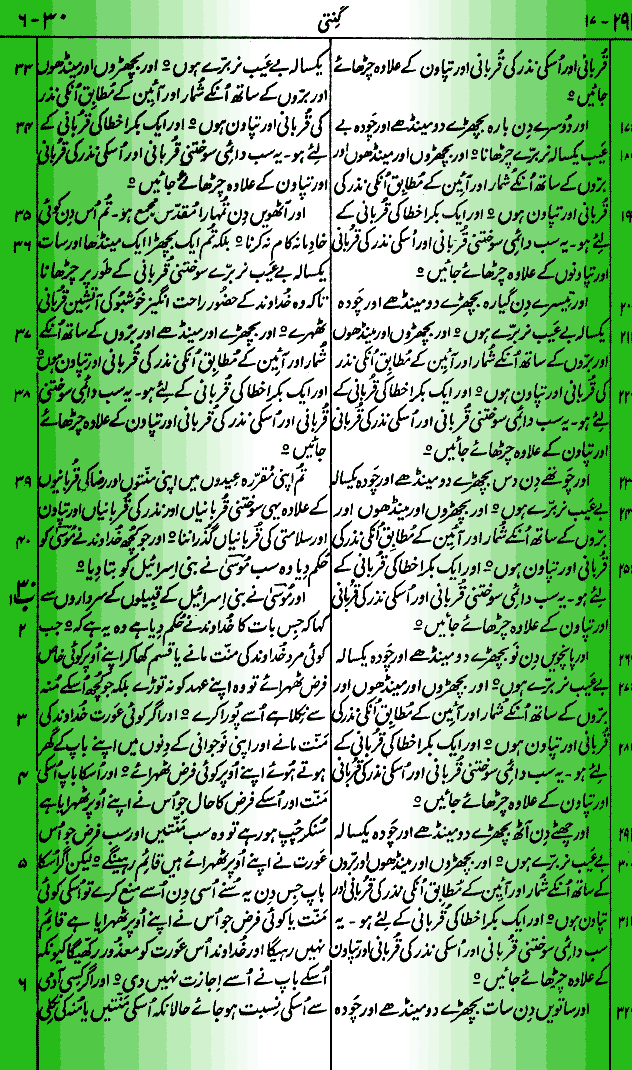
Verse by Verse Analysis (Numbers 29:17 – 30:6)
Numbers 29:17
Verse: And on the second day ye shall offer twelve young bullocks two rams fourteen lambs of the first year without spot
-
English Explanation: On the second day of the Feast of Tabernacles (Sukkot), the number of bullocks decreases by one (from thirteen to twelve), while the rams and lambs remain constant. Every animal must be physically perfect.
-
Urdu Explanation: عیدِ خیام کے دوسرے دن بارہ جوان بیل، دو مینڈھے اور چودہ ایک ایک سال کے بے عیب برے قربان کیے جانے کا حکم ہے۔ بیلوں کی تعداد میں ہر گزرتے دن کے ساتھ ایک کی کمی کی جاتی تھی۔
Numbers 29:18
Verse: And their meat offering and their drink offerings for the bullocks for the rams and for the lambs shall be according to their number after the manner
-
English Explanation: Each animal sacrifice was accompanied by a specific grain (meat) and drink offering, proportioned exactly to the quantity of livestock being sacrificed as per the established ritual law.
-
Urdu Explanation: ان بیلوں، مینڈھوں اور بروں کی نذر کی قربانی اور تپاون (پینے کے نذرانے) ان کی مقررہ تعداد اور رواج کے مطابق ہونے چاہئیں۔
Numbers 29:19
Verse: And one kid of the goats for a sin offering beside the continual burnt offering and the meat offering thereof and their drink offerings
-
English Explanation: A male goat was sacrificed for atonement (sin offering). This was in addition to the daily morning and evening sacrifices that were never to be interrupted.
-
Urdu Explanation: ایک بکرا گناہ کی قربانی کے لیے ذبح کیا جاتا تھا جو کہ روزانہ کی دائمی سوختنی قربانی اور اس کے ساتھ کے نذرانوں کے علاوہ تھا۔
Numbers 29:20–22 (The Third Day)
Verse 20: And on the third day eleven bullocks two rams fourteen lambs of the first year without blemish Verse 21: And their meat offering and their drink offerings for the bullocks for the rams and for the lambs shall be according to their number after the manner Verse 22: And one goat for a sin offering beside the continual burnt offering and his meat offering and his drink offering
-
English Explanation: On the third day, the bullocks decrease to eleven. The ritual consistency emphasizes that worship requires meticulous adherence to God’s specific instructions.
-
Urdu Explanation: تیسرے دن بیلوں کی تعداد گیارہ ہو جاتی ہے۔ باقی تمام مینڈھے، برے اور گناہ کی قربانی کا طریقہ کار وہی رہتا ہے جو دوسرے دن تھا۔
Numbers 29:23–25 (The Fourth Day)
Verse 23: And on the fourth day ten bullocks two rams and fourteen lambs of the first year without blemish Verse 24: Their meat offering and their drink offerings for the bullocks for the rams and for the lambs shall be according to their number after the manner Verse 25: And one kid of the goats for a sin offering beside the continual burnt offering his meat offering and his drink offering
-
English Explanation: The fourth day sees the bullocks reduced to ten. The “manner” refers to the specific ratios of flour, oil, and wine required for each animal type.
-
Urdu Explanation: چوتھے دن بیلوں کی تعداد دس رہ جاتی ہے۔ یہ نذرانے اس بات کی علامت تھے کہ بنی اسرائیل اپنی بہترین نعمتیں خدا کے حضور پیش کر رہے ہیں۔
Numbers 29:26–28 (The Fifth Day)
Verse 26: And on the fifth day nine bullocks two rams and fourteen lambs of the first year without spot Verse 27: And their meat offering and their drink offerings for the bullocks for the rams and for the lambs shall be according to their number after the manner Verse 28: And one goat for a sin offering beside the continual burnt offering and his meat offering and his drink offering
-
English Explanation: On the fifth day, nine bullocks are offered. The repetition in the text ensures that the priesthood maintained the exact count during the long festival.
-
Urdu Explanation: پانچویں دن نو بیل قربان کیے جاتے۔ متن کی تکرار اس بات کو یقینی بناتی ہے کہ کاہنوں سے قربانی کی گنتی میں کوئی غلطی نہ ہو۔
Numbers 29:29–31 (The Sixth Day)
Verse 29: And on the sixth day eight bullocks two rams and fourteen lambs of the first year without blemish Verse 30: And their meat offering and their drink offerings for the bullocks for the rams and for the lambs shall be according to their number after the manner Verse 31: And one goat for a sin offering beside the continual burnt offering his meat offering and his drink offering
-
English Explanation: The sixth day requires eight bullocks. The total number of bullocks sacrificed over the seven days of Sukkot equaled seventy, symbolizing the seventy nations of the world.
-
Urdu Explanation: چھٹے دن آٹھ بیل پیش کیے جاتے۔ ان سات دنوں میں مجموعی طور پر ستر بیل قربان کیے جاتے تھے جو کہ دنیا کی قوموں کی نمائندگی کرتے تھے۔
Numbers 29:32–34 (The Seventh Day)
Verse 32: And on the seventh day seven bullocks two rams and fourteen lambs of the first year without blemish Verse 33: And their meat offering and their drink offerings for the bullocks for the rams and for the lambs shall be according to their number after the manner Verse 34: And one goat for a sin offering beside the continual burnt offering his meat offering and his drink offering
-
English Explanation: On the final day of the primary feast, the number of bullocks reaches seven. This completes the descending cycle of the main festival offerings.
-
Urdu Explanation: ساتویں دن بیلوں کی تعداد کم ہو کر سات رہ جاتی ہے۔ یہ اصل عید کے قربانی کے چکر کی تکمیل تھی۔
Numbers 29:35–38 (The Eighth Day – Shemini Atzeret)
Verse 35: On the eighth day ye shall have a solemn assembly ye shall do no servile work therein Verse 36: But ye shall offer a burnt offering a sacrifice made by fire of a sweet savour unto the LORD one bullock one ram seven lambs of the first year without blemish Verse 37: Their meat offering and their drink offerings for the bullock for the ram and for the lambs shall be according to their number after the manner Verse 38: And one goat for a sin offering beside the continual burnt offering and his meat offering and his drink offering
-
English Explanation: The eighth day is a separate, holy gathering where work is forbidden. Only one bullock and one ram are offered, signifying a more intimate time between God and Israel after the universal focus of the previous days.
-
Urdu Explanation: آٹھواں دن ایک خاص مقدس مجمع ہوتا تھا جس میں کوئی دنیاوی کام نہیں کیا جاتا تھا۔ اس دن صرف ایک بیل اور ایک مینڈھا قربان کیا جاتا تھا، جو کہ خدا اور اس کی قوم کے درمیان خصوصی تعلق کی علامت تھا۔
Numbers 29:39–40
Verse 39: These things ye shall do unto the LORD in your set feasts beside your vows and your freewill offerings for your burnt offerings and for your meat offerings and for your drink offerings and for your peace offerings Verse 40: And Moses told the children of Israel according to all that the LORD commanded Moses
-
English Explanation: These regulations for public feasts did not replace personal vows or voluntary offerings. Moses faithfully delivered every detail of these divine instructions to the people.
-
Urdu Explanation: یہ وہ قربانیاں تھیں جو مقررہ عیدوں پر دی جانی تھیں، جو کہ ذاتی منتوں اور خوشی کے نذرانوں کے علاوہ تھیں۔ موسیٰ نے یہ تمام احکامات بنی اسرائیل تک پہنچا دیے۔
Chapter 30: Laws Concerning Vows
Numbers 30:1
Verse: And Moses spake unto the heads of the tribes concerning the children of Israel saying This is the thing which the LORD hath commanded
-
English Explanation: Moses addresses the tribal leaders specifically because they were responsible for judging disputes and enforcing legal matters like the fulfillment of vows.
-
Urdu Explanation: موسیٰ نے قبائل کے سرداروں سے کلام کیا کیونکہ وہ عوامی معاملات اور منتوں کو پورا کروانے کے ذمہ دار تھے۔
Numbers 30:2
Verse: If a man vow a vow unto the LORD or swear an oath to bind his soul with a bond he shall not break his word he shall do according to all that proceedeth out of his mouth
-
English Explanation: A man is strictly bound by his word. If he makes a promise to God or an oath of self-denial, he must fulfill it exactly as stated. Integrity in speech is paramount.
-
Urdu Explanation: اگر کوئی مرد خدا کے لیے منت مانے تو اسے اپنی بات سے نہیں پھرنا چاہیے۔ جو کچھ اس کے منہ سے نکلے اسے پورا کرنا لازم ہے۔
Numbers 30:3–5 (Vows of Young Women)
Verse 3: If a woman also vow a vow unto the LORD and bind herself by a bond being in her father’s house in her youth Verse 4: And her father hear her vow and her bond wherewith she hath bound her soul and her father shall hold his peace at her then all her vows shall stand and every bond wherewith she hath bound her soul shall stand Verse 5: But if her father disallow her in the day that he heareth not any of her vows or of her bonds wherewith she hath bound her soul shall stand and the LORD shall forgive her because her father disallowed her
-
English Explanation: A young woman living in her father’s house is under his authority. If he hears her vow and says nothing, it remains valid. If he objects immediately upon hearing it, the vow is voided, and God forgives her for not fulfilling it.
-
Urdu Explanation: اگر کوئی کنواری لڑکی اپنے باپ کے گھر میں منت مانے اور اس کا باپ سن کر خاموش رہے تو منت قائم رہے گی۔ لیکن اگر باپ اسی دن اعتراض کر دے تو وہ منت باطل ہو جائے گی اور خدا اسے معاف کر دے گا۔
Numbers 30:6
Verse: And if she had at all an husband when she vowed or uttered ought out of her lips wherewith she bound her soul
-
English Explanation: This introduces the scenario of a woman who makes a vow while betrothed or married. Her husband holds a similar authority over her verbal commitments as the father did.
-
Urdu Explanation: یہ آیت اس عورت کے بارے میں ہے جس کی شادی ہو چکی ہو یا منگنی ہو چکی ہو۔ یہاں شوہر کو وہی اختیار حاصل ہے جو باپ کو حاصل تھا۔