Verse-by-Verse Commentary
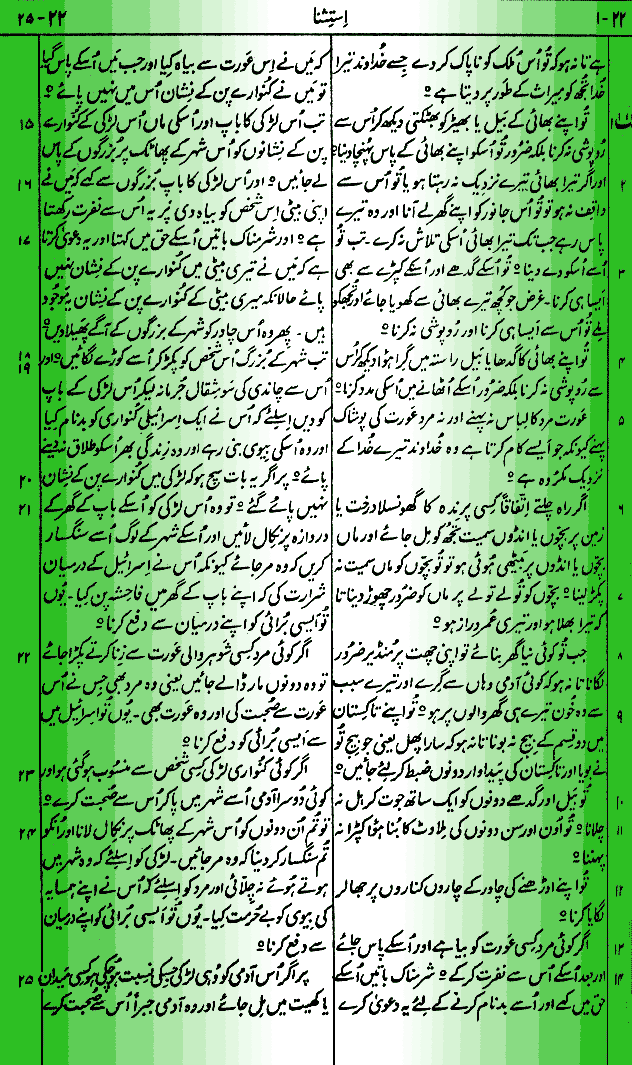
Deuteronomy 22:1
Verse: Thou shalt not see the brother’s ox or his sheep go astray and hide thyself from them thou shalt in any case bring them again unto thy brother
-
English Explanation: This verse emphasizes the duty of a neighbor. If you see a fellow community member’s livestock wandering off, you are not permitted to ignore it (“hide thyself”). It is a command for proactive kindness and restoration of property.
-
Urdu Detail: اس آیت میں پڑوسی کے حقوق اور سماجی ذمہ داری پر زور دیا گیا ہے۔ اگر آپ اپنے بھائی (کسی ہم وطن) کے بیل یا بھیڑ کو بھٹکتے ہوئے دیکھیں، تو آپ اسے نظر انداز نہیں کر سکتے۔ آپ پر فرض ہے کہ اسے واپس اس کے مالک تک پہنچائیں۔
Deuteronomy 22:2
Verse: And if thy brother be not nigh unto thee or if thou know him not then thou shalt bring it unto thine own house and it shall be with thee until thy brother seek after it and thou shalt restore it to him again
-
English Explanation: If the owner lives far away or is unknown, you must take the animal into your own home and care for it. You act as a temporary trustee until the owner comes looking for it.
-
Urdu Detail: اگر مالک دور رہتا ہو یا آپ اسے نہ جانتے ہوں، تو اس جانور کو اپنے گھر لے آئیں اور اس وقت تک اس کی دیکھ بھال کریں جب تک مالک اسے تلاش کرتا ہوا نہ آ جائے۔ یہ دیانتداری اور امانت داری کی تعلیم ہے۔
Deuteronomy 22:3
Verse: In like manner shalt thou do with his ass and so shalt thou do with his raiment and with all lost thing of thy brother’s which he hath lost and thou hast found shalt thou do likewise thou mayest not hide thyself
-
English Explanation: This law extends to all types of property—donkeys, clothing, or any lost item. The core principle is that “finding is not keeping”; one must actively seek to return what is lost.
-
Urdu Detail: یہی قانون گدھے، کپڑوں اور ہر اس چیز پر لاگو ہوتا ہے جو کسی کی کھو گئی ہو۔ آپ اسے چھپا کر اپنے پاس نہیں رکھ سکتے بلکہ اسے واپس کرنا اخلاقی اور مذہبی فریضہ ہے۔
Deuteronomy 22:4
Verse: Thou shalt not see thy brother’s ass or his ox fall down by the way and hide thyself from them thou shalt surely help him to lift them up again
-
English Explanation: This focuses on animal welfare and mutual aid. If an animal is struggling under a load, you must stop and help the owner lift it. It discourages indifference toward the suffering of animals or the struggles of neighbors.
-
Urdu Detail: اگر کسی کا جانور بوجھ تلے دب جائے یا گر جائے، تو آپ اسے دیکھ کر گزر نہیں سکتے۔ آپ کو اس کی مدد کرنی چاہیے تاکہ جانور کو اٹھایا جا سکے۔ یہ ہمدردی کا درس ہے۔
Deuteronomy 22:5
Verse: The woman shall not wear that which pertaineth unto a man neither shall a man put on a woman’s garment for all that do so are abomination unto the LORD thy God
-
English Explanation: This verse establishes a distinction between the sexes in terms of attire. It aims to preserve the natural order and social boundaries created by God, labeling the blurring of these lines as an “abomination.”
-
Urdu Detail: یہ آیت مرد و عورت کے لباس میں امتیاز قائم کرتی ہے۔ عورتوں کو مردانہ اور مردوں کو زنانہ لباس پہننے سے منع کیا گیا ہے تاکہ خدا کی تخلیق کردہ فطری حدود برقرار رہیں۔
Deuteronomy 22:6-7
Verse: If a bird’s nest chance to be before thee… thou shalt not take the dam with the young But thou shalt in any wise let the dam go and take the young to thee that it may be well with thee and that thou mayest prolong thy days
-
English Explanation: This is a law of conservation and mercy. You may take the young/eggs for food, but you must release the mother bird. This ensures the species can continue to reproduce and shows respect for the parental bond in nature.
-
Urdu Detail: اگر آپ کو پرندے کا گھونسلہ ملے، تو آپ بچے یا انڈے لے سکتے ہیں لیکن مادہ پرندہ (ماں) کو چھوڑنا ضروری ہے۔ یہ قدرت کے نظام کے تحفظ اور رحم دلی کی علامت ہے۔
Deuteronomy 22:8
Verse: When thou buildest a new house then thou shalt make a battlement for thy roof that thou bring not blood upon thine house if any man fall from thence
-
English Explanation: A “battlement” is a low wall or railing. Since roofs were used as living spaces, this law mandates safety measures to prevent accidental falls, emphasizing personal responsibility for the safety of guests.
-
Urdu Detail: جب نیا گھر بنائیں تو چھت پر منڈیر یا دیوار ضرور بنائیں تاکہ کوئی وہاں سے گر کر زخمی نہ ہو۔ یہ انسانی جان کی حفاظت اور گھر کے مالک کی ذمہ داری کو ظاہر کرتا ہے۔
Deuteronomy 22:9-11
Verse: Thou shalt not sow thy vineyard with divers seeds… Thou shalt not plow with an ox and an ass together Thou shalt not wear a garment of divers sorts as of woollen and linen together
-
English Explanation: These laws prohibit “unnatural mixtures.” Plowing with different animals (unequal strength) is cruel; mixing seeds or fabrics (wool and linen) symbolized a spiritual need for purity and separation from pagan practices.
-
Urdu Detail: یہ آیات مختلف اقسام کی چیزوں کو ملانے سے منع کرتی ہیں، جیسے دو قسم کے بیج، بیل اور گدھے کو ایک ساتھ جوتنا، یا اون اور سوت کو ملا کر پہننا۔ یہ پاکیزگی اور فطری نظم کی علامت ہے۔
Deuteronomy 22:12
Verse: Thou shalt make thee fringes upon the four quarters of thy vesture wherewith thou coverest thyself
-
English Explanation: Fringes (Tzitzit) served as a visual reminder for the Israelites to keep God’s commandments in their daily lives.
-
Urdu Detail: اپنے لباس کے چاروں کونوں پر جھالر (پھندنے) لگانے کا حکم دیا گیا تاکہ بنی اسرائیل کو ہر وقت خدا کے احکامات یاد رہیں۔
Deuteronomy 22:13-21
Verse Summary: These verses deal with a husband accusing his new wife of not being a virgin…
-
English Explanation: This section provides a legal framework to protect women from false accusations. If a husband slanders his wife, her parents provide “tokens of virginity” (the cloth from the wedding night) to the elders. If the man lied, he is fined and cannot divorce her. If the accusation is true, the woman faces capital punishment for “folly in Israel.”
-
Urdu Detail: یہ آیات شادی شدہ زندگی میں پاکدامنی اور الزام تراشی کے قوانین بیان کرتی ہیں۔ اگر شوہر بیوی پر جھوٹا الزام لگائے تو اسے سزا اور جرمانہ ہوگا، لیکن اگر جرم ثابت ہو جائے تو سخت سزا کا حکم ہے۔
Deuteronomy 22:22-25
Verse Summary: Laws regarding adultery and sexual assault…
-
English Explanation: Adultery with a married woman resulted in the death penalty for both parties (v. 22). In the case of a betrothed woman in the city, both are punished unless she cried for help. However, if the act happens in the field (where no one could hear her), only the man is punished, as the woman is presumed to have resisted.
-
Urdu Detail: زنا کے متعلق قوانین: اگر کوئی شادی شدہ عورت کے ساتھ زنا کرے تو دونوں کو موت کی سزا ملے گی۔ شہر اور میدان کے قوانین میں فرق رکھا گیا ہے تاکہ زبردستی (زیادتی) کی صورت میں مظلوم عورت کو بچایا جا سکے اور ظالم کو سزا دی جائے۔