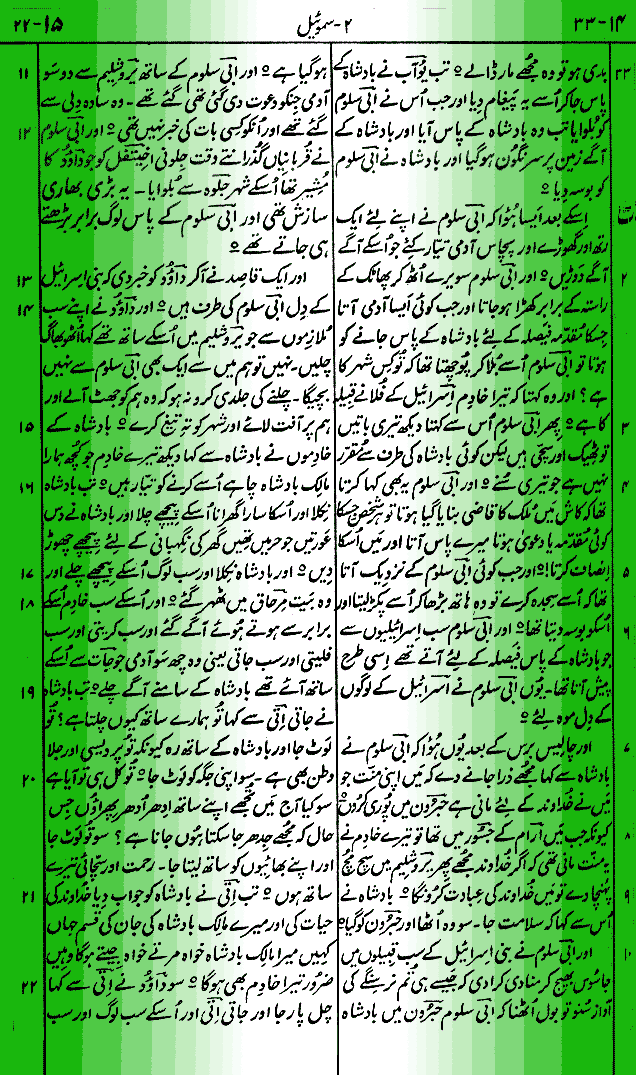
Verse-by-Verse Commentary: 2 Samuel 15:1-22
Verse 1
Verse: And it came to pass after this that Absalom prepared him chariots and horses and fifty men to run before him
-
English Explanation: Absalom began to project royal authority through visual grandeur. By acquiring chariots and a personal guard, he was mimicking the style of a king to overshadow David’s aging presence.
-
Urdu Explanation: ابشلوم نے اپنی بادشاہت کا رعب جمانے کے لیے رتھ، گھوڑے اور پچاس محافظ اپنے آگے دوڑنے کے لیے رکھ لیے تاکہ وہ لوگوں کی نظروں میں ایک طاقتور شہزادے کے طور پر ابھرے۔
Verse 2
Verse: And Absalom rose up early and stood beside the way of the gate and it was so that when any man that had a controversy came to the king for judgment then Absalom called unto him and said Of what city art thou And he said Thy servant is of one of the tribes of Israel
-
English Explanation: Absalom used “the gate” (the place of legal judgment) to intercept citizens. He showed personal interest in their lives to build a grassroots following.
-
Urdu Explanation: ابشلوم صبح سویرے شہر کے پھاٹک پر کھڑا ہو جاتا اور ہر اس شخص سے ہمدردی جتاتا جو بادشاہ سے انصاف لینے آتا۔ وہ ان سے ان کے شہر اور قبیلے کے بارے میں پوچھ کر اپنائیت ظاہر کرتا۔
Verse 3
Verse: And Absalom said unto him See thy matters are good and right but there is no man deputed of the king to hear thee
-
English Explanation: This is classic political manipulation. He validated the person’s grievance while subtly undermining King David’s administration by claiming the King was neglectful.
-
Urdu Explanation: وہ لوگوں سے کہتا کہ تمہارا معاملہ تو درست ہے لیکن بادشاہ کی طرف سے کوئی مقرر نہیں جو تمہاری فریاد سن سکے۔ اس طرح وہ داؤد بادشاہ کے خلاف بدگمانی پیدا کرتا۔
Verse 4
Verse: Absalom said moreover Oh that I were made judge in the land that every man which hath any suit or cause might come unto me and I would do him justice
-
English Explanation: Absalom presented himself as the “solution” to the perceived administrative failure, promising swift and perfect justice if he were in power.
-
Urdu Explanation: وہ خواہش ظاہر کرتا کہ کاش میں ملک کا قاضی ہوتا تو ہر کسی کو انصاف فراہم کرتا۔ یہ اس کی اقتدار حاصل کرنے کی پوشیدہ تڑپ تھی۔
Verse 5
Verse: And it was so that when any man came nigh to him to do him obeisance he put forth his hand and took him and kissed him
-
English Explanation: He rejected traditional royal distance. By embracing and kissing commoners, he used false humility to charm the public.
-
Urdu Explanation: جب کوئی اسے تعظیم دینے آتا تو وہ اسے جھکنے نہ دیتا بلکہ ہاتھ بڑھا کر اسے گلے لگا لیتا اور چومتا۔ یہ اس کی ظاہری عاجزی تھی تاکہ لوگوں کو اپنا گرویدہ بنا سکے۔
Verse 6
Verse: And on this manner did Absalom to all Israel that came to the king for judgment so Absalom stole the hearts of the men of Israel
-
English Explanation: Through constant PR and manipulation, Absalom “stole” the loyalty that belonged to David. It was a spiritual and political theft of affection.
-
Urdu Explanation: اس طرح ابشلوم نے بنی اسرائیل کے دل جیت لیے یا یوں کہیے کہ ان کے دلوں کو داؤد سے چرا لیا۔
Verse 7
Verse: And it came to pass after forty years that Absalom said unto the king I pray thee let me go and pay my vow which I have vowed unto the LORD in Hebron
-
English Explanation: Using religion as a cover, Absalom asked permission to go to Hebron. Hebron was a strategic location and David’s first capital.
-
Urdu Explanation: چالیس سال (یا ایک طویل عرصے) بعد ابشلوم نے بادشاہ سے جھوٹ بولا کہ وہ حبرون جا کر اپنی منت پوری کرنا چاہتا ہے جو اس نے خدا سے مانی تھی۔
Verse 8
Verse: For thy servant vowed a vow while I abode at Geshur in Syria saying If the LORD shall bring me again indeed to Jerusalem then I will serve the LORD
-
English Explanation: He claimed his vow was made during his exile in Geshur. He framed his rebellion as an act of worship.
-
Urdu Explanation: اس نے کہا کہ جب وہ جسور میں تھا تو اس نے منت مانی تھی کہ اگر خدا اسے یروشلم واپس لائے گا تو وہ بندگی کرے گا۔
Verse 9
Verse: And the king said unto him Go in peace So he arose and went to Hebron
-
English Explanation: David, unsuspecting and perhaps hopeful for his son’s spiritual growth, gave his blessing.
-
Urdu Explanation: داؤد بادشاہ نے اسے سلامتی کے ساتھ جانے کی اجازت دے دی اور وہ حبرون روانہ ہو گیا۔
Verse 10
Verse: But Absalom sent spies throughout all the tribes of Israel saying As soon as ye hear the sound of the trumpet then ye shall say Absalom reigneth in Hebron
-
English Explanation: The religious trip was a signal for a pre-planned military coup. The trumpet blast was the official start of the revolution.
-
Urdu Explanation: لیکن ابشلوم نے تمام اسرائیل میں جاسوس بھیجے کہ جب نرسنگے کی آواز سنائی دے تو اعلان کر دینا کہ ابشلوم حبرون میں بادشاہ بن گیا ہے۔
Verse 11
Verse: And with Absalom went two hundred men out of Jerusalem that were called and they went in their simplicity and they knew not any thing
-
English Explanation: He took 200 influential guests from Jerusalem. They were innocent pawns who made the movement look legitimate without knowing the plot.
-
Urdu Explanation: یروشلم سے دو سو معزز لوگ اس کے ساتھ گئے جو بے خبر تھے اور نہیں جانتے تھے کہ یہ ایک بغاوت ہے۔
Verse 12
Verse: And Absalom sent for Ahithophel the Gilonite David’s counseller from his city even from Giloh while he offered sacrifices And the conspiracy was strong for the people increased continually with Absalom
-
English Explanation: Recruiting David’s chief advisor, Ahithophel, was a massive blow. The momentum shifted heavily toward Absalom.
-
Urdu Explanation: ابشلوم نے داؤد کے مشیر اخیتو فل کو بھی اپنے ساتھ ملا لیا۔ یہ سازش بہت گہری تھی اور ابشلوم کی طاقت بڑھتی گئی۔
Verse 13
Verse: And there came a messenger to David saying The hearts of the men of Israel are after Absalom
-
English Explanation: The news finally reached David. The realization was devastating: the nation had turned against him in favor of his son.
-
Urdu Explanation: ایک قاصد نے داؤد کو خبر دی کہ اسرائیل کے لوگوں کے دل ابشلوم کی طرف مائل ہو چکے ہیں۔
Verse 14
Verse: And David said unto all his servants that were with him at Jerusalem Arise and let us flee for we shall not else escape from Absalom make speed to depart lest he overtake us suddenly and bring evil upon us and smite the city with the edge of the sword
-
English Explanation: David chose to flee not just for his life, but to save Jerusalem from a bloody siege.
-
Urdu Explanation: داؤد نے اپنے خادموں سے کہا کہ ہمیں یہاں سے بھاگنا ہوگا ورنہ ابشلوم ہمیں اچانک آ کر پکڑ لے گا اور شہر کو تباہ کر دے گا۔
Verse 15
Verse: And the king’s servants said unto the king Behold thy servants are ready to do whatsoever my lord the king shall appoint
-
English Explanation: In contrast to Absalom’s betrayal, David’s immediate staff showed unwavering loyalty.
-
Urdu Explanation: بادشاہ کے وفادار خادموں نے کہا کہ ہم آپ کے ہر حکم کی تعمیل کے لیے تیار ہیں۔
Verse 16
Verse: And the king went forth and all his household after him And the king left ten women which were concubines to keep the house
-
English Explanation: David left ten concubines to maintain the palace, perhaps thinking the rebellion wouldn’t target the women.
-
Urdu Explanation: بادشاہ اپنے گھرانے کے ساتھ نکل کھڑا ہوا لیکن محل کی حفاظت کے لیے دس حرم (کنیزیں) پیچھے چھوڑ دیں۔
Verse 17
Verse: And the king went forth and all the people after him and tarried in a place that was far off
-
English Explanation: The procession halted at the edge of the city to organize the retreat.
-
Urdu Explanation: بادشاہ اور اس کے پیچھے تمام لوگ شہر سے نکل کر ایک دور مقام پر ٹھہر گئے تاکہ اپنی روانگی کو منظم کر سکیں۔
Verse 18
Verse: And all his servants passed on beside him and all the Cherethites and all the Pelethites and all the Gittites six hundred men which came after him from Gath passed on before the king
-
English Explanation: David’s professional mercenaries (Cherethites and Pelethites) and 600 Gittites (foreigners) remained loyal when his own people didn’t.
-
Urdu Explanation: اس کے تمام محافظ اور چھ سو جتی مرد جو جاتی شہر سے آئے تھے، بادشاہ کے سامنے سے گزرے۔ یہ غیر ملکی سپاہی داؤد کے بے حد وفادار تھے۔
Verse 19
Verse: Then said the king to Ittai the Gittite Wherefore goest thou also with us return to thy place and abide with the king for thou art a stranger and also an exile
-
English Explanation: David selflessly urged Ittai, a foreign exile, to stay and serve the new king rather than suffer in the wilderness.
-
Urdu Explanation: داؤد نے اِتّی جتی سے کہا کہ تم ہمارے ساتھ کیوں آ رہے ہو؟ تم تو پردیسی ہو، واپس چلے جاؤ اور نئے بادشاہ (ابشلوم) کے ساتھ رہو۔
Verse 20
Verse: Whereas thou camest but yesterday should I this day make thee go up and down with us seeing I go whither I may return thou and take back thy brethren mercy and truth be with thee
-
English Explanation: David highlights Ittai’s short tenure. He releases him from any obligation, blessing him with mercy and truth.
-
Urdu Explanation: داؤد نے کہا کہ تم تو کل ہی آئے ہو، میں تمہیں اپنے ساتھ در بدر کیوں پھرایوں؟ تم اپنے بھائیوں کو لے کر واپس چلے جاؤ، خدا کا رحم تمہارے ساتھ رہے۔
Verse 21
Verse: And Ittai answered the king and said As the LORD liveth and as my lord the king liveth surely in what place my lord the king shall be whether in death or life even there also will thy servant be
-
English Explanation: Ittai makes a profound vow of loyalty. He chooses David in exile over Absalom in a palace, even if it means death.
-
Urdu Explanation: اِتّی نے جواب دیا کہ زندہ خدا کی قسم، جہاں میرا بادشاہ ہوگا، خواہ موت ہو یا زندگی، میں وہیں رہوں گا۔ یہ وفاداری کی اعلیٰ مثال تھی۔
Verse 22
Verse: And David said to Ittai Go and pass over And Ittai the Gittite passed over and all his men and all the little ones that were with him
-
English Explanation: Accepting this devotion, David allowed the Gittites and their families to join him. Ittai’s faith earned him a place in David’s inner circle.
-
Urdu Explanation: داؤد نے اِتّی کو ساتھ چلنے کی اجازت دے دی۔ چنانچہ اِتّی اپنے تمام آدمیوں اور بچوں سمیت داؤد کے ساتھ روانہ ہو گیا۔