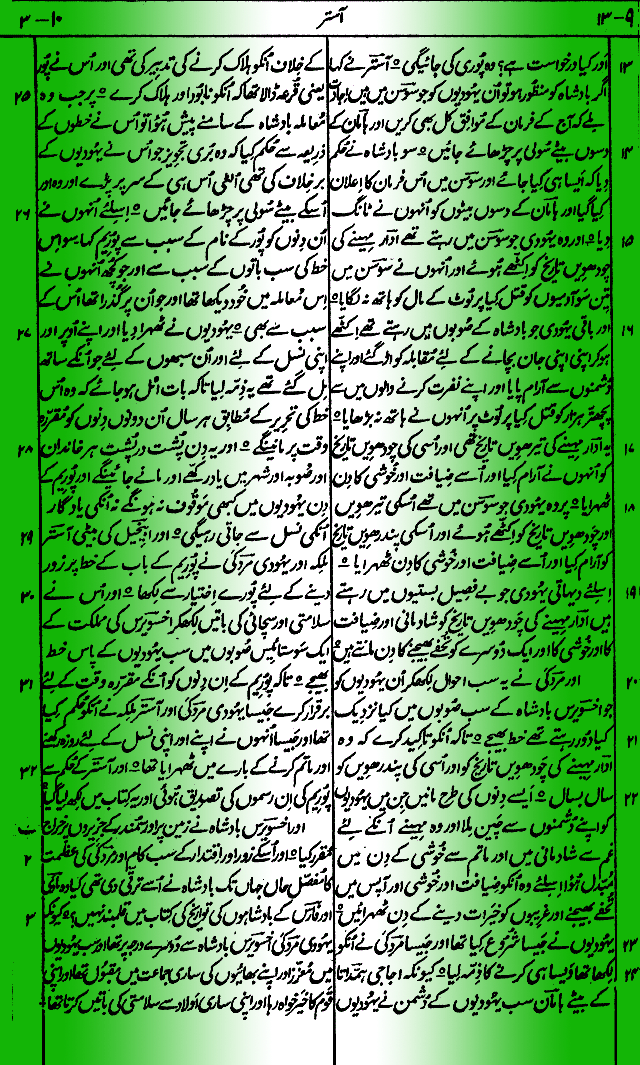
Verse-by-Verse Commentary and Explanation
Esther 9:13
Verse: Then said Esther If it please the king let it be granted to the Jews which are in Shushan to do tomorrow also according unto this day’s decree and let Haman’s ten sons be hanged upon the gallows
English Explanation: Queen Esther requests the king to extend the decree for one more day specifically in the capital city of Shushan. This was not out of vindictiveness, but a strategic move to completely neutralize the lingering anti-Semitic factions who were still planning to eliminate the Jews. Additionally, she asks for the public hanging of Haman’s ten dead sons to serve as a stark deterrent to any remaining enemies of the Jewish community.
Urdu Explanation (تفصیل): ملکہ آستیر بادشاہ سے درخواست کرتی ہے کہ دارالحکومت شوشن میں یہودیوں کو ایک اور دن کے لیے اپنے دفاع کی اجازت دی جائے۔ یہ کوئی ذاتی انتقام نہیں تھا بلکہ ان دشمنوں کا مکمل خاتمہ تھا جو اب بھی خفیہ طور پر سازشیں کر رہے تھے۔ ہامان کے دس بیٹوں کو سرعام پھانسی پر لٹکانے کا مقصد یہ تھا کہ باقی ماندہ دشمنوں کے دلوں میں عبرت پیدا ہو اور وہ دوبارہ سر اٹھانے کی جرات نہ کریں۔
Esther 9:14
Verse: And the king commanded it so to be done and the decree was given at Shushan and they hanged Haman’s ten sons
English Explanation: King Ahasuerus grants Esther’s request immediately. The royal command is issued in Shushan, authorizing an extra day of defense, and the bodies of Haman’s ten sons are publicly exposed on the gallows. This publicly validated the Jewish victory and signaled that the crown fully supported them.
Urdu Explanation (تفصیل): اخششویرس بادشاہ نے آستیر کی درخواست کو فوری طور پر قبول کرتے ہوئے نیا فرمان جاری کیا۔ شوشن میں اس حکم نامے کا اعلان کیا گیا اور ہامان کے دس بیٹوں کی لاشوں کو پھانسی کے تختے پر لٹکا دیا گیا تاکہ سب پر واضح ہو جائے کہ شاہی دربار اب یہودیوں کے ساتھ کھڑا ہے۔
Esther 9:15
Verse: For the Jews that were in Shushan gathered themselves together on the fourteenth day also of the month Adar and slew three hundred men at Shushan but on the prey they laid not their hand
English Explanation: On the extended fourteenth day of the month of Adar, the Jews in Shushan defended themselves again, neutralizing three hundred hostile men. Crucially, the text emphasizes that they did not touch the financial plunder. This shows their motive was purely survival and justice, not economic gain or robbery.
Urdu Explanation (تفصیل): ادار کے مہینے کی چودہویں تاریخ کو شوشن کے یہودی دوبارہ اکٹھے ہوئے اور انہوں نے مزید تین سو دشمنوں کا خاتمہ کیا۔ یہاں بھی اس بات پر زور دیا گیا ہے کہ انہوں نے مالِ غنیمت یا لوٹ مار کو ہاتھ تک نہیں لگایا، جس سے یہ ثابت ہوتا ہے کہ ان کا مقصد صرف اپنی بقا اور تحفظ تھا، نہ کہ مالی فائدہ۔
Esther 9:16
Verse: But the other Jews that were in the king’s provinces gathered themselves together and stood for their lives and had rest from their enemies and slew of their foes seventy and five thousand but they laid not their hands on the prey
English Explanation: While Shushan fought for an extra day, the Jews living throughout the other provinces of Persia completed their defense on the thirteenth day. They successfully defeated 75,000 of their armed attackers, securing peace and rest. Like their brethren in the capital, they strictly abstained from taking any plunder.
Urdu Explanation (تفصیل): دارالحکومت کے باہر سلطنت کے دیگر صوبوں میں رہنے والے یہودیوں نے تیرہویں تاریخ کو ہی اپنے دفاع کا کام مکمل کر لیا تھا۔ انہوں نے اپنے اوپر حملہ کرنے والے 75,000 دشمنوں کو ہلاک کر کے امن قائم کیا۔ انہوں نے بھی دارالحکومت کے یہودیوں کی طرح لوٹ مار سے مکمل پرہیز کیا۔
Esther 9:17
Verse: On the thirteenth day of the month Adar and on the fourteenth day of the same rested they and made it a day of feasting and gladness
English Explanation: In the provinces, the fighting took place on the thirteenth of Adar, meaning their victory and rest began on the fourteenth. They instantly transformed this day into a spontaneous celebration filled with joy, sharing food, and deep relief.
Urdu Explanation (تفصیل): صوبوں میں رہنے والے یہودیوں کے لیے جنگ تیرہ تاریخ کو ختم ہو گئی تھی، اس لیے چودہویں تاریخ ان کے لیے سکون اور آرام کا دن بن گئی۔ انہوں نے اس دن کو جشن، خوشی اور ضیافت کے دن کے طور پر منایا۔
Esther 9:18
Verse:But the Jews that were at Shushan assembled together on the thirteenth day thereof and on the fourteenth thereof and on the fifteenth day of the same they rested and made it a day of feasting and gladness
English Explanation: Because the Jews in the capital city of Shushan had to fight on both the thirteenth and fourteenth days of Adar, their day of rest and celebration fell on the fifteenth day. This historical timeline accounts for why Purim is celebrated over two distinct days depending on the location.
Urdu Explanation (تفصیل): چونکہ شوشن کے یہودیوں کو تیرہ اور چودہ دونوں تاریخوں کو لڑنا پڑا تھا، اس لیے ان کا آرام اور جشن پندرہ تاریخ کو ہوا۔ یہی وجہ ہے کہ پوریم کا تہوار مختلف مقامات کی مناسبت سے دو الگ دنوں میں منایا جاتا ہے۔
Esther 9:19
Verse: Therefore the Jews of the villages that dwelt in the unwalled towns made the fourteenth day of the month Adar a day of gladness and feasting and a good day and of sending portions one to another
English Explanation: The Jews living in rural areas and unwalled towns established the fourteenth of Adar as their regular holiday. It became a day characterized by deep joy, shared meals, and the beautiful tradition of sending gifts of food to one another, cementing community bonds.
Urdu Explanation (تفصیل): دیہاتوں اور غیر محفوظ شہروں میں رہنے والے یہودیوں نے ادار کی چودہویں تاریخ کو خوشی، ضیافت اور مبارکباد کا دن مقرر کیا۔ اس دن انہوں نے ایک دوسرے کو کھانے کے تحائف بھیجے، جس سے برادری میں محبت اور اتحاد کو فروغ ملا۔
Esther 9:20
Verse: And Mordecai wrote these things and sent letters unto all the Jews that were in all the provinces of the king Ahasuerus both nigh and far
English Explanation: Mordecai, now acting with supreme royal authority, officially records these miraculous events. He sends formal letters to every Jewish community throughout the vast Persian empire, ensuring that the story of their deliverance is preserved.
Urdu Explanation (تفصیل): مردکی نے، جو اب سلطنت کا وزیر اعظم بن چکا تھا، ان تمام معجزاتی واقعات کو قلمبند کیا اور شاہ اخششویرس کے تمام صوبوں میں رہنے والے دور اور نزدیک کے تمام یہودیوں کو سرکاری خطوط بھیجے۔
Esther 9:21
Verse: To stablish this among them that they should keep the fourteenth day of the month Adar and the fifteenth day of the same yearly
English Explanation: The core purpose of Mordecai’s letters was to institutionalize an annual festival. He commands all Jews to observe both the fourteenth and fifteenth days of Adar every single year, uniting the celebrations of both the provincial and metropolitan Jews.
Urdu Explanation (تفصیل): مردکی کے خطوط کا اصل مقصد اس جشن کو ایک سالانہ روایت بنانا تھا۔ اس نے حکم دیا کہ ہر سال ادار مہینے کی چودہویں اور پندرہویں تاریخ کو یادگاری تہوار کے طور پر منایا جائے تاکہ دیہاتی اور شہری دونوں علاقوں کا جشن متحد ہو سکے۔
Esther 9:22
Verse:As the days wherein the Jews rested from their enemies and the month which was turned unto them from sorrow to joy and from mourning into a good day that they should make them days of feasting and joy and of sending portions one to another and gifts to the poor
English Explanation: This verse highlights the deep spiritual and emotional theme of Esther: total reversal. A month meant for genocide and mourning became a season of ultimate joy. Mordecai establishes three pillars for Purim: feasting, sharing food with neighbors, and explicitly giving charitable gifts to the poor so that everyone can rejoice regardless of their financial standing.
Urdu Explanation (تفصیل): یہ آیت کتابِ آستیر کے مرکزی خیال کو ظاہر کرتی ہے: حالات کا یکسر بدل جانا۔ غم خوشی میں اور ماتم عید میں بدل گیا۔ مردکی نے اس تہوار کے لیے تین اہم چیزیں مقرر کیں: جشن منانا، پڑوسیوں کو کھانے کے تحائف بھیجنا، اور غریبوں کی مالی مدد کرنا تاکہ معاشرے کا ہر طبقہ اس خوشی میں شریک ہو سکے۔
Esther 9:23
Verse: And the Jews undertook to do as they had begun and as Mordecai had written unto them
English Explanation: The Jewish community unanimously accepts Mordecai’s directive. What started as a spontaneous celebration of survival becomes a formal, binding tradition embraced by the entire nation across generations.
Urdu Explanation (تفصیل): یہودیوں نے متفقہ طور پر مردکی کی اس ہدایت کو قبول کر لیا۔ جو جشن پہلے ایک وقتی خوشی کے طور پر شروع ہوا تھا، اب وہ پوری قوم کے لیے ایک باقاعدہ مذہبی اور ثقافتی روایت بن گیا۔
Esther 9:24
Verse: Because Haman the son of Hammedatha the Agagite the enemy of all the Jews had devised against the Jews to destroy them and had cast Pur that is the lot to consume them and to destroy them
English Explanation: The text provides the historical context for the holiday. It recalls how Haman the Agagite planned a total genocide and cast the “Pur” (the lot) to magically determine the perfect day to wipe the Jewish people out.
Urdu Explanation (تفصیل): یہاں اس تہوار کا پس منظر بیان کیا گیا ہے کہ کس طرح یہودیوں کے جانی دشمن ہامان نے ان کی نسل کشی کا منصوبہ بنایا تھا اور ان کو ہلاک کرنے کے لیے بہترین دن کا انتخاب کرنے کی خاطر ‘پور’ یعنی قرعہ ڈالا تھا۔
Esther 9:25
Verse:But when Esther came before the king he commanded by letters that his wicked device which he devised against the Jews should return upon his own head and that he and his sons should be hanged on the gallows
English Explanation: The plot turned completely when Esther courageously risked her life to intercede before the king. Ahasuerus revoked the psychological momentum of Haman’s plot, causing the evil scheme to backfire entirely on Haman and his family.
Urdu Explanation (تفصیل): لیکن جب ملکہ آستیر نے اپنی جان خطرے میں ڈال کر بادشاہ کے سامنے فریاد کی، تو بادشاہ نے نئے احکامات جاری کیے۔ نتیجہ یہ ہوا کہ ہامان کی مکارانہ سازش خود اسی کے گلے پڑ گئی اور وہ اپنے بیٹوں سمیت پھانسی چڑھا۔
Esther 9:26
Verse: Wherefore they called these days Purim after the name of Pur Therefore for all the words of this letter and of that which they had seen concerning this matter and which had come unto them
English Explanation: The festival receives its official name: Purim, derived from the Persian word Pur (meaning “lot”). It stands as a mocking reminder of Haman’s failed lottery; what man planned by fate, God overruled by divine providence.
Urdu Explanation (تفصیل): اسی وجہ سے اس تہوار کا نام پوریم رکھا گیا، جو لفظ ‘پور’ (قرعہ) سے نکلا ہے۔ یہ نام ہامان کی ناکام قسمت آزمائی کی یاد دلاتا ہے کہ جسے انسان اتفاق یا تقدیر سمجھتا ہے، خدا اسے اپنے لوگوں کی بھلائی کے لیے بدل دیتا ہے۔
Esther 9:27
Verse:The Jews ordained and took upon them and upon their seed and upon all such as joined themselves unto them so as it should not fail that they would keep these two days according to their writing and according to their appointed time every year
English Explanation: The observance of Purim is made an unalterable national covenant. It applied not just to those who witnessed the event, but to their descendants and any future converts who joined the Jewish faith.
Urdu Explanation (تفصیل): یہودیوں نے اس تہوار کو ایک مستقل عہد بنا لیا۔ یہ حکم نہ صرف اس وقت موجود لوگوں کے لیے تھا، بلکہ ان کی آنے والی نسلوں اور ان تمام لوگوں کے لیے بھی تھا جو مستقبل میں یہودی مذہب کا حصہ بننے والے تھے۔
Esther 9:28
Verse: And that these days should be remembered and kept throughout every generation every family every province and every city and that these days of Purim should not fail from among the Jews nor the memorial of them perish from their seed
English Explanation: This directive ensures that the memory of God’s deliverance remains alive forever. No matter how much time passes or where the Jewish diaspora scatters across different cities and nations, Purim must never be forgotten.
Urdu Explanation (تفصیل): اس کا مقصد یہ تھا کہ خدا کی اس عظیم نجات کی یاد کبھی مٹ نہ پائے۔ نسل در نسل، خاندان در خاندان، اور دنیا کے ہر شہر اور صوبے میں پوریم کا تہوار ہمیشہ زندہ رکھا جائے تاکہ ان کی اولاد اپنے ماضی کو نہ بھولے۔
Esther 9:29
Verse: Then Esther the queen the daughter of Abihail and Mordecai the Jew wrote with all authority to confirm this second letter of Purim
English Explanation: To give the festival absolute legal and religious permanence, Queen Esther and Mordecai issue a joint decree utilizing their full political power. This second letter officially establishes Purim as law.
Urdu Explanation (تفصیل): اس تہوار کو مستقل قانونی اور مذہبی حیثیت دینے کے لیے، ملکہ آستیر اور مردکی نے اپنے مشترکہ شاہی اور سیاسی اختیارات کا استعمال کرتے ہوئے دوسرا سرکاری خط جاری کیا تاکہ پوریم کی تصدیق کی جا سکے۔
Esther 9:30
Verse: And he sent the letters unto all the Jews to the hundred twenty and seven provinces of the kingdom of Ahasuerus with words of peace and truth
English Explanation: The official letters are systematically distributed to all 127 provinces of the Persian Empire. The message contains words of “peace and truth,” offering emotional healing and theological assurance to a community that had recently faced annihilation.
Urdu Explanation (تفصیل): یہ خطوط سلطنت کے تمام 127 صوبوں میں بھیجے گئے۔ ان خطوط کا پیغام “سلامتی اور سچائی” پر مبنی تھا، جو اس خوفزدہ قوم کے لیے تسلی اور امید کا باعث بنا۔
Esther 9:31
Verse:To confirm these days of Purim in their times appointed according as Mordecai the Jew and Esther the queen had enjoined them and as they had decreed for themselves and for their seed the matters of the fastings and their cry
English Explanation: The decree legally solidifies the scheduled dates for Purim. It also references the established customs of fasting and prayer that preceded their victory, ensuring that the solemn spiritual reflection (the Fast of Esther) is remembered alongside the joyful feasting.
Urdu Explanation (تفصیل): اس فرمان نے پوریم کی تاریخوں کو حتمی شکل دی۔ اس میں اس روزے اور گریہ وزاری کا بھی ذکر کیا گیا جو فتح سے پہلے انہوں نے خدا کے سامنے کی تھی، تاکہ خوشی کے ساتھ ساتھ اس روحانی جدوجہد کو بھی یاد رکھا جائے۔
Esther 9:32
Verse: And the decree of Esther confirmed these matters of Purim and it was written in the book
English Explanation: Queen Esther’s authoritative decree officially seals the religious regulations of Purim, and the entire historical account is written down in the royal records or the sacred scroll (Megillah) for perpetuity.
Urdu Explanation (تفصیل): ملکہ آستیر کے اس شاہی حکم نے پوریم کے معاملات کو مستقل طور پر طے کر دیا اور اس تمام واقعے کو شاہی تاریخ یا مقدس کتاب (صحیفے) میں ہمیشہ کے لیے درج کر لیا گیا۔
Chapter 10:1
Verse: And the king Ahasuerus laid a tribute upon the land and upon the isles of the sea
English Explanation: Chapter 10 shifts focus to the geopolitical reality post-Purim. Under the wise administration of Mordecai, the economic power of King Ahasuerus expands significantly, allowing him to successfully levy taxes across both the mainland and distant coastal territories.
Urdu Explanation (تفصیل): باب 10 کا آغاز سلطنت کی معاشی ترقی سے ہوتا ہے۔ مردکی کی بہترین حکمتِ عملی کی بدولت بادشاہ اخششویرس نے زمین اور سمندر کے جزیروں پر نئے ٹیکس نافذ کیے، جو سلطنت کے وسیع اثر و رسوخ اور معاشی استحکام کو ظاہر کرتا ہے۔
Chapter 10:2
Verse: And all the acts of his power and of his might and the declaration of the greatness of Mordecai whereunto the king advanced him are they not written in the book of the chronicles of the kings of Media and Persia
English Explanation: The author highlights that the political accomplishments of King Ahasuerus and the extraordinary advancement of Mordecai were globally recognized facts, documented explicitly in the official historical archives of Media and Persia.
Urdu Explanation (تفصیل): بادشاہ اخششویرس کی طاقت کے کارنامے اور مردکی کی عظمت و ترقی کا احوال میڈیا اور فارس کے بادشاہوں کی تواریخ کی کتابوں میں درج ہے۔ یہ اس بات کا ثبوت ہے کہ یہ واقعات تاریخی طور پر مسلمہ تھے۔
Chapter 10:3
Verse: For Mordecai the Jew was next unto king Ahasuerus and great among the Jews and accepted of the multitude of his brethren seeking the wealth of his people and speaking peace to all his seed
English Explanation: The book of Esther concludes with a portrait of Mordecai as the Grand Vizier of Persia, second only to the King. Despite his immense secular power, he remained humble, deeply loved by his people, and completely dedicated to protecting, enriching, and ensuring peace for the future generations of Israel.
Urdu Explanation (تفصیل): کتابِ آستیر کا اختتام مردکی کی تعریف پر ہوتا ہے جو سلطنتِ فارس میں بادشاہ کے بعد دوسرے نمبر پر تھا۔ اتنے بڑے عہدے پر ہونے کے باوجود وہ اپنی قوم کا خیرخواہ رہا، غریبوں اور کمزوروں کے حقوق کے لیے کام کرتا رہا اور اپنی نسل کے لیے امن اور سلامتی کا باعث بنا۔