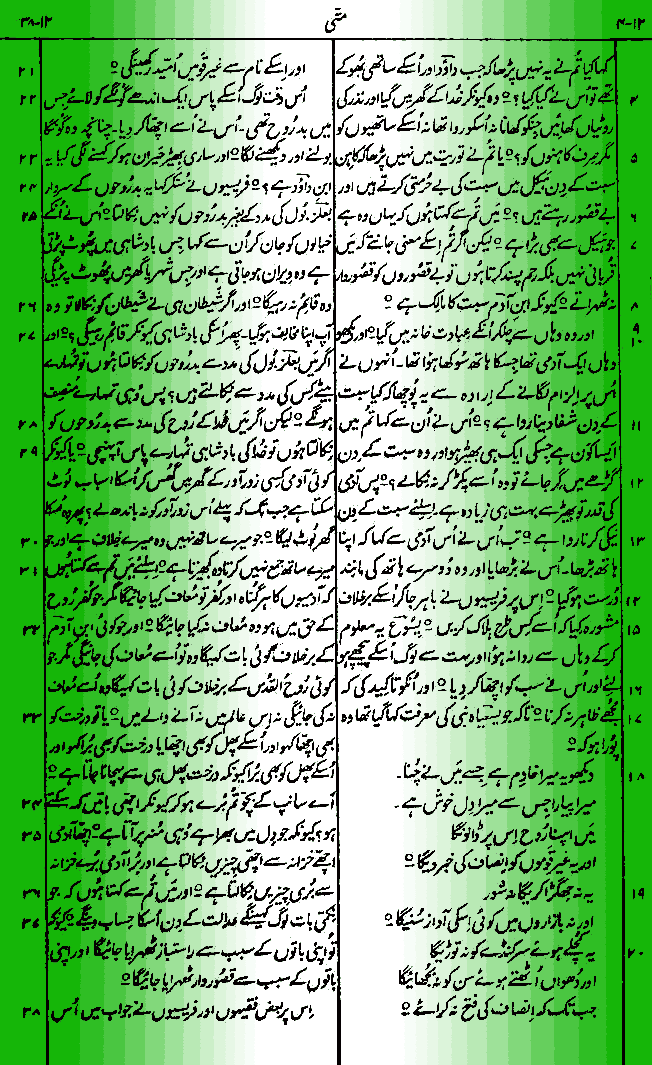
Matthew 12:3–38 Verse-by-Verse Commentary
Matthew 12:3
Verse: But he said unto them Have ye not read what David did when he was an hungred and they that were with him
-
English Explanation: Jesus defends His disciples who were plucking grain on the Sabbath by referencing King David (1 Samuel 21). When David and his men were starving, human necessity and mercy took precedence over ceremonial rituals. Jesus uses this historical scriptural fact to silence the overly legalistic Pharisees.
-
Urdu Explanation: یسوع نے فرسیوں کو جواب دیا کہ کیا انہوں نے داؤد نبی کی تاریخ نہیں پڑھی؟ جب داؤد اور ان کے ساتھی بھوکے تھے تو انہوں نے انسانی ضرورت کو رسمی قوانین پر فوقیت دی۔ یسوع یہ واضح کر رہے ہیں کہ انسانی زندگی اور رحم کا درجہ ظاہری قوانین سے بڑھ کر ہے۔
Matthew 12:4
Verse: How he entered into the house of God and did eat the shewbread which was not lawful for him to eat neither for them which were with him but only for the priests
-
English Explanation: Under the Mosaic Law, the consecrated “shewbread” (Showbread) in the Tabernacle was reserved strictly for the Levitical priests. However, because of extreme hunger, David was allowed to eat it. Jesus demonstrates that God values preserving human life over strict ritualistic compliance.
-
Urdu Explanation: اس آیت میں ذکر ہے کہ کس طرح داؤد خدا کے گھر (خیمہ اجتماع) میں داخل ہوئے اور وہ مقدس روٹیاں کھائیں جو صرف کاہنوں کے لیے مخصوص تھیں۔ یسوع ثابت کرتے ہیں کہ خدا رسمی قربانیوں یا اصولوں سے زیادہ انسان کی بقا اور اس کی ضرورت کو اہمیت دیتا ہے۔
Matthew 12:5
Verse: Or have ye not read in the law how that on the sabbath days the priests in the temple profane the sabbath and are blameless
-
English Explanation: Jesus gives a second scriptural defense based on temple practices. Priests perform manual labor on the Sabbath by slaughtering animals and maintaining fires, acts that would technically “profane” the Sabbath rest, yet they are considered blameless because their work serves God’s house.
-
Urdu Explanation: یسوع شریعت سے ایک اور مثال دیتے ہیں کہ ہیکل کے کاہن سبت کے دن قربانی کے جانور ذبح کرنے اور دیگر کام کرنے کے باوجود گناہگار نہیں ٹھہرتے۔ خدا کی عبادت اور ہیکل کی خدمت کے لیے سبت کے دن کام کرنا جائز مانا جاتا تھا۔
Matthew 12:6
Verse: But I say unto you That in this place is one greater than the temple
-
English Explanation: This is a monumental claim of divinity. If the temple service justified the priests’ work on the Sabbath, Jesus’ ministry justifies His disciples’ actions because Jesus is greater, holier, and more authoritative than the physical temple structure itself.
-
Urdu Explanation: یہاں یسوع اپنی الٰہی پہچان اور اختیار کا اعلان کرتے ہیں۔ وہ فرماتے ہیں کہ یہاں وہ موجود ہے جو ہیکل سے بھی بڑا ہے۔ اگر ہیکل کی خدمت کاہنوں کو سبت کے گناہ سے پاک رکھتی ہے، تو یسوع (جو خدا کا حقیقی گھر ہیں) کے ساتھ ہونا شاگردوں کو راستباز ٹھہراتا ہے۔
Matthew 12:7
Verse: But if ye had known what this meaneth I will have mercy and not sacrifice ye would not have condemned the guiltless
-
English Explanation: Quoting Hosea 6:6, Jesus targets the heart attitude of the Pharisees. God desires compassion, love, and mercy toward others far more than flawless outward religious performances and sacrifices. Had they understood love, they wouldn’t have falsely accused the innocent disciples.
-
Urdu Explanation: یسوع ہوسیع نبی کا اقتباس پیش کرتے ہوئے فرماتے ہیں کہ خدا قربانی سے زیادہ رحم پسند کرتا ہے۔ اگر فرسیوں کے دلوں میں رحم اور محبت ہوتی، تو وہ بھوکے شاگردوں پر سبت توڑنے کا جھوٹا الزام لگا کر انہیں قصوروار نہ ٹھہراتے۔
Matthew 12:8
Verse: For the Son of man is Lord even of the sabbath day
-
English Explanation: Jesus explicitly declares His supreme authority. As the “Son of man” (the Messiah), He created the Sabbath and possesses the sole authority to define its purpose, meaning, and proper observance, placing Himself completely above Pharisaic traditions.
-
Urdu Explanation: یسوع صاف طور پر اعلان کرتے ہیں کہ “ابنِ آدم” (مسیح) سبت کے دن کا بھی مالک ہے۔ چونکہ سبت کو خدا نے انسان کی بھلائی کے لیے بنایا تھا، اس لیے یسوع کو یہ مکمل اختیار ہے کہ وہ اس کے حقیقی مقصد کی وضاحت کریں۔
Matthew 12:9
Verse: And when he was departed thence he went into their synagogue
-
English Explanation: Moving from the grain fields, Jesus enters the local Jewish synagogue on the same Sabbath day. He does not hide His teachings but walks directly into the heart of Jewish institutional worship to confront structural legalism.
-
Urdu Explanation: یہاں سے رخصت ہو کر یسوع فرسیوں کے مقامی عبادت خانے (سنّاگونی) میں داخل ہوئے۔ وہ اپنے پیغام کو چھپاتے نہیں بلکہ سیدھے ان کے مرکز میں جا کر سچائی کی تعلیم دیتے ہیں۔
Matthew 12:10
Verse: And behold there was a man which had his hand withered And they asked him saying Is it lawful to heal on the sabbath days that they might accuse him
-
English Explanation: The religious leaders view a disabled man not with compassion, but as bait. They maliciously question Jesus about healing on the Sabbath, hoping He will say “yes” so they can legally charge Him with breaking the Sabbath commandment.
-
Urdu Explanation: عبادت خانے میں ایک سُوکھے ہاتھ والا آدمی موجود تھا۔ فرسیوں نے اس معذور انسان کو ہمدردی کی نظر سے نہیں دیکھا، بلکہ یسوع کو پھنسانے کے لیے سوال کیا کہ کیا سبت کے دن شفا دینا جائز ہے؟ تاکہ وہ ان پر مقدمہ چلا سکیں۔
Matthew 12:11
Verse: And he said unto them What man shall there be among you that shall have one sheep and if it fall into a pit on the sabbath day will he not lay hold on it and lift it out
-
English Explanation: Jesus exposes their hypocrisy by appealing to their financial self-interest. Any Pharisee would break Rabbinic traditions to rescue a costly sheep trapped in a ditch on the Sabbath. They value their livestock more than human lives.
-
Urdu Explanation: یسوع ان کی منافقت کو بے نقاب کرتے ہوئے کہتے ہیں کہ اگر تمہاری کوئی بھی بھیڑ سبت کے دن گڑھے میں گر جائے، تو تم مالی نقصان سے بچنے کے لیے اسے فوراً نکال لو گے۔ تم اپنے جانور کی پرواہ کرتے ہو لیکن انسان کی نہیں۔
Matthew 12:12
Verse: How much then is a man better than a sheep Wherefore it is lawful to do well on the sabbath days
-
English Explanation: Jesus highlights the supreme value of human life created in God’s image. If saving an animal on the Sabbath is acceptable, performing an act of healing and doing good for a human being is fundamentally righteous and lawful.
-
Urdu Explanation: یسوع فرماتے ہیں کہ انسان کی قدر و قیمت ایک بھیڑ سے کہیں زیادہ ہے۔ اس لیے سبت کے دن کسی کے ساتھ نیکی کرنا، شفا دینا اور بھلائی کا کام کرنا شریعت کے عین مطابق اور جائز ہے۔
Matthew 12:13
Verse: Then saith he to the man Stretch forth thine hand And he stretched it forth and it was restored whole like as the other
-
English Explanation: Jesus heals the man instantly using only His spoken word, meaning no physical work was performed to trigger their trap. The man’s faith is shown through obedience; when he extends his crippled arm, it becomes completely whole.
-
Urdu Explanation: یسوع نے اس آدمی سے فرمایا کہ اپنا ہاتھ آگے بڑھا، اور جیسے ہی اس نے ہاتھ بڑھایا، وہ دوسرے ہاتھ کی طرح بالکل تندرست ہو گیا۔ یسوع نے بغیر کسی جسمانی مشقت کے صرف کلام سے شفا دی تاکہ فرسیوں کا اعتراض ختم ہو جائے۔
Matthew 12:14
Verse: Then the Pharisees went out and held a council against him how they might destroy him
-
Explanation: Instead of rejoicing over a miraculous healing, the Pharisees allow hatred to blind them. Ironically, they plot a brutal murder on the Sabbath, proving they are the ones truly violating the holiness of the day.
-
Urdu Explanation: معجزہ دیکھنے کے باوجود فرسیوں کے دل سخت رہے۔ وہ وہاں سے باہر گئے اور یسوع کو قتل کرنے کی سازشیں کرنے لگے۔ وہ سبت کے دن نیکی کرنے کو گناہ سمجھتے تھے لیکن اسی دن قتل کی سازش کرنا ان کے لیے جائز تھا۔
Matthew 12:15
Verse: But when Jesus knew it he withdrew himself from thence and great multitudes followed him and he healed them all
-
English Explanation: Aware of their deadly plots, Jesus strategically leaves the area because His hour to die had not yet arrived. Despite withdrawing to rural regions, massive crowds seek Him out, and He compassionately heals everyone who is sick.
-
Urdu Explanation: جب یسوع کو ان کے ارادوں کا علم ہوا، تو وہ وہاں سے چلے گئے کیونکہ ابھی ان کی قربانی کا وقت نہیں آیا تھا۔ اس کے باوجود ایک بڑی بھیڑ ان کے پیچھے چلی آئی اور انہوں نے سب بیماروں کو شفا بخشی۔
Matthew 12:16
Verse: And charged them that they should not make him known
-
English Explanation: Jesus instructs those healed not to broadcast His identity. He wants to avoid political uprisings, premature confrontations with Jerusalem’s leadership, and crowds seeking Him solely for physical miracles rather than spiritual salvation.
-
Urdu Explanation: یسوع نے شفا پانے والوں کو تاکید کی کہ وہ ان کی شہرت نہ پھیلائیں۔ وہ نہیں چاہتے تھے کہ لوگ انہیں صرف ایک دنیاوی بادشاہ یا معجزہ دکھانے والا سمجھیں، یا وقت سے پہلے ان کی مخالفت میں شدت آئے۔
Matthew 12:17
Verse: That it might be fulfilled which was spoken by Esaias the prophet saying
-
English Explanation: Matthew emphasizes that Jesus’ quiet, non-confrontational manner was not a sign of fear or weakness, but the exact fulfillment of ancient Messianic prophecy found in Isaiah 42.
-
Urdu Explanation: متی رسول واضح کرتے ہیں کہ یسوع کا یہ حلیم اور پرامن رویہ کسی خوف کی وجہ سے نہیں تھا، بلکہ یہ یسعیاہ نبی کی اس پیشگوئی کو پورا کر رہا تھا جو صدیوں پہلے مسیح کے بارے میں کی گئی تھی۔
Matthew 12:18
Verse: Behold my servant whom I have chosen my beloved in whom my soul is well pleased I will put my spirit upon him and he shall shew judgment to the Gentiles
-
English Explanation: This prophecy confirms Jesus as God’s chosen, beloved Messiah, empowered directly by the Holy Spirit. His ultimate mission extends far beyond Israel; He will proclaim justice and divine truth to the Gentile nations.
-
Urdu Explanation: یہ آیت یسعیاہ 42 کی پیشگوئی ہے جہاں خدا یسوع کو اپنا پسندیدہ اور محبوب خادم کہتا ہے۔ خدا اپنی روح پاک ان پر نازل کرتا ہے تاکہ وہ غیر قوموں (دنیا بھر کے انسانوں) تک سچائی اور انصاف کا پیغام پہنچائیں۔
Matthew 12:19
Verse: He shall not strive nor cry neither shall any man hear his voice in the streets
-
English Explanation: Unlike earthly rulers or military conquerors, the Messiah does not rely on loud political shouting, violent revolutions, or self-promoting street protests to establish His heavenly kingdom. He operates in quiet power.
-
Urdu Explanation: دنیاوی بادشاہوں کے برعکس، مسیح شور شرابا، لڑائی جھگڑا یا سڑکوں پر اپنی تشہیر نہیں کریں گے۔ ان کی بادشاہت دلوں پر حکومت کرنے والی اور پرامن ہوگی۔
Matthew 12:20
Verse: A bruised reed shall he not break and smoking flax shall he not quench till he send forth judgment unto victory
-
English Explanation: This beautiful metaphor emphasizes Jesus’ extreme tenderness. A “bruised reed” and “smoking flax” represent broken, weak, and spiritually exhausted people. Jesus will not crush or extinguish them; He will gently restore them until justice triumphs completely.
-
Urdu Explanation: “کچلے ہوئے سرکنڈے” اور “دھواں اٹھتی بتی” سے مراد وہ کمزور اور ٹوٹے ہوئے لوگ ہیں جنہیں دنیا ناکارہ سمجھتی ہے۔ یسوع ان کو ختم کرنے کے بجائے تسلی دیتے ہیں اور اپنی محبت سے دوبارہ زندہ کرتے ہیں۔
Matthew 12:21
Verse: And in his name shall the Gentiles trust
-
English Explanation: The ultimate conclusion of the Messiah’s global work is that people from all non-Jewish nations (Gentiles) will place their hope, faith, and eternal trust in Him for salvation.
-
Urdu Explanation: اس کا آخری نتیجہ یہ ہوگا کہ نہ صرف یہودی، بلکہ دنیا کی تمام غیر قومیں اور نسلیں نجات کے لیے یسوع کے نام پر بھروسہ اور ایمان رکھیں گی۔
Matthew 12:22
Verse: Then was brought unto him one possessed with a devil blind and dumb and he healed him insomuch that the blind and dumb both spake and saw
-
English Explanation: A severely afflicted man, completely controlled by a demon causing blindness and muteness, is brought to Jesus. Jesus delivers and heals him instantly, demonstrating absolute authority over demonic forces.
-
Urdu Explanation: ایک ایسے آدمی کو یسوع کے پاس لایا گیا جو بدروح کے قبضے میں ہونے کی وجہ سے اندھا اور گونگا تھا۔ یسوع نے اسے فوراً شفا دی، جس سے وہ بولنے اور دیکھنے لگا، جو کہ تاریکی کی قوتوں پر ان کے مکمل اختیار کا ثبوت تھا۔
Matthew 12:23
Verse: And all the people were amazed and said Is not this the son of David
-
English Explanation: The astonished eyewitnesses begin wondering if Jesus is the long-awaited “Son of David” (the prophetic title for the conquering Messiah who would liberate Israel).
-
Urdu Explanation: یہ حیرت انگیز معجزہ دیکھ کر عوام دنگ رہ گئے اور کہنے لگے کہ کیا یہ وہی “ابنِ داؤد” (مسیح موعود) تو نہیں جس کا انتظار صدیوں سے کیا جا رہا تھا؟
Matthew 12:24
Verse: But when the Pharisees heard it they said This fellow doth not cast out devils but by Beelzebub the prince of the devils
-
English Explanation: Unable to deny the physical reality of the miracle, the malicious Pharisees try to ruin His reputation by accusing Jesus of using witchcraft, claiming He drives out lesser demons through the power of Satan (Beelzebub).
-
Urdu Explanation: فرسیوں نے جب یہ سنا تو وہ معجزے کا انکار نہ کر سکے۔ انہوں نے حسد میں آ کر لوگوں کو گمراہ کرنے کے لیے الزام لگایا کہ یہ شخص بدروحوں کے سردار “بعلزبول” (شیطان) کی طاقت سے بدروحوں کو نکالتا ہے۔
Matthew 12:25
Verse: And Jesus knew their thoughts and said unto them Every kingdom divided against itself is brought to desolation and every city or house divided against itself shall not stand
-
English Explanation: Jesus, reading their innermost thoughts, exposes the logical absurdity of their claim. No kingdom, city, or household can survive if its members fight against each other; internal war leads to immediate destruction.
-
Urdu Explanation: یسوع ان کے دلوں کے خیالات کو جانتے تھے اور انہوں نے عقل پر مبنی جواب دیا کہ کوئی بھی سلطنت، شہر یا گھر اگر اپنے ہی خلاف تقسیم ہو جائے تو وہ برباد ہو جاتا ہے۔ اندرونی جنگ کسی کو فائدہ نہیں پہنچاتی۔
Matthew 12:26
Verse: And if Satan cast out Satan he is divided against himself how shall then his kingdom stand
-
English Explanation: If Satan empowers Jesus to drive out his own demons, Satan is actively destroying his own dark kingdom and undoing his own work, which makes no strategic sense.
-
Urdu Explanation: اگر شیطان ہی شیطان کو نکالنے لگے، تو وہ خود اپنے ہی خلاف کھڑا ہو جائے گا۔ ایسی صورت میں شیطان کی سلطنت کیسے قائم رہ سکتی ہے؟ فرسیوں کا الزام منطقی طور پر بالکل غلط تھا۔
Matthew 12:27
Verse: And if I by Beelzebub cast out devils by whom do your children cast them out therefore they shall be your judges
-
English Explanation: Some of the Pharisees’ own followers (“children”) practiced exorcism. Jesus asks: if my exorcisms are demonic, by whose power do your disciples perform theirs? Their own followers’ methods would judge and condemn the Pharisees’ double standards.
-
Urdu Explanation: فرسیوں کے اپنے شاگرد بھی بدروحیں نکالنے کا دعویٰ کرتے تھے۔ یسوع نے پوچھا کہ اگر میں شیطان کی مدد سے یہ کرتا ہوں، تو تمہارے شاگرد کس کی طاقت سے نکالتے ہیں؟ اس طرح ان کے اپنے شاگرد ہی ان کی منافقت پر فیصلہ سنانے والے ٹھہریں گے۔
Matthew 12:28
Verse: But if I cast out devils by the Spirit of God then the kingdom of God is come unto you
-
English Explanation: Since the demonic theory is disproven, the only logical conclusion is that Jesus drives out demons through the authentic power of the Holy Spirit, proving that the sovereign Kingdom of God has arrived in their midst.
-
Urdu Explanation: پس اگر میں خدا کی روح (روح القدس) کی قدرت سے بدروحوں کو نکالتا ہوں، تو یہ اس بات کا پکا ثبوت ہے کہ خدا کی بادشاہت تمہارے درمیان آ پہنچی ہے اور تمہیں اب توبہ کرنی چاہیے۔
Matthew 12:29
Verse: Or else how can one enter into a strong man’s house and spoil his goods except he first bind the strong man and then he will spoil his house
-
English Explanation: Jesus uses a robbery metaphor. Satan is the “strong man” holding humanity captive. Jesus is the stronger warrior who has successfully “bound” Satan, allowing Him to plunder Satan’s house and liberate human souls from demonic bondage.
-
Urdu Explanation: یسوع ایک مثال دیتے ہیں کہ کوئی شخص کسی طاقتور کے گھر میں گھس کر اس کا مال تب تک نہیں لوٹ سکتا جب تک وہ پہلے اس طاقتور کو باندھ نہ دے۔ یسوع نے شیطان کو باندھ دیا ہے، اسی لیے وہ ارواحِ خبیثہ کو نکال کر لوگوں کو آزاد کر رہے ہیں۔
Matthew 12:30
Verse: He that is not with me is against me and he that gathereth not with me scattereth abroad
-
English Explanation: Spiritual neutrality regarding Jesus is impossible. You are either actively aligned with Him, or you are opposing Him. Those who do not join Jesus in gathering souls into God’s kingdom are actively scattering them away.
-
Urdu Explanation: روحانی معاملات میں کوئی غیر جانبداری نہیں ہو سکتی۔ جو شخص یسوع کے ساتھ نہیں ہے، وہ ان کا مخالف ہے، اور جو ان کے ساتھ مل کر روحیں جمع نہیں کرتا، وہ دراصل انہیں گمراہی کی طرف بکھیر رہا ہے۔
Matthew 12:31
Verse: Wherefore I say unto you All manner of sin and blasphemy shall be forgiven unto men but the blasphemy against the Holy Ghost shall not be forgiven unto men
-
English Explanation: God’s grace can forgive all kinds of human sins and mistakes. However, “blasphemy against the Holy Spirit”—which is willfully, permanently rejecting the Spirit’s clear testimony of Christ and attributing God’s holy work to Satan—is unpardonable because the person refuses the only source of forgiveness.
-
Urdu Explanation: یسوع فرماتے ہیں کہ انسان کے تمام گناہ اور کفر معاف کیے جا سکتے ہیں، لیکن روح القدس کے خلاف کفر معاف نہیں کیا جائے گا۔ اس کا مطلب یہ ہے کہ حق کو جانتے بوجھتے ہوئے مستقل طور پر مسترد کرنا اور خدا کے کام کو شیطان کا کام کہنا انسان کو توبہ سے محروم کر دیتا ہے۔
Matthew 12:32
Verse: And whosoever speaketh a word against the Son of man it shall be forgiven him but whosoever speaketh against the Holy Ghost it shall not be forgiven him neither in this world neither in the world to come
-
English Explanation: An ignorant insult directed at Jesus during His humble human life (“Son of man”) can be forgiven upon future repentance. But hardening one’s heart permanently against the Holy Spirit’s ultimate convicting power leaves no path toward salvation in this life or eternity.
-
Urdu Explanation: اگر کوئی انسان ابنِ آدم (یسوع کے انسانی روپ) کے خلاف نادانی میں کچھ کہے تو توبہ کرنے پر معافی ممکن ہے۔ لیکن جو روح القدس کی گواہی کو جانتے ہوئے دانستہ مسترد کرتا ہے، اس کے لیے نہ اس جہان میں معافی ہے اور نہ آنے والے جہان میں۔
Matthew 12:33
Verse: Either make the tree good and his fruit good or else make the tree corrupt and his fruit corrupt for the tree is known by his fruit
-
English Explanation: Character and actions are intrinsically linked. A good tree naturally yields good fruit, while a rotten tree yields rotten fruit. Jesus’ good actions (healing people) prove He is good; the Pharisees’ wicked words prove their corrupt hearts.
-
Urdu Explanation: درخت اپنے پھل سے پہچانا جاتا ہے۔ اچھا درخت اچھا پھل لائے گا اور خراب درخت خراب پھل۔ یسوع کے شفا بخش معجزات (پھل) ثابت کرتے ہیں کہ وہ پاک ہیں، جبکہ فرسیوں کی زبان سے نکلنے والی باتیں ان کے خراب ہونے کی دلیل ہیں۔
Matthew 12:34
Verse: O generation of vipers how can ye being evil speak good things for out of the abundance of the heart the mouth speaketh
-
English Explanation: Jesus uses fierce language, calling the Pharisees a “brood of poisonous snakes.” Because their inner character is corrupt and malicious, it is impossible for them to speak authentic truth. Speech is simply the overflow of what fills the human heart.
-
Urdu Explanation: یسوع فرسیوں کو “سانپ کے بچے” کہہ کر پکارتے ہیں اور فرماتے ہیں کہ چونکہ وہ دل کے برے ہیں، اس لیے وہ اچھی باتیں کیسے کر سکتے ہیں؟ کیونکہ جو کچھ دل میں بھرا ہوتا ہے، زبان سے وہی باہر نکلتا ہے۔
Matthew 12:35
Verse: A good man out of the good treasure of the heart bringeth forth good things and an evil man out of the evil treasure bringeth forth evil things
-
English Explanation: The heart acts as a spiritual storehouse or treasury. A person who builds up a reserve of righteousness, love, and truth will naturally produce good deeds, whereas a wicked person will only manifest corruption and hatred.
-
Urdu Explanation: ایک نیک انسان اپنے دل کے اچھے خزانے سے اچھی باتیں اور نیک اعمال نکالتا ہے، جبکہ ایک بدکار انسان اپنے دل کے برے اور حسد سے بھرے خزانے سے صرف برائی اور نفرت ہی پھیلاتا ہے۔
Matthew 12:36
Verse: But I say unto you That every idle word that men shall speak they shall give account thereof in the day of judgment
-
English Explanation: Jesus gives a sobering warning about human speech. “Idle words” refer to careless, thoughtless, or malicious words spoken when a person thinks no one is listening. God records everything, and every person will face accountability on Judgment Day.
-
Urdu Explanation: یسوع ایک سنگین وارننگ دیتے ہیں کہ قیامت کے دن انسان کو اپنی زبان سے نکلے ہوئے ہر ایک فضول، بے کار اور نقصان دہ لفظ کا حساب دینا پڑے گا جسے وہ معمولی سمجھ کر بول دیتا ہے۔
Matthew 12:37
Verse: For by thy words thou shalt be justified and by thy words thou shalt be condemned
-
English Explanation: Words serve as the primary legal evidence of a person’s true internal spiritual condition. Your spoken words will either validate your saving faith and justify you, or expose an unrepentant, corrupt heart and condemn you.
-
Urdu Explanation: کیونکہ انسان کی گفتگو اس کے اندرونی ایمان کا پتہ دیتی ہے۔ تمہارے الفاظ ہی تمہاری راستبازی کی گواہی دیں گے اور تمہارے ہی الفاظ تمہیں مجرم اور گناہگار ٹھہرائیں گے۔
Matthew 12:38
Verse: Then certain of the scribes and of the Pharisees answered saying Master we would see a sign from thee
-
English Explanation: Despite having just witnessed a miraculous demonic deliverance and a restored withered hand, the stubborn religious scholars insolently demand a spectacular, self-serving cosmic sign from the sky to “prove” His divinity.
-
Urdu Explanation: ان تمام معجزات (اندھے گونگے کی شفا، سوکھے ہاتھ کی تندرستی) کو دیکھنے کے باوجود، بعض فقیہ اور فرسی اپنی ضد پر اڑے رہے اور یسوع سے کہنے لگے کہ اے استاد، ہم اپنے لیے آسمان سے کوئی خاص نشان دیکھنا چاہتے ہیں۔