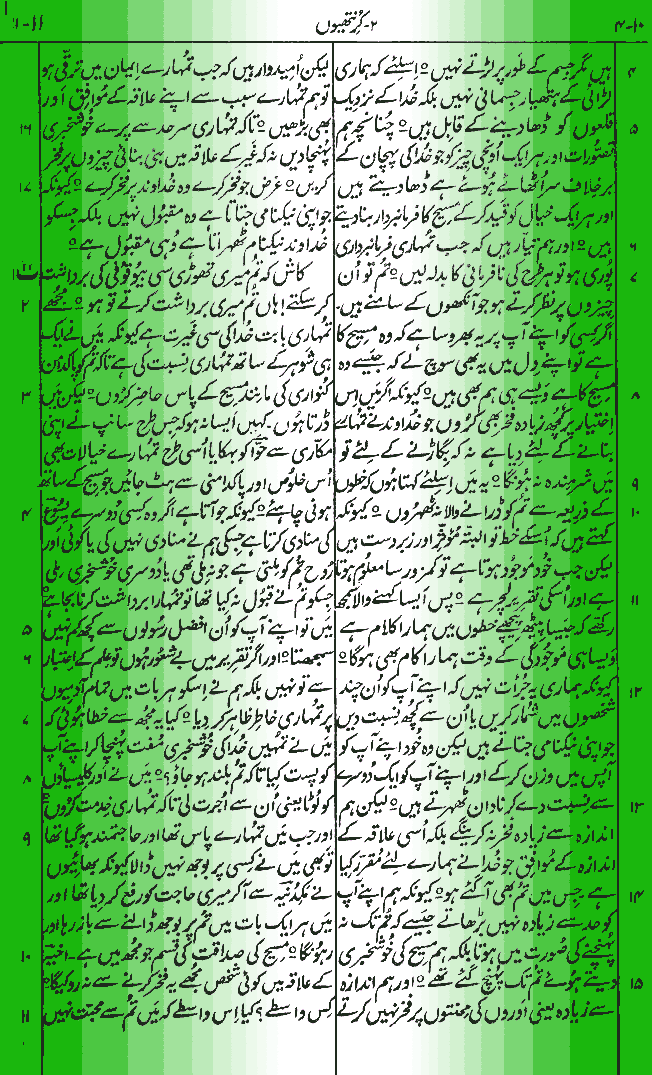
2 Corinthians Chapter 10
Verse 4
Verse: For the weapons of our warfare are not carnal but mighty through God to the pulling down of strong holds
-
Detailed Explanation (English): Paul transitions into military imagery to describe the Christian ministry. The “weapons” he uses are not physical, political, or based on human manipulation (“carnal”). Instead, they are spiritual tools—prayer, the Word of God, truth, and the Holy Spirit. These spiritual weapons possess divine power capable of demolishing spiritual fortresses, false philosophies, and stubborn mindsets that resist God.
-
Detailed Explanation (Urdu): پولس رسول یہاں مسیحی خدمت گزاری کو ایک روحانی جنگ سے تشبیہ دیتا ہے۔ وہ واضح کرتا ہے کہ ہمارے جنگی ہتھیار جسمانی، دنیاوی یا انسانی چالاکیوں پر مبنی نہیں ہیں۔ بلکہ یہ خدا کی قدرت سے معمور روحانی ہتھیار ہیں (جیسے دعا، کلامِ خدا، اور سچائی) جو ابلیس کے مضبوط قلعوں، باطل نظریات، اور انسانی سرکشی کو پاش پاش کرنے کی طاقت رکھتے ہیں۔
Verse 5
Verse: Casting down imaginations and every high thing that exalteth itself against the knowledge of God and bringing into captivity every thought to the obedience of Christ
-
Detailed Explanation (English): This verse focuses on the mental and intellectual battlefield. “Imaginations” refers to human reasonings, proud philosophies, and arrogant arguments that set themselves up against divine truth. The goal of spiritual warfare is to arrest these rebellious thoughts and bring them into total submission to the lordship and teachings of Jesus Christ.
-
Detailed Explanation (Urdu): یہ آیت ذہنی اور فکری جنگ کی نشان دہی کرتی ہے۔ “خیالات” سے مراد انسانی فلسفے، مغرورانہ دلیلیں اور وہ نظریات ہیں جو خدا کی سچی پہچان کے خلاف سر اٹھاتے ہیں۔ روحانی جنگ کا مقصد ان تمام باغیانہ سوچوں کو گرفتار کر کے یسوع مسیح کی اطاعت کے تابع کرنا ہے۔
Verse 6
Verse: And having in a readiness to revenge all disobedience when your obedience is fulfilled
-
Detailed Explanation (English): Paul displays his apostolic authority. He is prepared to discipline and correct those in the Corinthian church who remain rebellious. However, he patiently waits for the majority of the church to fully commit to obedience before he punishes the unrepentant minority, ensuring the congregation is spiritually secure first.
-
Detailed Explanation (Urdu): پولس یہاں اپنے رسولی اختیار کا اظہار کرتا ہے۔ وہ کلیسیا میں سرکشی کرنے والوں کو تنبیہ اور سزا دینے کے لیے تیار ہے۔ لیکن وہ پہلے یہ چاہتا ہے کہ کلیسیا کے وفادار لوگ مکمل طور پر فرمانبرداری کا ثبوت دیں، تاکہ جب وہ باغیوں کے خلاف کارروائی کرے تو وفاداروں کو نقصان نہ پہنچے۔
Verse 7
Verse: Do ye look on things after the outward appearance If any man trust to himself that he is Christ’s let him of himself think this again that as he is Christ’s even so are we Christ’s
-
Detailed Explanation (English): The Corinthians were easily impressed by superficial traits like eloquence or physical presence. Paul challenges his critics who claim a special, exclusive connection to Christ. He urges them to look at reality: if they belong to Christ, Paul and his companions belong to Christ just as much, if not more, through their fruits.
-
Detailed Explanation (Urdu): کرنتھیس کے لوگ ظاہری صورت و شکل، تقریر کی خوبصورتی اور ظاہری شان و شوکت سے جلدی متاثر ہو جاتے تھے۔ پولس ان کے اس معیار پر تنقید کرتا ہے۔ وہ اپنے مخالفین کو چیلنج کرتا ہے کہ اگر وہ خود کو مسیح کا خادم سمجھتے ہیں، تو انہیں یہ بھی ماننا ہوگا کہ پولس اور اس کے ساتھی بھی اتنے ہی مسیح کے خادم ہیں۔
Verse 8
Verse: For though I should boast somewhat more of our authority which the Lord hath given us for edification and not for your destruction I should not be ashamed
-
Detailed Explanation (English): Paul acknowledges his apostolic authority, emphasizing its true purpose. God gave him this authority to “edify” (build up) the church, not to tear it down. Even if he speaks boldly about his credentials, he will not be put to shame because his power is validated by spiritual growth, not destructive tyranny.
-
Detailed Explanation (Urdu): پولس اپنے رسولی اختیار کا دفاع کرتا ہے لیکن اس کا اصل مقصد واضح کرتا ہے۔ خدا نے اسے یہ اختیار کلیسیا کی ترقی اور تعمیر کے لیے دیا ہے، نہ کہ ان کی بربادی کے لیے۔ اگر وہ اپنے اس اختیار پر فخر بھی کرے تو شرمندہ نہیں ہوگا کیونکہ اس کا کام کلیسیا کو مضبوط بنانا ہے۔
Verse 9
Verse: That I may not seem as if I would terrify you by letters
-
Detailed Explanation (English): Paul wishes to avoid the accusation that he is a bully who only uses harsh letters to frighten the congregation from a distance. He wants them to understand that his letters are meant for spiritual correction, not empty intimidation.
-
Detailed Explanation (Urdu): پولس نہیں چاہتا کہ لوگ یہ سمجھیں کہ وہ محض خطوط کے ذریعے انہیں ڈرانے دھمکانے کی کوشش کر رہا ہے۔ اس کا مقصد کلیسیا پر رعب جمانا نہیں بلکہ دور رہ کر بھی ان کی روحانی اصلاح کرنا ہے۔
Verse 10
Verse: For his letters say they are weighty and powerful but his bodily presence is weak and his speech contemptible
-
Detailed Explanation (English): This verse quotes Paul’s critics directly. They accused him of being a “keyboard warrior” of his time—writing forceful, heavy-hitting letters while being physically unimpressive, perhaps soft-spoken, and lacking the dramatic rhetorical skills valued by Greek culture.
-
Detailed Explanation (Urdu): اس آیت میں پولس کے مخالفین کی تنقید کا ذکر ہے۔ وہ کہتے تھے کہ پولس کے خطوط تو بڑے رعب دار اور زوردار ہوتے ہیں، لیکن جب وہ سامنے آتا ہے تو جسمانی طور پر کمزور دکھائی دیتا ہے اور اس کی گفتگو میں وہ جادوئی خطابت نہیں ہوتی جو یونانی معاشرے میں پسند کی جاتی تھی۔
Verse 11
Verse: Let such an one think this that such as we are in word by letters when we are absent such will we be also in deed when we are present
-
Detailed Explanation (English): Paul issues a firm warning to those making these claims. He assures them that there is no gap between his written words and his physical actions. When he arrives in person, his actions in exercising discipline will match the authority found in his letters.
-
Detailed Explanation (Urdu): پولس تنقید کرنے والوں کو سخت وارننگ دیتا ہے۔ وہ کہتا ہے کہ ہمارے قول اور فعل میں کوئی تضاد نہیں ہے۔ جیسا اثر اور اختیار ہمارے خطوط کے الفاظ میں ہے، جب ہم ذاتی طور پر تمہارے درمیان آئیں گے تو ہمارا عمل بھی ویسا ہی سخت اور بااختیار ہوگا۔
Verse 12
Verse: For we dare not make ourselves of the number or compare ourselves with some that commend themselves but they measuring themselves by themselves and comparing themselves among themselves are not wise
-
Detailed Explanation (English): Paul exposes the foolishness of the false apostles. These men created their own standards of success, praised themselves, and competed against one another. Paul refuses to join this self-absorbed club. True validation comes from God, not from setting up self-serving, human benchmarks.
-
Detailed Explanation (Urdu): پولس جھوٹے رسولوں کی حماقت کو بے نقاب کرتا ہے۔ وہ لوگ خود اپنی تعریفیں کرتے تھے اور ایک دوسرے سے موازنہ کر کے خود کو بڑا ثابت کرتے تھے۔ پولس کہتا ہے کہ ہم ان کی طرح بیوقوف نہیں ہیں۔ جو لوگ خود ہی اپنے معیار بناتے ہیں اور اپنے ہی ساتھ موازنہ کرتے ہیں، وہ نادان ہیں۔
Verse 13
Verse: But we will not boast of things without our measure but according to the measure of the rule which God hath distributed to us a measure to reach even unto you
-
Detailed Explanation (English): Paul explains that he keeps his ministry goals within the geographical and spiritual boundaries set for him by God. He is not trespassing on other ministries. The assignment God gave him naturally included the city of Corinth, giving him a legitimate right to lead them.
-
Detailed Explanation (Urdu): پولس کہتا ہے کہ وہ اپنی حد سے باہر نکل کر مبالغہ آرائی نہیں کرتا۔ خدا نے اس کی خدمت کا جو دائرہ کار (حد) مقرر کیا ہے، وہ اسی کے اندر رہتا ہے۔ اور خدا کے اسی مقرر کردہ منصوبے کے تحت وہ کرنتھس کے شہر تک پہنچا، اس لیے وہاں خدمت کرنا اس کا جائز حق ہے۔
Verse 14
Verse: For we stretch not ourselves beyond our measure as though we reached not unto you for we are come as far as to you also in preaching the gospel of Christ
-
Detailed Explanation (English): He reinforces that he is not overextending his authority or claiming credit for territory he didn’t work for. He was the pioneer who first brought the gospel of Jesus Christ directly to Corinth, so his connection to them is genuine and authentic.
-
Detailed Explanation (Urdu): وہ اس بات پر زور دیتا ہے کہ ہم اپنی حد سے باہر پاؤں نہیں پھیلا رہے۔ ایسا نہیں ہے کہ ہمارا تم سے کوئی تعلق نہ تھا اور ہم زبردستی آ دھمکے۔ بلکہ ہم ہی وہ پہلے شخص تھے جو مسیح کی خوشخبری لے کر سب سے پہلے تمہارے پاس پہنچے۔
Verse 15
Verse: Not boasting of things without our measure that is of other men’s labours but having hope when your faith is increased that we shall be enlarged by you according to our rule abundantly
-
Detailed Explanation (English): Unlike the false teachers who moved into established churches and claimed credit for other people’s hard work, Paul only boasts of his own pioneer labor. He hopes that as the Corinthians grow stronger in their faith, they will support him so he can expand his ministry fields even further.
-
Detailed Explanation (Urdu): ان جھوٹے استادوں کے برعکس جو دوسروں کی محنت پر قبضہ کر کے اپنی واہ واہ کرواتے تھے، پولس کہتا ہے کہ ہم دوسروں کی محنت پر فخر نہیں کرتے۔ ہمیں امید ہے کہ جیسے جیسے تمہارا ایمان بڑھے گا، تم ہماری مدد کرو گے تاکہ ہم تمہارے ذریعے اپنے دائرہ کار کو مزید وسعت دے سکیں۔
Verse 16
Verse: To preach the gospel in the regions beyond you and not to boast in another man’s line of things made ready to our hand
-
Detailed Explanation (English): Paul’s vision is missionary expansion. He wants to move past Corinth into unreached territories to plant new churches, rather than stepping into an area where someone else has already done the groundwork and taking the credit for it.
-
Detailed Explanation (Urdu): پولس کا مقصد خوشخبری کو ان علاقوں تک پہنچانا ہے جو کرنتھس سے بھی آگے ہیں۔ وہ کسی دوسرے شخص کے تیار کردہ میدان میں جا کر بنے بنائے کام پر اپنی بڑائی کا دعویٰ کرنا پسند نہیں کرتا۔
Verse 17
Verse: But he that glorieth let him glory in the Lord
-
Detailed Explanation (English): Summarizing his stance on boasting, Paul echoes the Old Testament (Jeremiah 9:24). Human achievements, eloquence, and status mean nothing. If anyone wants to boast, they must redirect all praise and glory to the Lord, acknowledging that everything good comes from Him.
-
Detailed Explanation (Urdu): فخر کرنے کے پورے تصور کو سمیٹتے ہوئے پولس پرانے عہد نامے کے اقتباس سے کہتا ہے کہ جو کوئی فخر کرے، وہ خداوند پر فخر کرے۔ انسانی کامیابیاں اور خوبیاں خدا کے سامنے ہیچ ہیں۔ جو کچھ ہے، خدا کے فضل سے ہے۔
Verse 18
Verse: For not he that commendeth himself is approved but whom the Lord commendeth
-
Detailed Explanation (English): Self-praise holds no spiritual value. A person is not deemed righteous or successful just because they promote themselves or have glowing self-recommendations. The only validation that matters in eternity is the stamp of approval given by God Himself.
-
Detailed Explanation (Urdu): خود اپنی تعریف کرنا انسان کو مقبول نہیں بناتا۔ کوئی بھی شخص محض خود پسندی یا اپنی تشہیر کے ذریعے خدا کی نظر میں مقبول نہیں ہو سکتا۔ حقیقی مقبولیت وہ ہے جو خداوند کی طرف سے حاصل ہو۔
2 Corinthians Chapter 11
Verse 1
Verse: Would to God ye could bear with me a little in my folly and indeed bear with me
-
Detailed Explanation (English): Paul reluctantly prepares to talk about his own credentials and sufferings to counter the false teachers. He considers talking about himself to be “folly” or foolishness because a servant should only talk about Christ. However, out of deep love, he begs the Corinthians to tolerate this temporary foolishness.
-
Detailed Explanation (Urdu): پولس اب مجبوری میں اپنے رسالت کے ثبوت اور اپنی تکلیفوں کا ذکر کرنے لگا ہے تاکہ جھوٹے استادوں کا منہ بند کر سکے۔ وہ اپنی ذات کے بارے میں بات کرنے کو “نادانی” یا حماقت سمجھتا ہے کیونکہ خادم کو صرف مسیح کی بات کرنی چاہیے۔ لیکن وہ کرنتھیوں سے کہتا ہے کہ وہ اس کی اس نادانی کو تھوڑی دیر کے لیے برداشت کریں۔
Verse 2
Verse: For I am jealous over you with godly jealousy for I have espoused you to one husband that I may present you as a chaste virgin to Christ
-
Detailed Explanation (English): Paul uses wedding imagery. He views himself as the father of the bride who has betrothed (engaged) the Corinthian church to Jesus Christ, the husband. His jealousy is not selfish; it is a holy, divine protectiveness aimed at keeping the church pure, loyal, and uncorrupted until the day of Christ’s return.
-
Detailed Explanation (Urdu): پولس یہاں شادی کی تمثیل استعمال کرتا ہے۔ وہ خود کو ایک ایسے باپ کی مانند دیکھتا ہے جس نے کرنتھس کی کلیسیا کی منگنی یسوع مسیح (دولہا) سے کروائی ہے۔ اس کا رشک دنیاوی نہیں بلکہ الٰہی رشک ہے، تاکہ وہ کلیسیا کو ایک پاک دوشیزہ کی طرح پاک و صاف حالت میں مسیح کے سامنے پیش کر سکے۔
Verse 3
Verse: But I fear lest by any means as the serpent beguiled Eve through his subtilty so your minds should be corrupted from the simplicity that is in Christ
-
Detailed Explanation (English): Paul shares his deepest anxiety. Just as Satan used deception and clever lies to lead Eve away from God’s command in the Garden of Eden, Paul fears that false teachers will use intellectual arguments to corrupt the minds of the Corinthians, dragging them away from the pure, simple faith focused on Jesus.
-
Detailed Explanation (Urdu): پولس اپنے گہرے خوف کا اظہار کرتا ہے۔ وہ کہتا ہے کہ جس طرح باغِ عدن میں سانپ (ابلیس) نے حوا کو اپنی مکر و چالبازی سے بہکایا تھا، مجھے ڈر ہے کہ اسی طرح یہ جھوٹے استاد تمہیں گمراہ نہ کر دیں اور تمہارے ذہن اس سیدھی اور پاکیزہ ایمانداری سے بھٹک جائیں جو مسیح کے ساتھ ہونی چاہیے۔
Verse 4
Verse: For if he that cometh preacheth another Jesus whom we have not preached or if ye receive another spirit which ye have not received or another gospel which ye have not accepted ye might well bear with him
-
Detailed Explanation (English): Paul sarcastically critiques how tolerant the Corinthians are toward dangerous false doctrine. If an outsider comes preaching a fake version of Jesus, a different spiritual power, or a twisted gospel that alters salvation, the Corinthians surprisingly put up with it easily. Paul wonders why they tolerate these liars but criticize him.
-
Detailed Explanation (Urdu): پولس طنزیہ انداز میں کرنتھیوں کی اس بات پر سرزنش کرتا ہے کہ وہ جھوٹے نظریات کو کتنی جلدی قبول کر لیتے ہیں۔ وہ کہتا ہے کہ اگر کوئی نیا شخص آ کر کسی دوسرے یسوع کی منادی کرے، یا کوئی دوسری روح اور دوسرا انجیل کا پیغام پیش کرے، تو تم بڑی خوشی سے اسے برداشت کر لیتے ہو۔ پھر سچے رسول (پولس) پر اعتراض کیوں؟
Verse 5
Verse: For I suppose I was not a whit behind the very chiefest apostles
-
Detailed Explanation (English): Paul declares that he is not inferior in any way to these self-proclaimed “super-apostles” who were misleading the church. His ministry, authority, and spiritual insights are fully equal to, if not greater than, theirs.
-
Detailed Explanation (Urdu): پولس دوٹوک الفاظ میں کہتا ہے کہ میں ان نام نہاد “بڑے رسولوں” سے کسی بات میں کم نہیں ہوں جنہوں نے کلیسیا کو گمراہ کر رکھا ہے۔ خدا نے جو بصیرت اور اختیار مجھے دیا ہے، وہ کسی سے کم نہیں ہے۔
Verse 6
Verse: But though I be rude in speech yet not in knowledge but we have been thoroughly made manifest among you in all things
-
Detailed Explanation (English): Paul addresses the criticism regarding his speaking style. He admits he might not use the polished, theatrical oratorical styles of Greek culture (“rude in speech”), but he is definitely not lacking in deep spiritual knowledge. His life and transparent ministry among them have already proven his divine insight.
-
Detailed Explanation (Urdu): پولس اپنی تقریر پر ہونے والی تنقید کا جواب دیتا ہے۔ وہ کہتا ہے کہ اگرچہ میں بناوٹی تقریر اور یونانی خطابت کے فن سے واقف نہیں ہوں، لیکن الٰہی علم اور سچائی میں کمزور نہیں ہوں۔ ہم نے ہر طرح سے اور ہر بات میں یہ سچائی تم پر ظاہر کر دی ہے۔
Verse 7
Verse: Have I committed an offence in abasing myself that ye might be exalted because I have preached to you the gospel of God freely
-
Detailed Explanation (English): In ancient Greek culture, teachers who didn’t charge money were often looked down upon as low-class. Paul asks rhetorically if he sinned by humbling himself and working with his hands to preach the gospel for free. He did this so they wouldn’t have a financial burden, yet ironicaly, they used it to look down on him.
-
Detailed Explanation (Urdu): یونانی معاشرے میں جو استاد فیس نہیں لیتے تھے، انہیں گھٹیا سمجھا جاتا تھا۔ پولس طنزاً پوچھتا ہے کہ کیا میں نے تمہیں روحانی طور پر امیر بنانے کے لیے خود کو عاجز کیا اور مفت خوشخبری سنائی، تو کیا یہ میرا گناہ تھا؟ اس نے یہ قربانی اس لیے دی تاکہ کلیسیا پر بوجھ نہ پڑے، لیکن انہوں نے اس کو پولس کی کمزوری سمجھا۔
Verse 8
Verse: I robbed other churches taking wages of them to do you service
-
Detailed Explanation (English): Paul uses hyperbole (“robbed”) to make a sharp point. He accepted financial support from other poorer churches (like those in Macedonia) while he was working in Corinth. In essence, other ministries paid his bills so that he could serve the Corinthians completely free of charge.
-
Detailed Explanation (Urdu): پولس یہاں مبالغہ آرائی کا لفظ “لوٹا” استعمال کرتا ہے تاکہ انہیں شرم دلائے۔ وہ کہتا ہے کہ میں نے دوسری غریب کلیسیاؤں سے مالی مدد قبول کی تاکہ تمہاری خدمت کر سکوں۔ گویا ان کا حق مار کر (ان کے پیسوں سے) میں نے تمہیں مفت خدمات فراہم کیں۔
Verse 9
Verse: And when I was present with you and wanted I was chargeable to no man for that which was lacking to me the brethren which came from Macedonia supplied and in all things I have kept myself from being burdensome unto you and so will I keep myself
-
Detailed Explanation (English): Paul explains that even when he ran out of money in Corinth, he refused to beg or ask them for a single coin. Instead, believers traveling from Macedonia arrived with financial gifts to cover his needs. He takes pride in the fact that he was never a financial burden to them, and promises to keep it that way.
-
Detailed Explanation (Urdu): پولس وضاحت کرتا ہے کہ جب میں تمہارے درمیان تھا اور مجھے پیسوں کی ضرورت پڑی، تو میں نے کسی پر بوجھ نہیں ڈالا۔ مقدونیہ سے آنے والے بھائیوں نے میری ضرورتیں پوری کیں۔ میں نے ہر بات میں خود کو تمہارے لیے بوجھ بننے سے روکے رکھا اور آگے بھی ایسا ہی کروں گا۔
Verse 10
Verse: As the truth of Christ is in me no man shall stop me of this boasting in the regions of Achaia
-
Detailed Explanation (English): Paul takes a solemn oath by the truth of Christ. He declares that nobody in the entire region of Achaia (where Corinth was located) will strip him of his right to boast about preaching the gospel for free. This practice distinguished him from the greedy false prophets.
-
Detailed Explanation (Urdu): پولس مسیح کی سچائی کی قسم کھا کر کہتا ہے کہ پورے اخیہ کے علاقے میں کوئی بھی شخص مجھ سے مفت خوشخبری سنانے کے اس فخر کو نہیں چھین سکتا۔ یہ عمل اسے ان لالچی اور جھوٹے استادوں سے الگ کرتا تھا جو پیسوں کے لیے کام کرتے تھے۔
Verse 11
Verse: Wherefore because I love you not God knoweth
-
Detailed Explanation (English): Paul asks a final rhetorical question: Why does he refuse their money? Is it because he does not love them? He immediately answers with “God knows,” implying that God is the witness to his deep, genuine love for the Corinthian church. His refusal of funds was to protect them, not to reject them.
-
Detailed Explanation (Urdu): پولس ایک آخری سوال پوچھتا ہے کہ میں تم سے پیسے لینے سے کیوں انکار کرتا ہوں؟ کیا اس لیے کہ مجھے تم سے محبت نہیں؟ وہ خود جواب دیتا ہے کہ “خدا جانتا ہے” کہ میں تم سے کتنی محبت کرتا ہوں۔ رقم نہ لینے کا مقصد تمہاری حفاظت کرنا تھا نہ کہ تمہیں رد کرنا۔