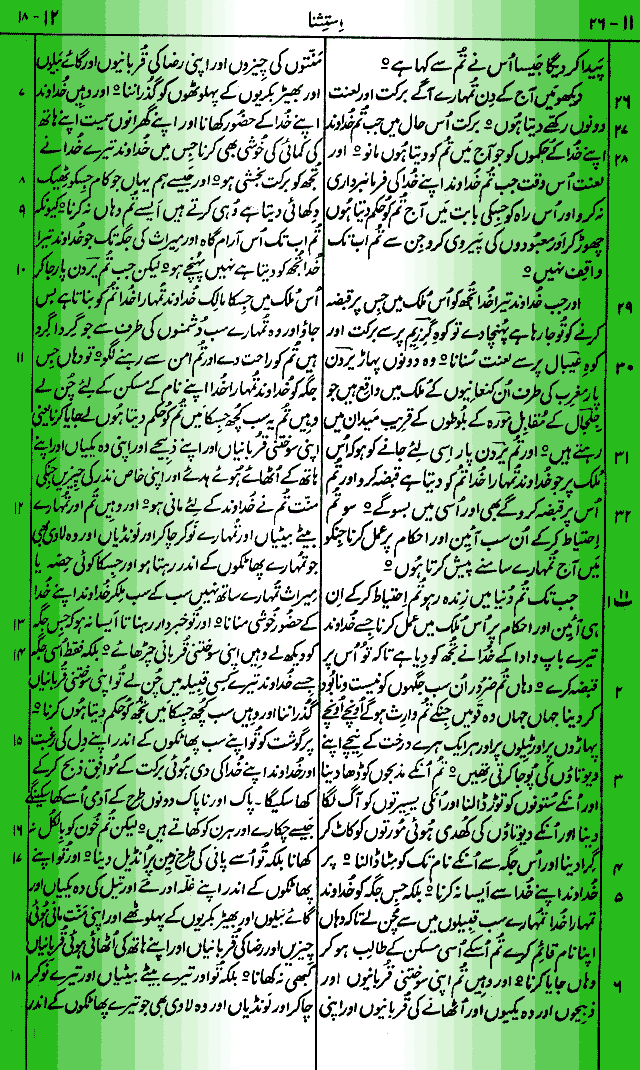
Deuteronomy Chapter 11 (Verses 26-32)
Verse 26
-
Verse: Behold I set before you this day a blessing and a curse
-
English Explanation: God presents the Israelites with a binary choice. Their future depends entirely on their moral and spiritual decisions. It emphasizes free will and the weight of personal responsibility.
-
Urdu Explanation: خدا بنی اسرائیل کے سامنے دو راستے رکھتا ہے: برکت یا لعنت۔ یہ آیت ظاہر کرتی ہے کہ ہماری زندگی کے فیصلے ہمارے مستقبل کا تعین کرتے ہیں۔
Verse 27
-
Verse: A blessing if ye obey the commandments of the LORD your God which I command you this day
-
English Explanation: The “Blessing” is conditional upon obedience. If the people follow God’s law, they will flourish in their new land.
-
Urdu Explanation: اگر تم خدا کے احکامات کی فرمانبرداری کرو گے تو تم پر برکت ہوگی۔ یہ خوشحالی اور کامیابی کا راستہ ہے۔
Verse 28
-
Verse: And a curse if ye will not obey the commandments of the LORD your God but turn aside out of the way which I command you this day to go after other gods which ye have not known
-
English Explanation: Disobedience, specifically turning toward false idols and unknown gods, leads to spiritual and physical ruin (the curse).
-
Urdu Explanation: لعنت ان لوگوں کے لیے ہے جو خدا کی راہ کو چھوڑ کر غیر معبودوں کے پیچھے چلیں گے۔ یہ گمراہی اور تباہی کا راستہ ہے۔
Verse 29
-
Verse: And it shall come to pass when the LORD thy God hath brought thee in unto the land whither thou goest to possess it that thou shalt put the blessing upon mount Gerizim and the curse upon mount Ebal
-
English Explanation: This was a physical ritual to reinforce the spiritual reality. Mount Gerizim symbolized life and blessing, while Mount Ebal symbolized the consequences of sin.
-
Urdu Explanation: خدا نے حکم دیا کہ جرزیم کے پہاڑ پر برکت اور عیبال کے پہاڑ پر لعنت کا اعلان کیا جائے تاکہ لوگ خدا کے عہد کو یاد رکھیں۔
Verse 30
-
Verse: Are they not on the other side Jordan by the way where the sun goeth down in the land of the Canaanites which dwell in the champaign over against Gilgal beside the plains of Moreh
-
English Explanation: Moses gives specific geographical markers to ensure the Israelites know exactly where these spiritual declarations must take place.
-
Urdu Explanation: موسیٰ علیہ السلام نے ان پہاڑوں کا درست جغرافیائی مقام بتایا تاکہ بنی اسرائیل کو معلوم ہو کہ یہ رسم کہاں ادا کرنی ہے۔
Verse 31
-
Verse: For ye shall pass over Jordan to go in to possess the land which the LORD your God giveth you and ye shall possess it and dwell therein
-
English Explanation: A promise of victory. Crossing the Jordan signifies the end of wandering and the beginning of a settled, sovereign life.
-
Urdu Explanation: یہ آیت دریائے یردن کو عبور کرنے اور اس زمین پر قبضہ کرنے کی بشارت دیتی ہے جو خدا نے انہیں عطا کی ہے۔
Verse 32
-
Verse: And ye shall observe to do all the statutes and judgments which I set before you this day
-
English Explanation: The possession of the land is tied to the practice of the Law. Sustainability in the Promised Land requires ongoing faithfulness.
-
Urdu Explanation: زمین میں بسنے کے بعد بھی خدا کے قوانین اور احکامات پر عمل کرنا لازمی ہے تاکہ وہ وہاں سکون سے رہ سکیں۔
Deuteronomy Chapter 12 (Verses 1-18)
Verse 1
-
Verse: These are the statutes and judgments which ye shall observe to do in the land which the LORD God of thy fathers giveth thee to possess it all the days that ye live upon the earth
-
English Explanation: This introduces the core judicial and religious laws that must govern the nation permanently.
-
Urdu Explanation: یہ وہ قوانین ہیں جن پر بنی اسرائیل کو اس وقت تک عمل کرنا ہے جب تک وہ زمین پر زندہ رہیں۔
Verse 2
-
Verse: Ye shall utterly destroy all the places wherein the nations which ye shall possess served their gods upon the high mountains and upon the hills and under every green tree
-
English Explanation: Total eradication of pagan worship sites is required to prevent spiritual contamination.
-
Urdu Explanation: تمہیں ان تمام جگہوں کو تباہ کر دینا چاہیے جہاں دوسری قومیں اپنے جھوٹے معبودوں کی عبادت کرتی تھیں۔
Verse 3
-
Verse: And ye shall overthrow their altars and break their pillars and burn their groves with fire and ye shall hew down the graven images of their gods and destroy the names of them out of that place
-
English Explanation: Physical destruction of idols. God demands the very names of false gods be erased from the land.
-
Urdu Explanation: ان کے بتوں کو توڑ دو اور ان کے نام و نشان مٹا دو تاکہ وہاں صرف سچے خدا کی عبادت ہو۔
Verse 4
-
Verse: Ye shall not do so unto the LORD your God
-
English Explanation: Do not worship God using the methods or rituals of the pagans. God’s worship must be pure and unique.
-
Urdu Explanation: تمہیں اپنے خدا کی عبادت ان طریقوں سے نہیں کرنی چاہیے جیسے مشرک اپنے بتوں کی کرتے تھے۔
Verse 5
-
Verse: But unto the place which the LORD your God shall choose out of all your tribes to put his name there even unto his habitation shall ye seek and thither thou shalt come
-
English Explanation: This establishes the concept of a “Central Sanctuary” (eventually Jerusalem) where God’s presence would dwell.
-
Urdu Explanation: خدا ایک خاص جگہ کا انتخاب کرے گا جہاں اس کا نام ہوگا، اور تمہیں وہیں جا کر اس کی عبادت کرنی ہوگی۔
Verse 6
-
Verse: And thither ye shall bring your burnt offerings and your sacrifices and your tithes and heave offerings of your hand and your vows and your freewill offerings and the firstlings of your herds and of your flocks
-
English Explanation: All major religious acts and offerings were to be brought to the central location to maintain national and spiritual unity.
-
Urdu Explanation: اپنی قربانیاں، نذرانے اور زکوٰۃ اسی مخصوص جگہ پر لانی ہوں گی جو خدا مقرر کرے گا۔
Verse 7
-
Verse: And there ye shall eat before the LORD your God and ye shall rejoice in all that ye put your hand unto ye and your households wherein the LORD thy God hath blessed thee
-
English Explanation: Worship is portrayed as a joyful community feast in the presence of God.
-
Urdu Explanation: وہاں تم اور تمہارے خاندان خدا کے حضور خوشی منائیں گے اور اس کی برکتوں کا شکر ادا کریں گے۔
Verse 8
-
Verse: Ye shall not do after all the things that we do here this day every man whatsoever is right in his own eyes
-
English Explanation: In the wilderness, worship was somewhat informal. In the Promised Land, it must be structured according to God’s specific commands.
-
Urdu Explanation: اب وہ وقت نہیں رہا کہ ہر انسان اپنی مرضی کے مطابق عمل کرے، بلکہ اب خدا کے بتائے ہوئے طریقے پر چلنا ہوگا۔
Verse 9
-
Verse: For ye are not as yet come to the rest and to the inheritance which the LORD your God giveth you
-
English Explanation: The wandering phase was temporary; the permanent laws were designed for the permanent home.
-
Urdu Explanation: تم ابھی تک اس مقام پر نہیں پہنچے جو تمہاری میراث ہے، اس لیے ابھی تیاری کا وقت ہے۔
Verse 10
-
Verse: But when ye go over Jordan and dwell in the land which the LORD your God giveth you to inherit and when he giveth you rest from all your enemies round about so that ye dwell in safety
-
English Explanation: God promises peace and security as the prerequisite for establishing the centralized house of worship.
-
Urdu Explanation: جب تم دشمنوں سے محفوظ ہو جاؤ گے اور سکون سے رہو گے، تب تمہیں خدا کے گھر کی فکر کرنی ہوگی۔
Verse 11
-
Verse: Then there shall be a place which the LORD your God shall choose to cause his name to dwell there thither shall ye bring all that I command you your burnt offerings and your sacrifices your tithes and the heave offering of your hand and all your choice vows which ye vow unto the LORD
-
English Explanation: Reiteration of the central sanctuary—one God, one people, one place of worship.
-
Urdu Explanation: خدا جس جگہ کا انتخاب کرے گا، وہیں تمام نذرانے اور قربانیاں پیش کی جائیں گی۔
Verse 12
-
Verse: And ye shall rejoice before the LORD your God ye and your sons and your daughters and your menservants and your maidservants and the Levite that is within your gates forasmuch as he hath no part nor inheritance with you
-
English Explanation: Inclusion is key. Worship must include children, servants, and the Levites (who had no land of their own).
-
Urdu Explanation: تمہاری خوشی میں تمہارے بچے، نوکر چاکر اور لاوی (مذہبی پیشوا) بھی شامل ہونے چاہئیں جن کا کوئی ذاتی حصہ نہیں۔
Verse 13
-
Verse: Take heed to thyself that thou offer not thy burnt offerings in every place that thou seest
-
English Explanation: A warning against “DIY” religion. You cannot just sacrifice anywhere you find convenient.
-
Urdu Explanation: خبردار رہو! اپنی قربانیاں ہر کسی جگہ پر پیش نہ کرو جہاں تمہارا دل چاہے۔
Verse 14
-
Verse: But in the place which the LORD shall choose in one of thy tribes there thou shalt offer thy burnt offerings and there thou shalt do all that I command thee
-
English Explanation: Strict adherence to God’s chosen location preserves the purity of the faith.
-
Urdu Explanation: صرف اسی جگہ قربانی کرو جو خدا نے منتخب کی ہے۔
Verse 15
-
Verse: Notwithstanding thou mayest kill and eat flesh in all thy gates whatsoever thy soul lusteth after according to the blessing of the LORD thy God which he hath given thee the unclean and the clean may eat thereof as of the roebuck and as of the hart
-
English Explanation: God allows for secular slaughter. You can eat meat for food anywhere, but religious sacrifice is restricted to the Tabernacle/Temple.
-
Urdu Explanation: تم اپنی خوراک کے لیے کہیں بھی گوشت ذبح کر سکتے ہو، لیکن مذہبی قربانی کے قوانین الگ ہیں۔
Verse 16
-
Verse: Only ye shall not eat the blood ye shall pour it upon the earth as water
-
English Explanation: Blood is sacred because it contains life. It must be poured out, never consumed.
-
Urdu Explanation: خون ہرگز نہ کھانا، اسے پانی کی طرح زمین پر بہا دینا کیونکہ خون میں زندگی ہے۔
Verse 17
-
Verse: Thou mayest not eat within thy gates the tithe of thy corn or of thy wine or of thy oil or the firstlings of thy herds or of thy flock nor any of thy vows which thou vowest nor thy freewill offerings or heave offering of thine hand
-
English Explanation: Sacred portions (tithes and firstlings) cannot be consumed at home; they are reserved for the presence of God.
-
Urdu Explanation: تم اناج، مے یا تیل کا دسواں حصہ اپنے گھر پر نہیں کھا سکتے، یہ مخصوص نذرانے ہیں۔
Verse 18
-
Verse: But thou must eat them before the LORD thy God in the place which the LORD thy God shall choose thou and thy son and thy daughter and thy manservant and thy maidservant and the Levite that is within thy gates and thou shalt rejoice before the LORD thy God in all that thou puttest thine hands unto
-
English Explanation: Re-emphasizing communal joy. Sacred eating is an act of fellowship with God and the community at the chosen site.
-
Urdu Explanation: تمہیں یہ سب خدا کے حضور اسی جگہ کھانا ہے جو وہ منتخب کرے گا، تاکہ تمہاری خوشی مکمل ہو سکے۔