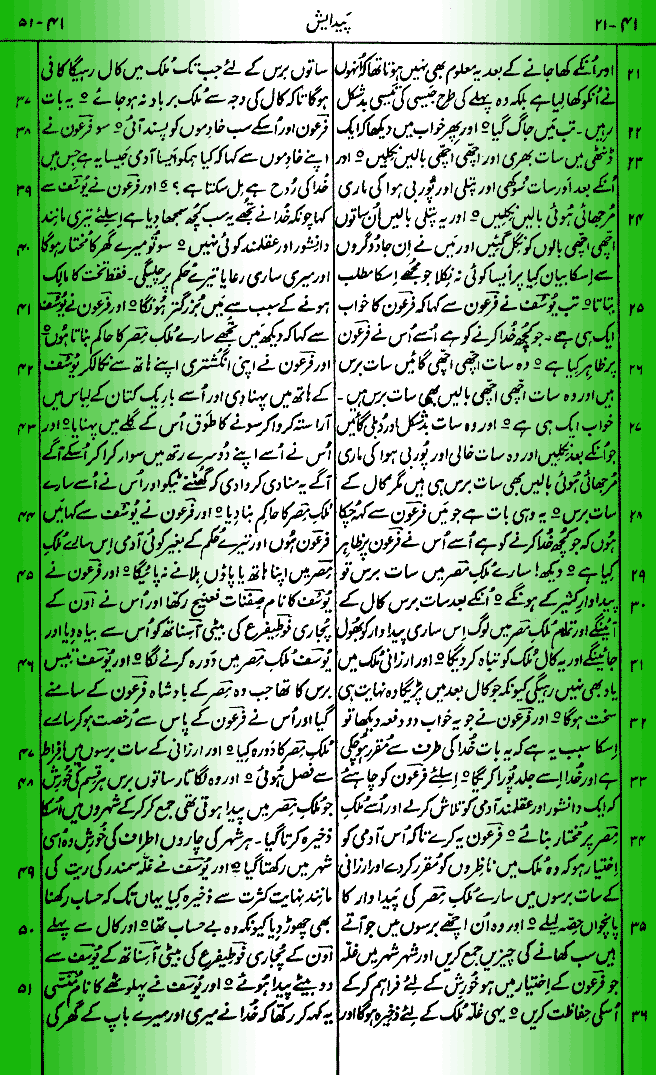
Biblical Commentary: Genesis 41:21–51
Verse 21
Verse: And when they had eaten them up it could not be known that they had eaten them but they were still ill favoured as at the beginning So I awoke English Explanation: Pharaoh describes the supernatural nature of his dream. Even after the thin cows ate the fat ones, they remained skinny. This signifies that the coming famine would be so severe that the previous years of plenty would leave no trace of prosperity. Urdu Explanation: فرعون اپنے خواب کی ہولناکی بیان کرتا ہے کہ دبلی گایوں نے فربہ گایوں کو کھا تو لیا لیکن ان کی حالت میں کوئی بہتری نہ آئی۔ یہ اس بات کی علامت تھی کہ آنے والا قحط اتنا شدید ہوگا کہ پچھلی خوشحالی کا نام و نشان مٹ جائے گا۔
Verse 22
Verse: And I saw in my dream and behold seven ears came up in one stalk full and good English Explanation: This begins the second part of the vision. Seven healthy, productive ears of grain represent seven years of incredible agricultural abundance. Urdu Explanation: یہ خواب کا دوسرا حصہ ہے جس میں اناج کی سات بالیاں ایک ہی ڈنٹھل پر اگی ہوئی تھیں جو کہ نہایت صحت مند اور بھرپور تھیں۔ یہ سات سالہ زبردست زرعی پیداوار کی علامت تھیں۔
Verse 23
Verse: And behold seven ears withered thin and blasted with the east wind sprung up after them English Explanation: After the good grain, seven shriveled ears appeared, damaged by the scorching “east wind” (the Sirocco), which symbolizes destruction and drought. Urdu Explanation: اچھی بالیوں کے بعد سات سوکھی اور مشرقی ہوا سے جھلسی ہوئی بالیاں نکلیں۔ مشرقی ہوا تباہی اور خشک سالی کی علامت سمجھی جاتی تھی۔
Verse 24
Verse: And the thin ears devoured the seven good ears and I told this unto the magicians but there was none that could declare it to me English Explanation: The ruined grain consumed the healthy grain. Pharaoh’s wise men and magicians were unable to interpret this because it was a divine revelation beyond human logic. Urdu Explanation: ان بیکار بالیوں نے اچھی بالیوں کو نگل لیا۔ فرعون کے جادوگر اور دانا لوگ اس کا مطلب بتانے سے قاصر رہے کیونکہ یہ ایک الہی پیغام تھا جو انسانی عقل سے بالا تر تھا۔
Verse 25
Verse: And Joseph said unto Pharaoh The dream of Pharaoh is one God hath shewed Pharaoh what he is about to do English Explanation: Joseph clarifies that both dreams (cows and grain) carry the same message. He credits God as the source of the revelation, showing that God is in control of future events. Urdu Explanation: یوسفؑ نے واضح کیا کہ دونوں خوابوں کا مقصد ایک ہی ہے۔ انہوں نے تمام کریڈٹ خدا کو دیا اور بتایا کہ خدا فرعون کو وہ دکھا رہا ہے جو وہ مستقبل میں کرنے والا ہے۔
Verse 26
Verse: The seven good kine are seven years and the seven good ears are seven years the dream is one English Explanation: Joseph interprets the symbols: the seven healthy cows and seven full ears both represent seven years of prosperity. Urdu Explanation: یوسفؑ نے تعبیر بتائی کہ سات عمدہ گائیں اور سات بھری ہوئی بالیاں دراصل خوشحالی کے سات سال ہیں۔
Verse 27
Verse: And the seven thin and ill favoured kine that came up after them are seven years and the seven empty ears blasted with the east wind shall be seven years of famine English Explanation: Similarly, the thin cows and blasted grain represent seven consecutive years of devastating famine that will follow the abundance. Urdu Explanation: اسی طرح سات دبلی گائیں اور جھلسی ہوئی بالیاں ان سات سالوں کی نشاندہی کرتی ہیں جو شدید قحط کے ہوں گے۔
Verse 28
Verse: This is the thing which I have spoken unto Pharaoh What God is about to do he sheweth unto Pharaoh English Explanation: Joseph reaffirms that this is a divine warning. God is graciously allowing Pharaoh to see the future to prepare for it. Urdu Explanation: یوسفؑ نے دوبارہ زور دیا کہ یہ خدا کی طرف سے ایک پیشگی اطلاع ہے تاکہ فرعون آنے والے وقت کے لیے خود کو تیار کر سکے۔
Verse 29
Verse: Behold there come seven years of great plenty throughout all the land of Egypt English Explanation: Egypt is promised a period of unprecedented harvest and economic growth. Urdu Explanation: مصر کی سرزمین میں پہلے سات سال ایسے آئیں گے جن میں غلے کی فراوانی اور بے پناہ برکت ہوگی۔
Verse 30
Verse: And there shall arise after them seven years of famine and all the plenty shall be forgotten in the land of Egypt and the famine shall consume the land English Explanation: The famine will be so catastrophic that people will forget the years of wealth; the scarcity will “consume” or deplete the nation’s resources. Urdu Explanation: ان سات سالوں کے بعد ایسا سخت قحط پڑے گا کہ لوگ پچھلی خوشحالی کو بھول جائیں گے اور یہ قحط ملک کو تباہ کر دے گا۔
Verse 31
Verse: And the plenty shall not be known in the land by reason of that famine following for it shall be very grievous English Explanation: This emphasizes the severity. The suffering during the famine will be so heavy that the memory of the good times will vanish. Urdu Explanation: قحط کی شدت اتنی زیادہ ہوگی کہ ملک میں خوشحالی کا کوئی نشان باقی نہیں رہے گا کیونکہ یہ بہت ہی تکلیف دہ وقت ہوگا۔
Verse 32
Verse: And for that the dream was doubled unto Pharaoh twice it is because the thing is established by God and God will shortly bring it to pass English Explanation: The repetition of the dream confirms its certainty. Joseph explains that when God gives a vision twice, it means the event is fixed and will happen very soon. Urdu Explanation: خواب کا دو بار آنا اس بات کی دلیل ہے کہ یہ بات خدا کی طرف سے طے ہو چکی ہے اور وہ جلد ہی اسے پورا کرے گا۔
Verse 33
Verse: Now therefore let Pharaoh look out a man discreet and wise and set him over the land of Egypt English Explanation: Joseph moves from interpretation to administration, advising Pharaoh to appoint a wise leader to manage the upcoming crisis. Urdu Explanation: یوسفؑ نے مشورہ دیا کہ فرعون کو اب ایک سمجھدار اور دانا شخص تلاش کرنا چاہیے جو پورے مصر کے انتظام کو سنبھال سکے۔
Verse 34
Verse: Let Pharaoh do this and let him appoint officers over the land and take up the fifth part of the land of Egypt in the seven plenteous years English Explanation: He suggests a 20% tax/reserve (one-fifth) on all produce during the good years to build a national reserve. Urdu Explanation: انہوں نے تجویز دی کہ خوشحالی کے سات سالوں کے دوران زمین کی پیداوار کا پانچواں حصہ (20 فیصد) سرکاری طور پر ذخیرہ کر لیا جائے۔
Verse 35
Verse: And let them gather all the food of those good years that come and lay up corn under the hand of Pharaoh and let them keep food in the cities English Explanation: Systematic storage of grain in urban centers was recommended to ensure logistics were ready for the famine. Urdu Explanation: تمام غلہ شاہی نگرانی میں شہروں کے گوداموں میں جمع کیا جائے تاکہ ضرورت کے وقت کام آ سکے۔
Verse 36
Verse: And that food shall be for store to the land against the seven years of famine which shall be in the land of Egypt that the land perish not through the famine English Explanation: The purpose of this reserve was survival—to prevent the total collapse and death of the population during the seven-year drought. Urdu Explanation: یہ ذخیرہ اندوزی اس لیے ضروری تھی تاکہ سات سالہ قحط کے دوران ملک تباہی اور موت سے بچ سکے۔
Verse 37
Verse: And the thing was good in the eyes of Pharaoh and in the eyes of all his servants English Explanation: Joseph’s wisdom and the clarity of his plan immediately impressed the King and his court. Urdu Explanation: یوسفؑ کی یہ تجویز فرعون اور اس کے تمام درباریوں کو بہت پسند آئی۔
Verse 38
Verse: And Pharaoh said unto his servants Can we find such a one as this is a man in whom the Spirit of God is English Explanation: Pharaoh recognizes that Joseph possesses a divine spirit and wisdom that is not of this world. Urdu Explanation: فرعون نے اعتراف کیا کہ یوسفؑ جیسا کوئی دوسرا نہیں مل سکتا جس میں خدا کی روح اور حکمت موجود ہو۔
Verse 39
Verse: And Pharaoh said unto Joseph Forasmuch as God hath shewed thee all this there is none so discreet and wise as thou art English Explanation: Pharaoh acknowledges that since God revealed the problem to Joseph, Joseph is the best person to implement the solution. Urdu Explanation: فرعون نے یوسفؑ سے کہا کہ چونکہ خدا نے یہ سب تم پر ظاہر کیا ہے، اس لیے تم سے زیادہ سمجھدار اور دانا کوئی دوسرا نہیں۔
Verse 40
Verse: Thou shalt be over my house and according unto thy word shall all my people be ruled only in the throne will I be greater than thou English Explanation: Joseph is promoted to Prime Minister/Grand Vizier. He is given authority over everyone except the King himself. Urdu Explanation: فرعون نے یوسفؑ کو اپنے گھر اور پوری قوم کا حاکم بنا دیا؛ صرف تخت و تاج کی حد تک فرعون ان سے بڑا تھا۔
Verse 41
Verse: And Pharaoh said unto Joseph See I have set thee over all the land of Egypt English Explanation: This is the formal declaration of Joseph’s authority over the entire nation of Egypt. Urdu Explanation: فرعون نے باقاعدہ اعلان کیا کہ میں نے تمہیں پورے ملکِ مصر کا مختارِ کل مقرر کر دیا ہے۔
Verse 42
Verse: And Pharaoh took off his ring from his hand and put it upon Josephs hand and arrayed him in vestures of fine linen and put a gold chain about his neck English Explanation: These were symbols of royal authority: the signet ring (power to sign laws), fine clothes (status), and the gold chain (honor). Urdu Explanation: فرعون نے اپنی مہر والی انگوٹھی یوسفؑ کو پہنائی، شاہی لباس عطا کیا اور گلے میں سونے کی زنجیر ڈالی جو کہ اعلیٰ اختیارات کی علامت تھی۔
Verse 43
Verse: And he made him to ride in the second chariot which he had and they cried before him Bow the knee and he made him ruler over all the land of Egypt English Explanation: Joseph was given the highest public honor, riding in the second royal chariot with a public herald demanding respect from the citizens. Urdu Explanation: انہیں شاہی سواری دی گئی اور لوگوں کو حکم دیا گیا کہ ان کے آگے جھکیں، اس طرح وہ عملی طور پر مصر کے حکمران بن گئے۔
Verse 44
Verse: And Pharaoh said unto Joseph I am Pharaoh and without thee shall no man lift up his hand or foot in all the land of Egypt English Explanation: This hyperbolic statement emphasizes absolute administrative control. No significant action could be taken in Egypt without Joseph’s approval. Urdu Explanation: فرعون نے کہا کہ میرے بعد تمہارا حکم آخری ہوگا، تمہاری اجازت کے بغیر کوئی شخص ملک میں ہاتھ پاؤں تک نہیں ہلا سکے گا۔
Verse 45
Verse: And Pharaoh called Josephs name Zaphnath-paaneah and he gave him to wife Asenath the daughter of Poti-pherah priest of On And Joseph went out over all the land of Egypt English Explanation: Joseph is given an Egyptian name (meaning “God speaks and he lives”) and a wife from a high-status family, fully integrating him into Egyptian leadership. Urdu Explanation: فرعون نے یوسفؑ کو ایک نیا نام ‘صفنیت فعنیح’ دیا اور ان کی شادی ایک معزز گھرانے میں کرائی، جس کے بعد انہوں نے پورے ملک کا دورہ شروع کیا۔
Verse 46
Verse: And Joseph was thirty years old when he stood before Pharaoh king of Egypt And Joseph went out from the presence of Pharaoh and went throughout all the land of Egypt English Explanation: After thirteen years of suffering and slavery, Joseph reaches the pinnacle of power at age thirty. He immediately gets to work, inspecting the land. Urdu Explanation: جب یوسفؑ فرعون کے سامنے کھڑے ہوئے تو ان کی عمر تیس برس تھی۔ وہ فوری طور پر اپنے فرائض کی ادائیگی کے لیے ملک کے دورے پر نکل گئے۔
Verse 47
Verse: And in the seven plenteous years the earth brought forth by handfuls English Explanation: The prophecy begins to come true. The harvests are so abundant that they exceed all previous records. Urdu Explanation: خوشحالی کے سات سال شروع ہوئے اور زمین نے اتنی کثرت سے غلہ اگایا کہ سنبھالنا مشکل ہو گیا۔
Verse 48
Verse: And he gathered up all the food of the seven years which were in the land of Egypt and laid up the food in the cities the food of the field which was round about every city laid he up in the same English Explanation: Joseph stays true to his plan, organizing a massive logistics operation to store the surplus grain in regional city hubs. Urdu Explanation: یوسفؑ نے اپنی حکمتِ عملی کے مطابق ہر شہر کے ارد گرد کے کھیتوں کا غلہ اسی شہر کے گوداموں میں جمع کرنا شروع کر دیا۔
Verse 49
Verse: And Joseph gathered corn as the sand of the sea very much until he left numbering for it was without number English Explanation: The abundance was so immense that they stopped keeping records; the grain was literally “innumerable” like the sand of the seashore. Urdu Explanation: غلہ اتنا زیادہ تھا کہ اس کا حساب رکھنا ناممکن ہو گیا، وہ سمندر کی ریت کی طرح بے شمار تھا۔
Verse 50
Verse: And unto Joseph were born two sons before the years of famine came which Asenath the daughter of Poti-pherah priest of On bare unto him English Explanation: During the years of plenty, God blessed Joseph personally with a family, signifying his restoration and peace in a foreign land. Urdu Explanation: قحط شروع ہونے سے پہلے یوسفؑ کے ہاں دو بیٹے پیدا ہوئے، جو ان کے لیے ذاتی خوشی اور برکت کا باعث بنے۔
Verse 51
Verse: And Joseph called the name of the firstborn Manasseh For God said he hath made me forget all my toil and all my fathers house English Explanation: Manasseh means “making to forget.” Joseph names his son this because God helped him heal from the trauma of his past and the betrayal of his brothers. Urdu Explanation: یوسفؑ نے پہلے بیٹے کا نام ‘منسی’ رکھا جس کا مطلب ہے ‘بھلا دینے والا’۔ انہوں نے کہا کہ خدا نے مجھے میری تمام تکلیفیں اور دکھ بھلا دیے ہیں۔