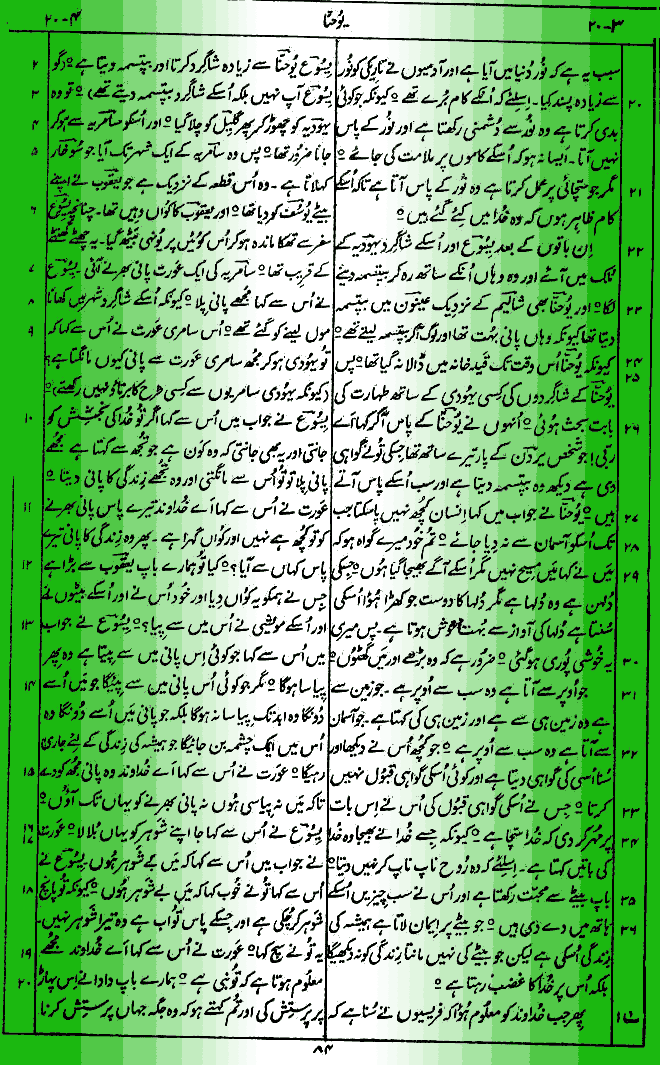
Verse-by-Verse Commentary (John 3:20 – John 4:20)
John 3:20
-
Verse Text: For every one that doeth evil hateth the light neither cometh to the light lest his deeds should be reproved
-
English Explanation: This verse exposes the psychological and spiritual reality of sin. Light inherently exposes what is hidden in darkness. Those who live in rebellion against God avoid divine truth (the Light) because they fear exposure, shame, and the ultimate judgment or correction of their lifestyle.
-
Urdu Explanation: یہ آیت گناہ کی نفسیاتی اور روحانی حقیقت کو ظاہر کرتی ہے۔ روشنی قدرتی طور پر اندھیرے میں چھپی چیزوں کو بے نقاب کرتی ہے۔ جو لوگ خدا کے خلاف نافرمانی کی زندگی گزارتے ہیں وہ الٰہی سچائی (روشنی) سے دور بھاگتے ہیں کیونکہ انہیں اپنے اعمال کے بے نقاب ہونے، شرمندگی اور ملامت کا ڈر ہوتا ہے۔
John 3:21
-
Verse Text: But he that doeth truth cometh to the light that his deeds may be made manifest that they are wrought in God
-
English Explanation: In contrast to the evildoer, a person committed to honesty and righteousness actively seeks the light. They do not fear exposure because their actions are rooted in obedience to God. Their lives serve as a testimony that their works are empowered by God Himself.
-
Urdu Explanation: بدکار کے برعکس، وہ شخص جو سچائی اور راستبازی پر قائم رہتا ہے وہ خود روشنی کے پاس آتا ہے۔ اسے بے نقاب ہونے کا کوئی خوف نہیں ہوتا کیونکہ اس کے اعمال خدا کی فرمانبرداری میں ہوتے ہیں۔ اس کی زندگی اس بات کی گواہی دیتی ہے کہ اس کے کام خدا کی طاقت سے انجام پائے ہیں۔
John 3:22
-
Verse Text: After these things came Jesus and his disciples into the land of Judaea and there he tarried with them and baptized
-
English Explanation: Following His profound conversation with Nicodemus in Jerusalem, Jesus transitions His ministry to the broader Judean countryside. Here, He spends valuable, relational time with His disciples while establishing a ministry of baptism, signaling a time of spiritual preparation and repentance.
-
Urdu Explanation: یروشلم میں نیکودیمس کے ساتھ گہری گفتگو کے بعد، یسوع نے اپنی وزارت کو یہودیہ کے دیہی علاقوں کی طرف منتقل کیا۔ یہاں، انہوں نے اپنے شاگردوں کے ساتھ قیمتی وقت گزارا اور بپتسمہ دینے کی وزارت شروع کی، جو کہ روحانی تیاری اور توبہ کے دور کی علامت تھی۔
John 3:23
-
Verse Text: And John also was baptizing in Aenon near to Salim because there was much water there and they came and were baptized
-
English Explanation: John the Baptist continues his ministry concurrently in Aenon, chosen specifically for its abundant water supply necessary for full immersion. This highlights that both Jesus’ and John’s ministries were operating simultaneously, drawing massive crowds seeking spiritual renewal.
-
Urdu Explanation: یوحنا بپتسمہ دینے والے نے بھی عینون میں اپنی وزارت جاری رکھی، جسے خاص طور پر پانی کی کثرت کی وجہ سے چنا گیا تھا جو کہ مکمل ڈبکی کے بپتسمہ کے لیے ضروری تھا۔ یہ ظاہر کرتا ہے کہ یسوع اور یوحنا دونوں کی وزارتیں بیک وقت کام کر رہی تھیں اور لوگ کثرت سے بپتسمہ لینے آ رہے تھے۔
John 3:24
-
Verse Text: For John was not yet cast into prison
-
English Explanation: The narrator provides a crucial chronological marker. This historical note clarifies that these events took place before Herod Antipas imprisoned John the Baptist, a defining turning point that occurred later in the Gospel narrative.
-
Urdu Explanation: یہاں ایک اہم تاریخی اور وقتی وضاحت پیش کی گئی ہے۔ یہ نوٹ واضح کرتا ہے کہ یہ واقعات ہیرودیس انتپاس کی طرف سے یوحنا بپتسمہ دینے والے کو قید کرنے سے پہلے پیش آئے تھے، جو کہ بعد میں انجیل کی تاریخ میں ایک بڑا موڑ ثابت ہوا۔
John 3:25
-
Verse Text: Then there arose a question between some of John’s disciples and the Jews about purifying
-
English Explanation: A theological debate or dispute arises between John’s disciples and certain Jewish authorities regarding ceremonial cleansing laws. This dispute likely centered around the effectiveness and authority of John’s baptism versus traditional Jewish purification rituals and Jesus’ new ministry.
-
Urdu Explanation: یہاں یوحنا کے شاگردوں اور یہودیوں کے درمیان طہارت اور پاکیزگی کی مذہبی رسومات کے حوالے سے ایک بحث چھڑ گئی۔ یہ بحث ممکنہ طور پر روایتی یہودی رسومات کے مقابلے میں یوحنا اور یسوع کے بپتسمہ کی اہمیت اور اختیار کے گرد گھوم رہی تھی۔
John 3:26
-
Verse Text: And they came unto John and said unto him Rabbi he that was with thee beyond Jordan to whom thou barest witness behold the same baptizeth and all men come to him
-
English Explanation: John’s disciples approach him with a sense of anxiety and professional jealousy. They point out that Jesus—whom John had previously endorsed—is now baptizing, and the crowds are shifting away from John toward Jesus. They view this as a competitive threat.
-
Urdu Explanation: یوحنا کے شاگردوں نے حسد اور فکر کے احساس کے ساتھ ان سے رجوع کیا۔ انہوں نے کہا کہ جس یسوع کی آپ نے گواہی دی تھی، اب وہ خود بپتسمہ دے رہا ہے اور سب لوگ آپ کو چھوڑ کر اس کے پاس جا رہے ہیں۔ وہ اسے ایک مقابلے کے طور پر دیکھ رہے تھے۔
John 3:27
-
Verse Text: John answered and said A man can receive nothing except it be given him from heaven
-
English Explanation: John responds with profound spiritual humility and theological alignment. He recognizes that ministry leadership, scope, and success are sovereignly allocated by God. He shifts the focus from earthly competition to heavenly appointment.
-
Urdu Explanation: یوحنا نے گہری روحانی عاجزی کے ساتھ جواب دیا کہ انسان کو کچھ نہیں مل سکتا جب تک کہ وہ اسے آسمان سے نہ دیا جائے۔ انہوں نے واضح کیا کہ ہر ایک کی وزارت اور کامیابی خدا کے ہاتھ میں ہے، اس لیے یہاں کسی دنیاوی مقابلے کی گنجائش نہیں ہے۔
John 3:28
-
Verse Text: Ye yourselves bear me witness that I said I am not the Christ but that I am sent before him
-
English Explanation: John reminds his followers of his consistent mission statement. He never claimed to be the Messiah; rather, he was explicitly commissioned as the herald or forerunner whose sole job was to prepare the path for the true Christ.
-
Urdu Explanation: یوحنا نے اپنے شاگردوں کو اپنا پرانا بیان یاد دلایا کہ انہوں نے کبھی مسیح ہونے کا دعویٰ نہیں کیا۔ بلکہ ان کا کام صرف ایک منادی کرنے والے کا تھا جسے مسیح سے پہلے اس کی راہ تیار کرنے کے لیے بھیجا گیا تھا۔
John 3:29
-
Verse Text: He that hath the bride is the bridegroom but the friend of the bridegroom which standeth and heareth him rejoiceth greatly because of the bridegroom’s voice this my joy therefore is fulfilled
-
English Explanation: Using a beautiful wedding metaphor, John describes Jesus as the Bridegroom and Israel/the Church as the bride. John identifies himself merely as the “best man” (friend of the bridegroom). His ultimate joy is not in keeping the attention, but in hearing the Bridegroom’s voice and seeing Him receive His bride.
-
Urdu Explanation: شادی کے ایک خوبصورت استعارے کا استعمال کرتے ہوئے، یوحنا نے یسوع کو “دولہا” اور کلیسیا کو “دلہن” قرار دیا۔ انہوں نے خود کو صرف دولہے کا دوست (براتی) کہا۔ ان کی خوشی اس بات میں نہیں تھی کہ لوگ ان کے پاس رہیں، بلکہ اس میں تھی کہ دولہے کی آواز سنیں اور اسے مقبول ہوتے دیکھیں۔
John 3:30
-
Verse Text: He must increase but I must decrease
-
Explanation: This is the ultimate statement of selfless ministry. John acknowledges that as Jesus’ divine purpose comes to the forefront, his own preparatory role must naturally fade into the background. It is a model for all spiritual servant leaders.
-
Urdu Explanation: یہ بے غرض وزارت اور عاجزی کا سب سے بڑا اعلان ہے۔ یوحنا نے اعتراف کیا کہ جیسے جیسے یسوع کا الٰہی مقصد سامنے آئے گا، ان کا اپنا ابتدائی کردار پسِ منظر میں چلا جائے گا۔ یہ تمام روحانی رہنماؤں کے لیے ایک بہترین نمونہ ہے۔
John 3:31
-
Verse Text: He that cometh from above is above all he that is of the earth is earthly and speaketh of the earth he that cometh from heaven is above all
-
English Explanation: The narrator underlines the ontological difference between Jesus and all earthly prophets. Jesus originates from heaven and holds absolute supremacy over everything. Earthly messengers, including John, are bound by human limitations, whereas Jesus speaks with supreme heavenly authority.
-
Urdu Explanation: یہاں یسوع اور دنیا کے دیگر انبیاء کے درمیان فرق کو واضح کیا گیا ہے۔ یسوع آسمان سے آیا ہے اور وہ سب سے بالا و برتر ہے۔ زمین کے پیدا کردہ لوگ انسانی حدود میں مقید ہوتے ہیں، جبکہ آسمانی ہستی (یسوع) مطلق الٰہی اختیار کے ساتھ کلام کرتی ہے۔
John 3:32
-
Verse Text: And what he hath seen and heard that he testifieth and no man receiveth his testimony
-
English Explanation: Jesus’ message is completely authentic because He bears witness to truths He has personally witnessed in the presence of the Father. Despite this flawless and direct heavenly revelation, humanity, in its spiritual blindness, generally rejects His message.
-
Urdu Explanation: یسوع کا پیغام بالکل سچا ہے کیونکہ وہ ان باتوں کی گواہی دیتا ہے جو اس نے اپنے باپ (خدا) کے پاس خود دیکھیں اور سنیں۔ اس کامل اور براہِ راست آسمانی سچائی کے باوجود، انسانیت اپنی روحانی اندھی اصرار کی وجہ سے عام طور پر اس کے پیغام کو رد کر دیتی ہے۔
John 3:33
-
Verse Text: He that hath received his testimony hath set to his seal that God is true
-
English Explanation: Whosoever breaks through spiritual blindness and accepts Jesus’ message validates and certifies God’s faithfulness. To believe Jesus is to formally acknowledge that God keeps His promises and that His word is absolute truth.
-
Urdu Explanation: جو کوئی بھی اس روحانی اندھیرے سے نکل کر یسوع کی گواہی کو قبول کرتا ہے، وہ گویا اس بات پر مہر لگا دیتا ہے کہ خدا سچا ہے۔ یسوع پر ایمان لانے کا مطلب یہ تسلیم کرنا ہے کہ خدا اپنے وعدوں کا پکا ہے اور اس کا کلام سراسر سچائی ہے۔
John 3:34
-
Verse Text: For he whom God hath sent speaketh the words of God for God giveth not the Spirit by measure unto him
-
English Explanation: Jesus, as the ultimate Sent One, speaks the precise words of the Father. Unlike Old Testament prophets who received limited measures of the Holy Spirit for specific tasks, Jesus possesses the Holy Spirit without limit or measure, completely filled with divine presence.
-
Urdu Explanation: یسوع خدا کا بھیجا ہوا حقیقی کلام پیش کرتا ہے۔ پرانے عہد نامے کے انبیاء کے برعکس جنہیں مخصوص کاموں کے لیے روح القدس محدود مقدار میں دیا جاتا تھا، یسوع کو خدا نے بغیر کسی ناپ یا حد کے پاک روح سے معمور کیا ہے۔
John 3:35
-
Verse Text: The Father loveth the Son and hath given all things into his hand
-
English Explanation: The relationship between the First and Second Persons of the Trinity is characterized by perfect love. Because of this eternal love, the Father has delegated cosmic authority, judgment, and dominion entirely into the hands of the Son.
-
Urdu Explanation: تثلیث پاک کے باپ اور بیٹے کے درمیان رشتہ کامل محبت کا ہے۔ اسی ازلی محبت کی وجہ سے، باپ نے کائنات کا تمام اختیار، عدالت اور حاکمیت بیٹے کے ہاتھ میں سونپ دی ہے۔
John 3:36
-
Verse Text: He that believeth on the Son hath everlasting life and he that believeth not the Son shall not see life but the wrath of God abideth on him
-
English Explanation: This verse sets a definitive, sobering boundary line for humanity. Salvation is directly tied to one’s response to Jesus. Faith in the Son yields immediate possession of eternal life, while conscious rejection results in missing true life and remaining under God’s righteous judgment against sin.
-
Urdu Explanation: یہ آیت انسانیت کے لیے ایک واضح اور فیصلہ کن حد مقرر کرتی ہے۔ نجات کا انحصار براہِ راست یسوع پر ایمان لانے پر ہے۔ بیٹے پر ایمان لانے سے ابدی زندگی حاصل ہوتی ہے، جبکہ اسے رد کرنے کا انجام خدا کے غضب اور دائمی سزا کی صورت میں نکلتا ہے۔
John 4:1
-
Verse Text: When therefore the Lord knew how the Pharisees had heard that Jesus made and baptized more disciples than John
-
English Explanation: Jesus becomes aware that the religious elite (the Pharisees) are monitoring His rapid growth. They noticed that His influence had surpassed that of John the Baptist, which threatened their centralized religious control in Jerusalem.
-
Urdu Explanation: یسوع کو معلوم ہوا کہ فریسیوں (مذہبی پیشواؤں) تک یہ خبر پہنچ چکی ہے کہ یسوع، یوحنا سے بھی زیادہ شاگرد بنا رہے اور بپتسمہ دے رہے ہیں۔ یہ چیز ان کے اپنے مذہبی تسلط کے لیے ایک خطرہ بن رہی تھی۔
John 4:2
-
Verse Text: Though Jesus himself baptized not but his disciples
-
English Explanation: The author includes a parenthetical clarification. Jesus did not physically perform the water baptisms Himself; instead, He delegated this ritual task to His disciples, focusing His own efforts on teaching, healing, and direct spiritual leadership.
-
Urdu Explanation: مصنف نے یہاں ایک وضاحتی جملہ شامل کیا ہے کہ یسوع خود اپنے ہاتھوں سے پانی کا بپتسمہ نہیں دیتے تھے، بلکہ ان کے شاگرد یہ کام کرتے تھے۔ یسوع کی توجہ تعلیم دینے، شفا دینے اور روحانی قیادت پر مرکوز تھی۔
John 4:3
-
Verse Text: He left Judaea and departed again into Galilee
-
English Explanation: To prevent a premature, hostile confrontation with the Pharisees before His appointed hour, Jesus strategicially de-escalates the situation. He leaves Judea and journeys northward back toward the region of Galilee.
-
Urdu Explanation: فریسیوں کے ساتھ وقت سے پہلے کسی تصادم یا مخالفت سے بچنے کے لیے، یسوع نے حکمتِ عملی کے تحت یہودیہ چھوڑ دیا اور شمال کی طرف گلیل کے علاقے کی طرف روانہ ہو گئے۔
John 4:4
-
Verse Text: And he must needs go through Samaria
-
English Explanation: While geographically there were alternative routes to bypass Samaria (which devout Jews often took to avoid Samaritans), the “must” here denotes a divine, providential necessity. Jesus had a spiritual appointment orchestrated by God.
-
Urdu Explanation: اگرچہ گلیل جانے کے لیے دوسرے راستے بھی موجود تھے جن سے یہودی لوگ سامریوں سے بچنے کے لیے گزرتے تھے، لیکن یہاں “ضرور” کا لفظ ایک الٰہی اور روحانی ضرورت کو ظاہر کرتا ہے۔ یسوع کی وہاں ایک خداوندی ملاقات طے تھی۔
John 4:5
-
Verse Text: Then cometh he to a city of Samaria which is called Sychar near to the parcel of ground that Jacob gave to his son Joseph
-
English Explanation: Jesus arrives at Sychar, a location deeply rooted in Old Testament patriarchal history. It sat adjacent to the historical plot of land that Jacob purchased and later bequeathed to his son Joseph, adding rich context to the setting.
-
Urdu Explanation: یسوع سامریہ کے ایک شہر سوخار پہنچے، جو پرانے عہد نامے کی تاریخ سے جڑا ہوا تھا۔ یہ زمین کا وہ ٹکڑا تھا جو یعقوب نے خریدا تھا اور بعد میں اپنے بیٹے یوسف کو دے دیا تھا، جو اس جگہ کی تاریخی اہمیت کو بڑھاتا ہے۔
John 4:6
-
Verse Text: Now Jacob’s well was there Jesus therefore being wearied with his journey sat thus on the well and it was about the sixth hour
-
English Explanation: This text vividly highlights Jesus’ genuine humanity. He experienced physical exhaustion from walking. He rested at Jacob’s well around the “sixth hour” (noon), during the hottest part of the day, setting the stage for an unexpected midday encounter.
-
Urdu Explanation: یہ آیت یسوع کی کامل انسانیت کو ظاہر کرتی ہے۔ سفر کی وجہ سے وہ جسمانی طور پر تھک گئے تھے اور دوپہر کے وقت (چھٹے گھنٹے) یعقوب کے کنویں پر بیٹھ گئے۔ یہ دن کا سب سے گرم وقت تھا جب یہ غیر متوقع ملاقات ہونے والی تھی۔
John 4:7
-
Verse Text: There cometh a woman of Samaria to draw water Jesus saith unto her Give me to drink
-
English Explanation: A Samaritan woman arrives at the well alone at an unusual, hot hour, hinting at her social isolation. Jesus breaks societal norms of gender and ethnicity by initiating a conversation and vulnerably asking her for water.
-
Urdu Explanation: ایک سامری عورت اس تپتی دوپہر میں اکیلی کنویں پر پانی بھرنے آئی، جو اس کی سماجی تنہائی کو ظاہر کرتا ہے۔ یسوع نے صنف اور قومیت کی سماجی دیواروں کو توڑتے ہوئے خود گفتگو کا آغاز کیا اور اس سے پانی مانگا۔
John 4:8
-
Verse Text: For his disciples were gone away unto the city to buy meat
-
English Explanation: This brief detail explains why Jesus was alone at the well. His disciples had traveled into the local Samaritan city to secure food provisions, providing privacy for this deeply personal, transformative dialogue.
-
Urdu Explanation: یہ مختصر تفصیل واضح کرتی ہے کہ یسوع کنویں پر اکیلے کیوں تھے۔ ان کے شاگرد شہر میں کھانا خریدنے گئے ہوئے تھے، جس سے اس گہری اور زندگی بدل دینے والی گفتگو کے لیے تنہائی کا موقع ملا۔
John 4:9
-
Verse Text: Then saith the woman of Samaria unto him How is it that thou being a Jew askest drink of me which am a woman of Samaria for the Jews have no dealings with the Samaritans
-
English Explanation: The woman expresses pure shock. First-century Jews and Samaritans shared deep-seated racial, religious, and political animosity. Jews considered Samaritans ceremonially unclean, making Jesus’ request highly radical.
-
Urdu Explanation: وہ عورت سخت حیران ہوئی۔ پہلی صدی میں یہودیوں اور سامریوں کے درمیان شدید مذہبی اور نسلی دشمنی تھی۔ یہودی لوگ سامریوں کو ناپاک سمجھتے تھے، اس لیے یسوع کا اس سے پانی مانگنا ایک بہت بڑی بات تھی۔
John 4:10
-
Verse Text: Jesus answered and said unto her If thou knewest the gift of God and who it is that saith to thee Give me to drink thou wouldest have asked of him and he would have given thee living water
-
English Explanation: Jesus completely shifts the trajectory of the conversation from physical thirst to spiritual lack. He reveals that if she recognized His true divine identity, she would be the one begging Him for “living water”—a metaphor for the Holy Spirit and eternal life.
-
Urdu Explanation: یسوع نے گفتگو کا رخ جسمانی پیاس سے بدل کر روحانی ضرورت کی طرف موڑ دیا۔ انہوں نے کہا کہ اگر تو خدا کی بخشش اور میری اصل پہچان کو جانتی، تو تو خود مجھ سے مانگتی اور میں تجھے “زندگی کا پانی” دیتا، جو پاک روح اور ابدی زندگی کا استعارہ ہے۔
John 4:11
-
Verse Text: The woman saith unto him Sir thou hast nothing to draw with and the well is deep from whence then hast thou that living water
-
English Explanation: Interpreting His words literalistically, the woman looks at the logistics. Jesus has no bucket, and the ancient well is exceptionally deep. She struggles to understand how He could access any fresh, moving “living water” source without equipment.
-
Urdu Explanation: عورت نے یسوع کی بات کو ظاہری معنوں میں لیا اور کہا کہ جناب، آپ کے پاس پانی نکالنے کے لیے کوئی برتن بھی نہیں اور کنواں گہرا ہے۔ تو پھر آپ کے پاس وہ زندگی کا بہتا ہوا پانی کہاں سے آئے گا؟
John 4:12
-
Verse Text: Art thou greater than our father Jacob which gave us the well and drank thereof himself and his children and his cattle
-
English Explanation: She challenges Jesus’ authority by invoking their shared ancestry through Jacob. She questions whether Jesus claims to possess a superior water source or a higher status than the great patriarch who originally established and used this reliable well.
-
Urdu Explanation: اس نے یعقوب کا حوالہ دیتے ہوئے یسوع کے اختیار کو چیلنج کیا۔ اس نے پوچھا کہ کیا آپ ہمارے باپ یعقوب سے بھی بڑے ہیں جس نے ہمیں یہ کنواں دیا اور خود بھی اس میں سے پیا؟ کیا آپ کے پاس اس سے بہتر کوئی ذریعہ ہے؟
John 4:13
-
Verse Text: Jesus answered and said unto her Whosoever drinketh of this water shall thirst again
-
English Explanation: Jesus does not insult Jacob, but gently points out the limitations of physical things. Physical water can only provide temporary relief; anyone who drinks it will inevitably become thirsty again, symbolizing the temporary satisfaction of worldly pursuits.
-
Urdu Explanation: یسوع نے یعقوب کی توہین کیے بغیر، مادی چیزوں کی محدودیت کی طرف اشارہ کیا۔ دنیاوی پانی صرف عارضی سکون دے سکتا ہے، اور اسے پینے والا دوبارہ پیاسا ہوگا، جو کہ دنیاوی خواہشات کی عارضی تسکین کی علامت ہے۔
John 4:14
-
Verse Text: But whosoever drinketh of the water that I shall give him shall never thirst but the water that I shall give him shall be in him a well of water springing up into everlasting life
-
English Explanation: Jesus contrasts physical water with His spiritual provision. The salvation and internal presence of the Holy Spirit that He offers creates an internal, self-sustaining fountain. It permanently satisfies the soul’s deepest longings, culminating in eternal life.
-
Urdu Explanation: یسوع نے مادی پانی کا موازنہ اپنی روحانی بخشش سے کیا۔ جو نجات اور پاک روح وہ دیتے ہیں، وہ انسان کے اندر ایک چشمہ بن جاتا ہے جو ابدی زندگی کے لیے ابلتا رہتا ہے اور روح کی پیاس ہمیشہ کے لیے مٹا دیتا ہے۔
John 4:15
-
Verse Text: The woman saith unto him Sir give me this water that I thirst not neither come hither to draw
-
English Explanation: Still somewhat focused on physical convenience, the woman eagerly requests this miraculous water. She wants to escape the daily physical exhaustion and social embarrassment of walking to the well in the heat of the day.
-
Urdu Explanation: عورت اب بھی کسی حد تک دنیاوی آسانی کے بارے میں سوچ رہی تھی، اس لیے اس نے فوراً وہ پانی مانگا تاکہ اسے روزانہ کی تھکن اور اس تپتی دوپہر میں لوگوں سے چھپ کر کنویں پر نہ آنا پڑے۔
John 4:16
-
Verse Text: Jesus saith unto her Go call thy husband and come hither
-
English Explanation: To address her true spiritual condition, Jesus abruptly but intentionally shifts the topic to her personal life. By asking her to bring her husband, He prepares to gently expose her hidden past and drive her to recognize her deep moral and spiritual need.
-
Urdu Explanation: اس کی حقیقی روحانی حالت کو بیدار کرنے کے لیے، یسوع نے حکمت کے ساتھ گفتگو کا رخ اس کی ذاتی زندگی کی طرف موڑ دیا۔ انہوں نے اسے اپنے شوہر کو بلانے کے لیے کہا تاکہ اس کے ماضی کو سامنے لا کر اسے گناہ اور توبہ کا احساس دلائیں۔
John 4:17
-
Verse Text: The woman answered and said I have no husband Jesus said unto her Thou hast well said I have no husband
-
English Explanation: The woman replies with a technically true but deceptive shorthand statement, trying to deflect scrutiny. Jesus commends her precise wording but immediately signals that He knows the underlying truth she is holding back.
-
Urdu Explanation: عورت نے خود کو بچانے کے لیے آدھا سچ بولا کہ میرا کوئی شوہر نہیں ہے۔ یسوع نے اس کے لفظی سچ کی تصدیق کی لیکن ساتھ ہی یہ اشارہ دیا کہ وہ اس کے پیچھے چھپی پوری حقیقت سے واقف ہیں۔
John 4:18
-
Verse Text: For thou hast had five husbands and he whom thou now hast is not thy husband in that saidst thou truly
-
English Explanation: Jesus displays supernatural knowledge by exposing her history: she has been married five times, and her current relationship lacks legal or biblical covenant commitment. This divine insight proves He sees her entire life clearly.
-
Urdu Explanation: یسوع نے غیب کا علم ظاہر کرتے ہوئے اس کی زندگی کے پوشیدہ راز کھول دیے کہ وہ پانچ شادیاں کر چکی ہے اور اب جس کے ساتھ رہ رہی ہے وہ اس کا شوہر نہیں ہے۔ اس الٰہی انکشاف نے ثابت کیا کہ یسوع اس کی زندگی سے واقف ہیں۔
John 4:19
-
Verse Text: The woman saith unto him Sir I perceive that thou art a prophet
-
English Explanation: Shocked by His supernatural insight into her highly private life, the woman abandons her deflection. She acknowledges Jesus not just as a common traveler, but recognizes Him as a true Prophet sent by God.
-
Urdu Explanation: اپنی انتہائی نجی زندگی کے بارے میں یسوع کے اس مافوق الفطرت علم کو دیکھ کر عورت دنگ رہ گئی۔ اس نے مانا کہ یسوع کوئی عام مسافر نہیں بلکہ خدا کا بھیجا ہوا ایک سچا نبی ہے۔
John 4:20
-
Verse Text: Our fathers worshipped in this mountain and ye say that in Jerusalem is the place where men ought to worship
-
English Explanation: Recognizing His prophetic status, she immediately brings up the core theological dispute between Samaritans and Jews: the correct location for worship. Samaritans worshiped on Mount Gerizim, while Jews insisted on the Temple in Jerusalem.
-
Urdu Explanation: یسوع کو نبی تسلیم کرنے کے بعد، اس نے فوراً سامریوں اور یہودیوں کے درمیان سب سے بڑے مذہبی اختلاف کا ذکر کیا کہ عبادت کہاں ہونی چاہیے۔ سامری جبلِ جرزیم پر عبادت کرتے تھے جبکہ یہودی یروشلم کے ہیکل کو اصل جگہ مانتے تھے۔