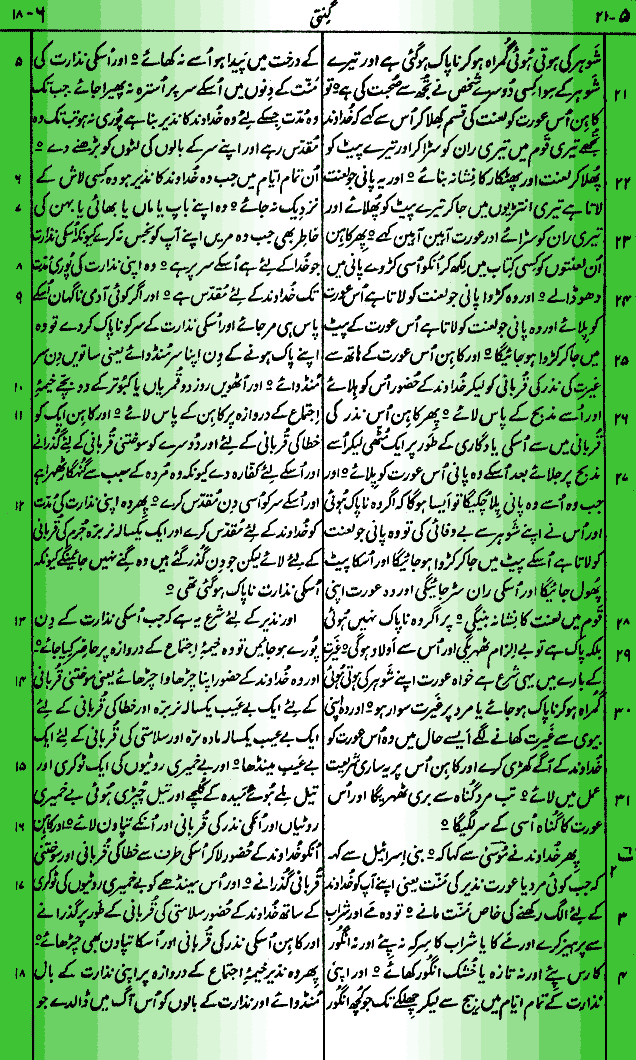
Chapter 5: The Law of Jealousy
Numbers 5:21
Verse: Then the priest shall charge the woman with an oath of cursing and the priest shall say unto the woman The LORD make thee a curse and an oath among thy people when the LORD doth make thy thigh to rot and thy belly to swell
-
English Explanation: The priest administers a formal oath. The physical consequences mentioned (swelling and rotting) serve as a visible, divine sign of guilt if she has been unfaithful.
-
Urdu Explanation: کاہن عورت کو بددعا کی قسم کھلائے گا۔ اگر وہ قصوروار ہے تو خدا کی طرف سے اس پر ایسی لعنت آئے گی کہ اس کا پیٹ پھول جائے گا اور ران سڑ جائے گی جو اس کے گناہ کی علامت ہوگی۔
Numbers 5:22
Verse: And this water that causeth the curse shall go into thy bowels to make thy belly to swell and thy thigh to rot And the woman shall say Amen amen
-
English Explanation: The woman accepts the terms of the trial by saying “Amen, amen,” acknowledging that God is the rightful judge of her secret actions.
-
Urdu Explanation: یہ بددعا کا پانی عورت کے پیٹ میں جا کر اثر دکھائے گا۔ عورت “آمین آمین” کہے گی جس کا مطلب ہے کہ وہ خدا کے اس فیصلے کو قبول کرتی ہے۔
Numbers 5:23
Verse: And the priest shall write these curses in a book and he shall blot them out with the bitter water
-
English Explanation: The priest writes the curses on a scroll and washes the ink into the bitter water, symbolically transferring the power of the written word into the liquid.
-
Urdu Explanation: کاہن ان بددعاؤں کو ایک طومار پر لکھے گا اور پھر اس لکھائی کو کڑوے پانی میں دھو ڈالے گا تاکہ وہ کلمات اس پانی کا حصہ بن جائیں۔
Numbers 5:24
Verse: And he shall cause the woman to drink the bitter water that causeth the curse and the water that causeth the curse shall enter into her and become bitter
-
English Explanation: Consumption of the water represents the internalizing of the oath; the water itself is not toxic, but it becomes a medium for divine intervention.
-
Urdu Explanation: عورت کو وہ کڑوا پانی پلایا جائے گا۔ یہ پانی اس کے اندر جا کر کڑواہٹ پیدا کرے گا اور اگر وہ گنہگار ہے تو اس پر اثر کرے گا۔
Numbers 5:25-26
Verse: Then the priest shall take the jealousy offering out of the womans hand and shall wave the offering before the LORD and offer it upon the altar And the priest shall take an handful of the offering even the memorial thereof and burn it upon the altar and afterward shall cause the woman to drink the water
-
English Explanation: A “jealousy offering” (barley meal) is presented to God. It contains no oil or incense, reflecting the somber nature of the accusation.
-
Urdu Explanation: کاہن عورت کے ہاتھ سے حسد کا ہدیہ لے کر اسے خداوند کے حضور ہلائے گا اور اس کا کچھ حصہ قربان گاہ پر جلائے گا۔ اس کے بعد وہ عورت پانی پیئے گی۔
Numbers 5:27-28
Verse: And when he hath made her to drink the water then it shall come to pass that if she be defiled and have done trespass against her husband that the water that causeth the curse shall enter into her and become bitter and her belly shall swell and her thigh shall rot and the woman shall be a curse among her people And if the woman be not defiled but be clean then she shall be free and shall conceive seed
-
English Explanation: If guilty, she suffers physically and socially. If innocent, she is divinely vindicated and blessed with fertility, proving her purity.
-
Urdu Explanation: اگر عورت ناپاک ہوئی تو پانی اس کے جسم میں بیماری پیدا کرے گا۔ لیکن اگر وہ پاک دامن ہوئی تو اسے کوئی نقصان نہیں ہوگا بلکہ وہ صاحبِ اولاد ہوگی۔
Numbers 5:29-31
Verse: This is the law of jealousies when a wife goeth aside to another instead of her husband and is defiled Or when the spirit of jealousy cometh upon him and he be jealous over his wife and shall set the woman before the LORD and the priest shall execute upon her all this law Then shall the man be guiltless from iniquity and this woman shall bear her iniquity
-
English Explanation: This law provided a way to resolve intense domestic suspicion through divine appeal, preventing private revenge and protecting an innocent wife.
-
Urdu Explanation: یہ حسد کا قانون ہے۔ اس کے ذریعے شوہر کے شک کا ازالہ ہوتا ہے۔ اگر شوہر بلاوجہ شک کرے تو اس عمل کے بعد وہ بری الذمہ ہو جاتا ہے اور گناہ کی ذمہ داری عورت پر ہوتی ہے اگر وہ قصوروار ہو۔
Chapter 6: The Law of the Nazarite
Numbers 6:1-2
Verse: And the LORD spake unto Moses saying Speak unto the children of Israel and say unto them When either man or woman shall separate themselves to vow a vow of a Nazarite to separate themselves unto the LORD
-
English Explanation: The Nazarite vow was a voluntary act of deep devotion where an individual consecrated themselves entirely to God for a specific period.
-
Urdu Explanation: خدا نے موسیٰ سے فرمایا کہ بنی اسرائیل کو نذیر کی منت کے بارے میں بتاؤ۔ یہ ایک ایسی منت ہے جس میں مرد یا عورت خود کو مخصوص وقت کے لیے خدا کے لیے وقف کر دیتے ہیں۔
Numbers 6:3-4
Verse: He shall separate himself from wine and strong drink and shall drink no vinegar of wine or vinegar of strong drink neither shall he drink any liquor of grapes nor eat moist grapes or dried All the days of his separation shall he eat nothing that is made of the vine tree from the kernels even to the husk
-
English Explanation: The Nazarite must abstain from all grape products to maintain a state of total sobriety and distinction from worldly pleasures.
-
Urdu Explanation: نذیر اپنے وقف کے دوران انگور کی کسی بھی چیز سے پرہیز کرے گا۔ نہ شراب، نہ سرکہ اور نہ ہی انگور یا کشمش کھائے گا۔
Numbers 6:5
Verse: All the days of the vow of his separation there shall no razor come upon his head until the days be fulfilled in the which he separateth himself unto the LORD he shall be holy and shall let the locks of the hair of his head grow
-
English Explanation: Long hair was a visible sign of the vow. It represented the “crown” of God upon the person, showing they were under a special holy obligation.
-
Urdu Explanation: جب تک اس کی منت کے دن پورے نہ ہوں، وہ اپنے سر کے بال نہیں کاٹے گا۔ لمبے بال اس کے خدا کے لیے مخصوص ہونے کی ظاہری علامت ہوں گے۔
Numbers 6:6-8
Verse: All the days that he separateth himself unto the LORD he shall come at no dead body He shall not make himself unclean for his father or for his mother for his brother or for his sister when they die because the consecration of his God is upon his head All the days of his separation he is holy unto the LORD
-
English Explanation: The Nazarite was held to a standard of purity even higher than an ordinary priest, forbidden from touching any corpse, even a close relative.
-
Urdu Explanation: نذیر کسی لاش کے پاس نہیں جائے گا، خواہ وہ اس کے قریبی رشتہ دار ہی کیوں نہ ہوں۔ وہ اپنے وقف کے تمام ایام میں خداوند کے لیے پاک ہے۔
Numbers 6:9-12
Verse: And if any man die very suddenly by him and he hath defiled the head of his consecration then he shall shave his head in the day of his cleansing on the seventh day shall he shave it … but the days that were before shall be lost because his separation was defiled
-
English Explanation: If the vow is accidentally broken by contact with death, the person must undergo a cleansing ritual, shave their head, and start the entire vow period over.
-
Urdu Explanation: اگر ناگہانی طور پر کوئی اس کے پاس مر جائے تو اس کا وقف ناپاک ہو جائے گا۔ اسے ساتویں دن سر منڈوانا ہوگا اور اپنی منت کا وقت دوبارہ شروع کرنا ہوگا۔ پچھلے دن شمار نہیں ہوں گے۔
Numbers 6:13-17
Verse: And this is the law of the Nazarite when the days of his separation are fulfilled … And he shall offer his offering unto the LORD … And the priest shall bring them before the LORD and shall offer his sin offering and his burnt offering
-
English Explanation: Completion of the vow required elaborate sacrifices (burnt, sin, and peace offerings), showing that even after a period of holiness, atonement is necessary.
-
Urdu Explanation: جب منت پوری ہو جائے تو نذیر کو مختلف قربانیاں (سوختنی، خطا اور سلامتی کا ہدیہ) پیش کرنی ہوں گی۔ یہ خدا کے حضور شکرگزاری اور کفارے کی علامت ہے۔
Numbers 6:18
Verse: And the Nazarite shall shave the head of his separation at the door of the tabernacle of the congregation and shall take the hair of the head of his separation and put it in the fire which is under the sacrifice of the peace offerings
-
English Explanation: Shaving the head at the Tabernacle marked the end of the vow. Burning the hair in the sacrificial fire symbolized giving the strength and “crown” of their separation back to God.
-
Urdu Explanation: نذیر خیمہِ اجتماع کے دروازے پر اپنا سر منڈوائے گا اور ان بالوں کو سلامتی کے ہدیہ کی آگ میں ڈال دے گا، جو اس کے وقف کے مکمل ہونے کا نشان ہے۔