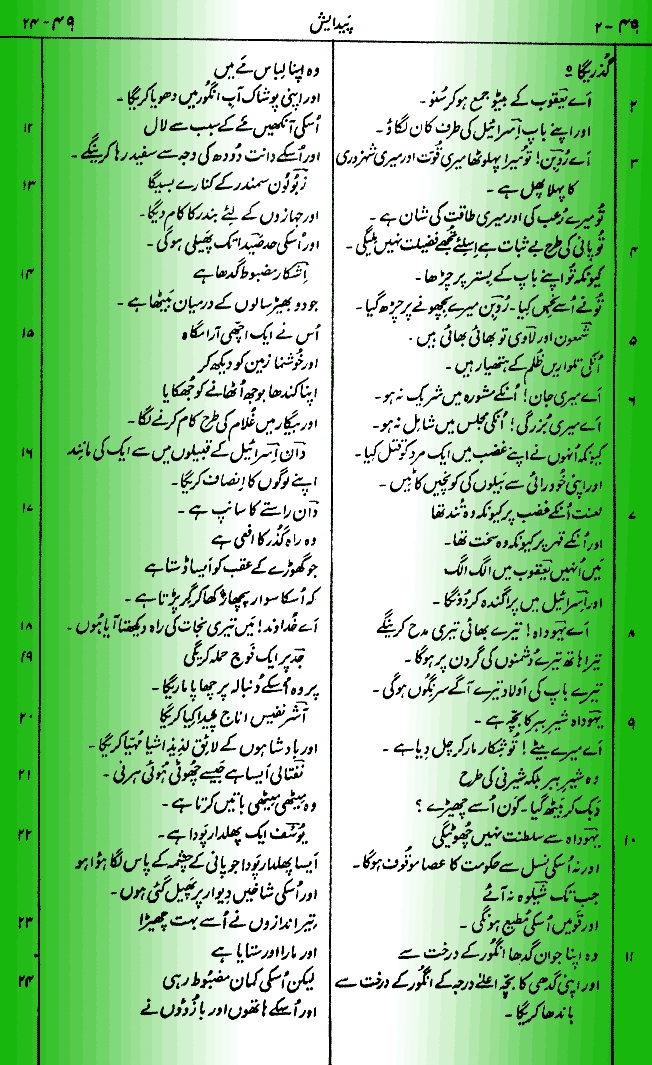
Genesis 49: Verses and Explanations
Verse 2
Verse: Gather yourselves together and hear ye sons of Jacob and hearken unto Israel your father
-
English Explanation: Jacob (Israel) calls his twelve sons for his final words. This is a formal summons to receive prophetic insights into their future lineages. He speaks as both their biological father and the patriarch of a nation.
-
Urdu Explanation: یعقوب (اسرائیل) اپنے بارہ بیٹوں کو اپنے آخری الفاظ سننے کے لیے بلاتے ہیں۔ یہ ان کے مستقبل کے بارے میں نبوت حاصل کرنے کے لیے ایک رسمی بلاوا ہے۔ وہ ان کے باپ اور ایک قوم کے پیشوا کے طور پر کلام کر رہے ہیں۔
Verse 3
Verse: Reuben thou art my firstborn my might and the beginning of my strength the excellency of dignity and the excellency of power
-
English Explanation: Reuben, the eldest, held the natural right of the firstborn (double portion and leadership). Jacob acknowledges his status as the “firstfruits” of his physical strength and his high potential.
-
Urdu Explanation: روبن پہلوٹھا ہونے کے ناطے وراثت اور قیادت کا قدرتی حق رکھتا تھا۔ یعقوب اس کی حیثیت کو اپنی جسمانی قوت کے پہلے پھل اور اس کی اعلیٰ صلاحیت کے طور پر تسلیم کرتے ہیں۔
Verse 4
Verse: Unstable as water thou shalt not excel because thou wentest up to thy fathers bed then defiledst thou it he went up to my couch
-
English Explanation: Due to Reuben’s lack of moral discipline (his sin with Bilhah), he lost his preeminence. Just as water flows uncontrollably, his character was unstable, leading to the loss of his birthright leadership.
-
Urdu Explanation: روبن کی اخلاقی کمزوری (بلہاہ کے ساتھ گناہ) کی وجہ سے اس نے اپنی برتری کھو دی۔ جیسے پانی بے قابو بہتا ہے اس کا کردار غیر مستحکم تھا جس کی وجہ سے وہ قیادت کے حق سے محروم ہو گیا۔
Verse 5
Verse: Simeon and Levi are brethren instruments of cruelty are in their habitations
-
English Explanation: Jacob groups Simeon and Levi together because of their shared violence in the massacre of the Shechemites. Their “brotherhood” was rooted in anger rather than righteousness.
-
Urdu Explanation: یعقوب نے شمعون اور لاوی کو ان کے مشترکہ تشدد (سکم کے لوگوں کا قتل عام) کی وجہ سے ایک ساتھ رکھا ہے۔ ان کی بھائی بندی نیکی کے بجائے غصے اور انتقام پر مبنی تھی۔
Verse 6
Verse: O my soul come not thou into their secret unto their assembly mine honour be not thou united for in their anger they slew a man and in their selfwill they digged down a wall
-
English Explanation: Jacob distances his own legacy from their impulsive violence. He condemns their “self-will,” noting that their anger led them to commit acts of wanton destruction.
-
Urdu Explanation: یعقوب اپنی میراث کو ان کے پرتشدد اقدامات سے الگ کرتے ہیں۔ وہ ان کے غصے اور خود غرضی کی مذمت کرتے ہیں جس نے انہیں تباہی مچانے پر اکسایا۔
Verse 7
Verse: Cursed be their anger for it was fierce and their wrath for it was cruel I will divide them in Jacob and scatter them in Israel
-
English Explanation: As a consequence, their tribes would be scattered. Simeon’s territory was later absorbed by Judah, and Levi became a landless tribe of priests, dispersed among the other tribes.
-
Urdu Explanation: نتیجے کے طور پر ان کے قبائل کو منتشر ہونا پڑا۔ بعد میں شمعون کا علاقہ یہوداہ میں ضم ہو گیا اور لاوی کے لوگ کاہن بن کر دوسرے قبائل میں پھیل گئے۔
Verse 8
Verse: Judah thou art he whom thy brethren shall praise thy hand shall be in the neck of thine enemies thy fathers children shall bow down before thee
-
English Explanation: Leadership shifts to Judah. His name means “praise,” and Jacob prophesies that he will lead in battle and receive the submission of the other tribes.
-
Urdu Explanation: قیادت اب یہوداہ کی طرف منتقل ہو جاتی ہے۔ اس کے نام کا مطلب “تعریف” ہے اور یعقوب پیشین گوئی کرتے ہیں کہ وہ جنگ میں قیادت کرے گا اور دوسرے قبائل اس کی تعظیم کریں گے۔
Verse 9
Verse: Judah is a lions whelp from the prey my son thou art gone up he stooped down he couched as a lion and as an old lion who shall rouse him up
-
English Explanation: Judah is compared to a lion, symbolizing strength, royalty, and courage. He is portrayed as a victorious predator that no one dares to provoke.
-
Urdu Explanation: یہوداہ کو شیر سے تشبیہ دی گئی ہے جو طاقت، بادشاہت اور بہادری کی علامت ہے۔ اسے ایک فاتح کے طور پر دکھایا گیا ہے جسے للکارنے کی کوئی ہمت نہیں کرتا۔
Verse 10
Verse: The sceptre shall not depart from Judah nor a lawgiver from between his feet until Shiloh come and unto him shall the gathering of the people be
-
English Explanation: This is a Messianic prophecy. It predicts that the royal line will remain with Judah until “Shiloh” (The Prince of Peace/Messiah) arrives, to whom all nations will gather.
-
Urdu Explanation: یہ ایک مسیحائی پیشین گوئی ہے۔ یہ بتاتی ہے کہ بادشاہی یہوداہ کے پاس رہے گی جب تک کہ “شیلوہ” (امن کا شہزادہ یا مسیح) نہ آ جائے جس کی طرف تمام قومیں جمع ہوں گی۔
Verse 11
Genesis 49:11 explained in detail: read the complete KJV verse and discover the English and Urdu meaning of the vine, choice vine, wine, and “blood of grapes” imagery in Judah’s prophecy.
-
English Explanation: This imagery describes the immense prosperity of Judah’s land. Vines will be so plentiful that people can tie animals to them, and wine will be as common as water.
-
Urdu Explanation: یہ یہوداہ کی زمین کی بے پناہ خوشحالی کی عکاسی کرتا ہے۔ انگور کی بیلیں اتنی کثرت سے ہوں گی کہ لوگ جانوروں کو ان سے باندھیں گے اور مے پانی کی طرح عام ہوگی۔
Verse 12
Verse: His eyes shall be red with wine and his teeth white with milk
-
English Explanation: Further emphasizing abundance, this verse speaks of physical health and a surplus of agricultural produce (wine and dairy) in Judah’s territory.
-
Urdu Explanation: کثرت پر مزید زور دیتے ہوئے یہ آیت جسمانی صحت اور یہوداہ کے علاقے میں زرعی پیداوار (مے اور دودھ) کی فراوانی کی بات کرتی ہے۔
Verse 13
Verse: Zebulun shall dwell at the haven of the sea and he shall be for an haven of ships and his border shall be unto Zidon
-
English Explanation: Zebulun is prophesied to be a maritime tribe. Their location between the Sea of Galilee and the Mediterranean would make them a hub for trade and shipping.
-
Urdu Explanation: زبلون کے بارے میں پیشین گوئی کی گئی ہے کہ وہ سمندری تجارت سے وابستہ قبیلہ ہوگا۔ ان کا علاقہ تجارت اور بحری جہازوں کے لیے ایک مرکز بنے گا۔
Verse 14
Verse: Issachar is a strong ass couching down between two burdens
-
English Explanation: Issachar is compared to a strong, hardworking animal. It suggests a tribe that is physically capable but perhaps more inclined to labor than to political leadership.
-
Urdu Explanation: اشکار کو ایک طاقتور اور محنتی جانور سے تشبیہ دی گئی ہے۔ یہ ایک ایسے قبیلے کی طرف اشارہ ہے جو جسمانی طور پر توانا ہے لیکن شاید سیاسی قیادت کے بجائے محنت مشقت کو ترجیح دیتا ہے۔
Verse 15
Verse: And he saw that rest was good and the land that it was pleasant and bowed his shoulder to bear and became a servant unto tribute
-
English Explanation: Because Issachar valued the comfort of his fertile land, he was willing to submit to labor and taxes to maintain his peace, rather than fighting for dominance.
-
Urdu Explanation: کیونکہ اشکار نے اپنی زرخیز زمین کے آرام کو پسند کیا اس لیے وہ تسلط کے لیے لڑنے کے بجائے امن برقرار رکھنے کے لیے محنت اور ٹیکس دینے پر راضی رہا۔
Verse 16
Verse: Dan shall judge his people as one of the tribes of Israel
-
English Explanation: Despite being the son of a handmaid (Bilhah), Dan will have full legal and tribal status, providing judges for the nation (most notably Samson).
-
Urdu Explanation: کنیز (بلہاہ) کا بیٹا ہونے کے باوجود دان کو مکمل قانونی اور قبائلی حیثیت حاصل ہوگی اور وہ اسرائیل کے لیے قاضی فراہم کرے گا (جیسے کہ سمسون)۔
Verse 17
Verse: Dan shall be a serpent by the way an adder in the path that biteth the horse heels so that his rider shall fall backward
-
English Explanation: Dan will use guerrilla tactics and cunning in warfare. Like a small snake taking down a large horse, Dan’s influence will be strategic and surprising.
-
Urdu Explanation: دان جنگ میں گوریلا حربے اور چالاکی استعمال کرے گا۔ ایک چھوٹے سانپ کی طرح جو بڑے گھوڑے کو گرا دیتا ہے دان کی حکمت عملی حیران کن ہوگی۔
Verse 18
Verse: I have waited for thy salvation O LORD
-
English Explanation: Amidst these intense prophecies, Jacob pauses to express his personal faith and reliance on God’s deliverance (Yeshuah).
-
Urdu Explanation: ان شدید پیشین گوئیوں کے درمیان یعقوب اپنی ذاتی ایمان داری اور خدا کی نجات پر اپنے بھروسے کا اظہار کرنے کے لیے رکتے ہیں۔
Verse 19
Verse: Gad a troop shall overcome him but he shall overcome at the last
-
English Explanation: Gad’s territory (East of Jordan) would be prone to raids by desert tribes, but the prophecy promises that Gad will eventually strike back and prevail.
-
Urdu Explanation: جد کا علاقہ (یردن کے مشرق میں) صحرائی قبائل کے حملوں کی زد میں رہے گا لیکن پیشین گوئی یہ ہے کہ جد آخرکار جوابی کارروائی کرے گا اور غالب آئے گا۔
Verse 20
Verse: Out of Asher his bread shall be fat and he shall yield royal dainties
-
English Explanation: Asher’s allotted land was exceptionally fertile, especially known for olive oil and high-quality food fit for a king’s table.
-
Urdu Explanation: آشر کے حصے میں آنے والی زمین غیر معمولی طور پر زرخیز ہوگی جو خاص طور پر زیتون کے تیل اور بادشاہوں کے لائق عمدہ خوراک کے لیے مشہور ہوگی۔
Verse 21
Verse: Naphtali is a hind let loose he giveth goodly words
-
English Explanation: Naphtali is compared to a swift deer, symbolizing freedom and speed. “Goodly words” suggests a tribe known for eloquence or poetic beauty.
-
Urdu Explanation: نفتالی کو ایک آزاد ہرنی سے تشبیہ دی گئی ہے جو آزادی اور رفتار کی علامت ہے۔ “خوشگوار باتیں” ایک ایسے قبیلے کی طرف اشارہ کرتی ہیں جو اپنی فصاحت و بلاغت کے لیے جانا جاتا ہے۔
Verse 22
Verse: Joseph is a fruitful bough even a fruitful bough by a well whose branches run over the wall
-
English Explanation: Joseph is described as highly productive and blessed. His influence and prosperity extend beyond his own boundaries, fueled by a constant source of “water” (divine blessing).
-
Urdu Explanation: یوسف کو ایک نہایت پھلدار شاخ کے طور پر بیان کیا گیا ہے۔ اس کا اثر و رسوخ اور خوشحالی اپنی حدود سے باہر تک پھیلی ہوئی ہے جو کہ الٰہی برکت کے چشمے سے سیراب ہوتی ہے۔
Verse 23
Verse: The archers have sorely grieved him and shot at him and hated him
-
English Explanation: This refers to the severe trials Joseph faced—betrayal by his brothers and false accusations in Egypt. His enemies tried to destroy him, but he remained resilient.
-
Urdu Explanation: یہ ان شدید آزمائشوں کی طرف اشارہ ہے جن کا یوسف کو سامنا کرنا پڑا (بھائیوں کی دھوکہ دہی اور مصر میں جھوٹے الزامات)۔ اس کے دشمنوں نے اسے تباہ کرنے کی کوشش کی لیکن وہ ثابت قدم رہا۔