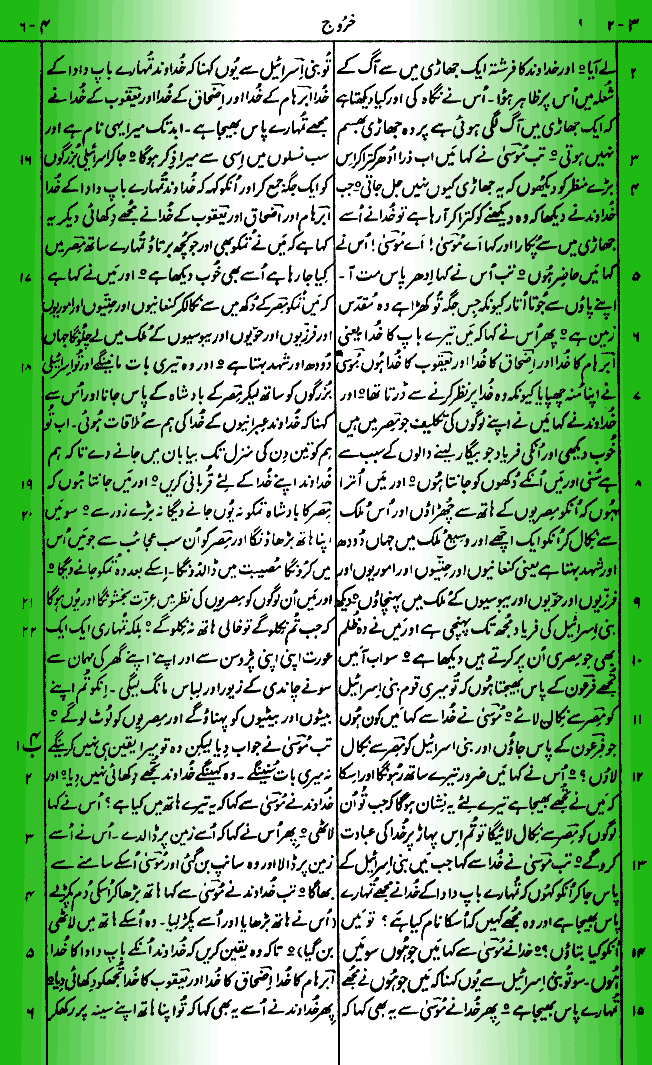
Exodus 3:3
Verse: And Moses said I will now turn aside and see this great sight why the bush is not burnt English Explanation: Moses is captivated by a supernatural phenomenon—a bush on fire that does not turn to ash. This represents his curiosity and the moment God captures his attention for a divine mission. Urdu Explanation: موسیٰ نے کہا کہ میں ذرا ادھر مڑ کر اس بڑے منظر کو دیکھوں کہ یہ جھاڑی کیوں نہیں جلتی۔ یہ آیت موسیٰ کے تجسس اور خدا کی طرف سے توجہ مبذول کرانے کے لمحے کو ظاہر کرتی ہے۔
Exodus 3:4
Verse: And when the LORD saw that he turned aside to see God called unto him out of the midst of the bush and said Moses Moses And he said Here am I English Explanation: God responds to Moses’ movement. By calling his name twice, God signifies intimacy and urgency. Moses’ response, “Here am I,” shows his readiness to listen. Urdu Explanation: جب خداوند نے دیکھا کہ وہ دیکھنے کے لیے مڑا ہے تو خدا نے جھاڑی کے بیچ سے اسے پکارا اور کہا موسیٰ موسیٰ۔ اس نے جواب دیا میں حاضر ہوں۔ یہ خدا اور بندے کے درمیان براہِ راست رابطے کا آغاز ہے۔
Exodus 3:5
Verse: And he said Draw not nigh hither put off thy shoes from off thy feet for the place whereon thou standest is holy ground English Explanation: God establishes his holiness. Removing shoes was a sign of respect and humility, acknowledging that God’s presence sanctifies the environment. Urdu Explanation: خدا نے فرمایا کہ یہاں قریب مت آ اور اپنے پاؤں سے جوتے اتار دے کیونکہ جس جگہ تو کھڑا ہے وہ مقدس زمین ہے۔ یہ خدا کے جلال اور پاکیزگی کے احترام کا حکم ہے۔
Exodus 3:6
Verse: Moreover he said I am the God of thy father the God of Abraham the God of Isaac and the God of Jacob And Moses hid his face for he was afraid to look upon God English Explanation: God identifies Himself through the covenant with the patriarchs. Moses hides his face out of “reverent fear,” recognizing his unworthiness before the Creator. Urdu Explanation: پھر اس نے کہا میں تیرے باپ کا خدا ہوں یعنی ابراہام کا خدا اِضحاق کا خدا اور یعقوب کا خدا۔ تب موسیٰ نے اپنا منہ چھپا لیا کیونکہ وہ خدا پر نظر کرنے سے ڈرتا تھا۔
Exodus 3:7
Verse: And the LORD said I have surely seen the affliction of my people which are in Egypt and have heard their cry by reason of their taskmasters for I know their sorrows English Explanation: This highlights God’s empathy. He is not distant; He sees, hears, and knows the suffering of His people intimately. Urdu Explanation: خداوند نے کہا کہ میں نے اپنے لوگوں کی تکلیف کو جو مصر میں ہیں یقیناً دیکھا ہے اور ان کے دکھوں کو جانتا ہوں۔ یہ ظاہر کرتا ہے کہ خدا اپنے لوگوں کے دکھ سے بے خبر نہیں ہے۔
Exodus 3:8
Verse: And I am come down to deliver them out of the hand of the Egyptians and to bring them up out of that land unto a good land and a large unto a land flowing with milk and honey unto the place of the Canaanites and the Hittites and the Amorites and the Perizzites and the Hivites and the Jebusites English Explanation: God announces His plan for salvation and restoration. He promises a transition from slavery to a land of abundance (“milk and honey”). Urdu Explanation: میں اترا ہوں کہ انہیں مصریوں کے ہاتھ سے چھڑاؤں اور اس ملک سے نکال کر ایک اچھے اور وسیع ملک میں لے جاؤں جہاں دودھ اور شہد کی ندیاں بہتی ہیں۔ یہ مخلصی اور برکت کا وعدہ ہے۔
Exodus 3:9
Verse: Now therefore behold the cry of the children of Israel is come unto me and I have also seen the oppression wherewith the Egyptians oppress them English Explanation: God reaffirms that the cries of the oppressed have reached His ears, serving as a legal and moral basis for His intervention. Urdu Explanation: اب دیکھ بنی اسرائیل کی فریاد مجھ تک پہنچی ہے اور میں نے وہ ظلم بھی دیکھا ہے جو مصری ان پر کر رہے ہیں۔ خدا انصاف کرنے والا خدا ہے۔
Exodus 3:10
Verse: Come now therefore and I will send thee unto Pharaoh that thou mayest bring forth my people the children of Israel out of Egypt English Explanation: The “Great Commission” for Moses. God chooses a human instrument to carry out His divine will against the most powerful ruler of the time. Urdu Explanation: پس اب تو آ میں تجھے فرعون کے پاس بھیجوں گا تاکہ تو میری قوم بنی اسرائیل کو مصر سے نکال لائے۔ یہ موسیٰ کی خدمت کے لیے باقاعدہ تقرری ہے۔
Exodus 3:11
Verse: And Moses said unto God Who am I that I should go unto Pharaoh and that I should bring forth the children of Israel out of Egypt English Explanation: Moses reacts with humility and self-doubt. He focuses on his own limitations rather than God’s power. Urdu Explanation: موسیٰ نے خدا سے کہا کہ میں کون ہوں جو فرعون کے پاس جاؤں؟ موسیٰ کو اپنی کمزوری کا احساس تھا لیکن وہ خدا کی قدرت کو بھول رہا تھا۔
Exodus 3:12
Verse: And he said Certainly I will be with thee and this shall be a token unto thee that I have sent thee When thou hast brought forth the people out of Egypt ye shall serve God upon this mountain English Explanation: God’s answer to “Who am I?” is “I will be with thee.” The assurance is not in Moses’ ability, but in God’s presence. Urdu Explanation: خدا نے فرمایا یقیناً میں تیرے ساتھ رہوں گا اور تیرے لیے یہ نشان ہوگا کہ جب تو لوگوں کو نکال لائے گا تو تم اسی پہاڑ پر خدا کی عبادت کرو گے۔
Exodus 3:13
Verse: And Moses said unto God Behold when I come unto the children of Israel and shall say unto them The God of your fathers hath sent me unto you and they shall say to me What is his name what shall I say unto them English Explanation: Moses asks for God’s specific name to provide authority and identity to the skeptical Israelites. Urdu Explanation: موسیٰ نے پوچھا کہ جب میں بنی اسرائیل کے پاس جاؤں اور وہ مجھ سے پوچھیں کہ اس کا نام کیا ہے تو میں انہیں کیا بتاؤں؟
Exodus 3:14
Verse: And God said unto Moses I AM THAT I AM and he said Thus shalt thou say unto the children of Israel I AM hath sent me unto you English Explanation: God reveals His eternal, self-existent nature. “I AM” (Yahweh) implies He is the source of all being and is unchanging. Urdu Explanation: خدا نے موسیٰ سے کہا “میں جو ہوں سو میں ہوں”۔ تو بنی اسرائیل سے کہنا کہ “میں ہوں” نے مجھے تمہارے پاس بھیجا ہے۔ یہ خدا کے ازلی اور ابدی ہونے کی پہچان ہے۔
Exodus 3:15
Verse: And God said moreover unto Moses Thus shalt thou say unto the children of Israel The LORD God of your fathers the God of Abraham the God of Isaac and the God of Jacob hath sent me unto you this is my name for ever and this is my memorial unto all generations English Explanation: God links His eternal name with His historical relationship with the Israelites’ ancestors, ensuring His legacy is remembered forever. Urdu Explanation: خدا نے مزید کہا کہ یہ میرا نام ہمیشہ تک ہے اور نسل در نسل میری یہی یادگاری ہے۔ وہ اپنے آپ کو باپ دادا کے خدا کے طور پر ظاہر کرتا ہے۔
Exodus 3:16
Verse: Go and gather the elders of Israel together and say unto them The LORD God of your fathers the God of Abraham of Isaac and of Jacob appeared unto me saying I have surely visited you and seen that which is done to you in Egypt English Explanation: God instructs Moses on leadership. He must first convince the elders that God has observed their misery and is ready to act. Urdu Explanation: جا اور اسرائیل کے بزرگوں کو جمع کر اور ان سے کہہ کہ تمہارے باپ دادا کے خدا نے مجھے درشن دیا اور کہا کہ میں نے تم پر اور تمہارے حال پر جو مصر میں ہے نظر کی ہے۔
Exodus 3:17
Verse: And I have said I will bring you up out of the affliction of Egypt unto the land of the Canaanites and the Hittites and the Amorites and the Perizzites and the Hivites and the Jebusites unto a land flowing with milk and honey English Explanation: A repetition of the promise of the Promised Land, reinforcing the goal of the Exodus. Urdu Explanation: خدا نے وعدہ کیا کہ وہ انہیں مصر کی مصیبت سے نکال کر اس ملک میں لے جائے گا جو برکتوں سے معمور ہے۔
Exodus 3:18
Verse: And they shall hearken to thy voice and thou shalt come thou and the elders of Israel unto the king of Egypt and ye shall say unto him The LORD God of the Hebrews hath met with us and now let us go we beseech thee three days’ journey into the wilderness that we may sacrifice to the LORD our God English Explanation: God promises that the elders will believe Moses. They are to make a modest initial request to Pharaoh for a religious pilgrimage. Urdu Explanation: وہ تیری بات مانیں گے اور تو بزرگوں کے ساتھ شاہِ مصر کے پاس جا کر کہنا کہ عبرانیوں کے خدا نے ہم سے ملاقات کی ہے لہذا ہمیں تین دن کی راہ کے لیے بیابان میں جانے دے۔
Exodus 3:19
Verse: And I am sure that the king of Egypt will not let you go no not by a mighty hand English Explanation: God forewarns Moses of Pharaoh’s resistance, showing His omniscience regarding human stubbornness. Urdu Explanation: میں جانتا ہوں کہ مصر کا بادشاہ تمہیں جانے نہیں دے گا جب تک کہ اس پر زبردست ہاتھ نہ چلایا جائے۔ خدا کو فرعون کی سرکشی کا پہلے سے علم تھا۔
Exodus 3:20
Verse: And I will stretch out my hand and smite Egypt with all my wonders which I will do in the midst thereof and after that he will let you go English Explanation: God declares that His power will eventually break Pharaoh’s will through miraculous plagues. Urdu Explanation: میں اپنا ہاتھ بڑھاؤں گا اور مصر کو اپنے عجائبات سے ماروں گا اور اس کے بعد وہ تمہیں جانے دے گا۔
Exodus 3:21
Verse: And I will give this people favour in the sight of the Egyptians and it shall come to pass that when ye go ye shall not go empty English Explanation: God promises that the Israelites will not leave as destitute refugees but with wealth, as a form of “back-pay” for their years of slavery. Urdu Explanation: میں ان لوگوں کو مصریوں کی نظر میں مقبول بناؤں گا اور جب تم جاؤ گے تو خالی ہاتھ نہ جاؤ گے۔
Exodus 3:22
Verse: But every woman shall borrow of her neighbour and of her that sojourneth in her house jewels of silver and jewels of gold and raiment and ye shall put them upon your sons and upon your daughters and ye shall spoil the Egyptians English Explanation: The Israelites are told to ask for valuables. This “spoiling” of Egypt signifies God’s justice and provision for His people’s future. Urdu Explanation: ہر عورت اپنی پڑوسن سے سونے چاندی کے زیورات اور کپڑے مانگے گی اور تم اپنے بیٹوں اور بیٹیوں کو پہناؤ گے اور مصریوں کو لوٹ لو گے۔
Exodus 4:1
Verse: And Moses answered and said But behold they will not believe me nor hearken unto my voice for they will say The LORD hath not appeared unto thee English Explanation: Moses expresses fear of rejection. He worries about his credibility among his own people. Urdu Explanation: موسیٰ نے جواب دیا کہ وہ میرا یقین نہیں کریں گے اور کہیں گے کہ خداوند تجھ پر ظاہر نہیں ہوا۔
Exodus 4:2
Verse: And the LORD said unto him What is that in thine hand And he said A rod English Explanation: God begins with what Moses already possesses. A simple shepherd’s staff is about to become a tool of divine power. Urdu Explanation: خداوند نے اس سے پوچھا تیرے ہاتھ میں کیا ہے؟ اس نے کہا ایک لاٹھی۔ خدا عام چیزوں کو غیر معمولی کاموں کے لیے استعمال کرتا ہے۔
Exodus 4:3
Verse: And he said Cast it on the ground And he cast it on the ground and it became a serpent and Moses fled from before it English Explanation: The first miracle. The transformation of the rod into a snake demonstrates God’s authority over nature and Egyptian symbols (the cobra was a symbol of Pharaoh). Urdu Explanation: خدا نے کہا اسے زمین پر پھینک۔ اس نے پھینکا تو وہ سانپ بن گئی اور موسیٰ اس کے سامنے سے بھاگا۔
Exodus 4:4
Verse: And the LORD said unto Moses Put forth thine hand and take it by the tail And he put forth his hand and caught it and it became a rod in his hand English Explanation: God tests Moses’ faith by asking him to grab a snake by the tail (the dangerous way). Moses obeys, and the miracle is reversed. Urdu Explanation: خداوند نے کہا اپنا ہاتھ بڑھا اور اس کی دم پکڑ۔ اس نے پکڑا تو وہ پھر لاٹھی بن گئی۔ یہ ایمان کا امتحان تھا۔
Exodus 4:5
Verse: That they may believe that the LORD God of their fathers the God of Abraham the God of Isaac and the God of Jacob hath appeared unto thee English Explanation: The purpose of the sign is to establish Moses’ divine credentials so the Israelites will believe his message. Urdu Explanation: تاکہ وہ یقین کریں کہ ان کے باپ دادا کا خدا تجھ پر ظاہر ہوا ہے۔
Exodus 4:6
Verse: And the LORD said furthermore unto him Put now thine hand into thy bosom And he put his hand into his bosom and when he took it out behold his hand was leprous as snow English Explanation: The second sign involves Moses’ own body. Leprosy was an incurable disease, showing God’s power over life, health, and sickness. Urdu Explanation: خداوند نے پھر کہا کہ اپنا ہاتھ اپنے سینے میں ڈال۔ جب اس نے نکالا تو وہ کوڑھ سے برف کی طرح سفید تھا۔ یہ انسانی کمزوری پر خدا کے اختیار کا نشان تھا۔