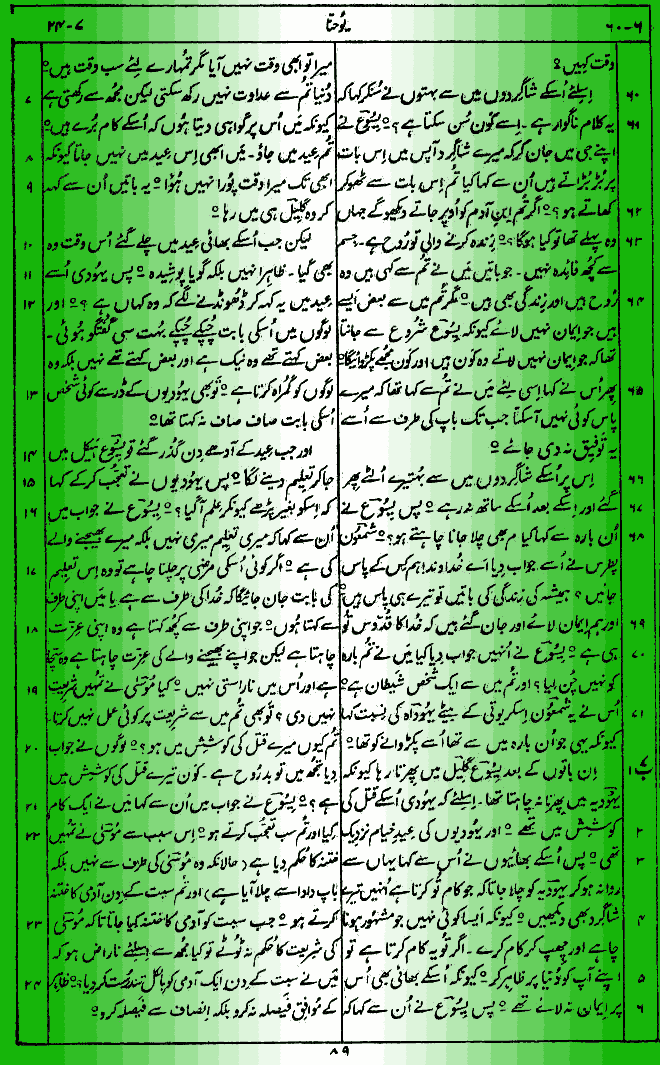
Verse-by-Verse Commentary (John 6:60 – John 7:24)
John 6:60
Verse: Many therefore of his disciples when they had heard this said This is an hard saying who can hear it
-
English Explanation: After Jesus finished teaching about eating His flesh and drinking His blood (signifying spiritual union through faith), many followers found the teaching offensive, confusing, and culturally taboo. They did not mean it was hard to understand, but rather hard to accept and submit to. It challenged their literalist mindset and their expectations of a physical, political Messiah.
-
Urdu Explanation: جب یسوع نے یہ تعلیم دی کہ جو کوئی میرا گوشت کھاتا اور میرا خون پیتا ہے وہ ابدی زندگی پاتا ہے، تو بہت سے پیروکاروں کے لیے یہ بات ناقابلِ قبول ٹھہری۔ ان کا مطلب یہ نہیں تھا کہ یہ بات سمجھنا مشکل ہے، بلکہ یہ کہ اس پر ایمان لانا اور اسے تسلیم کرنا ان کی روایات کے خلاف تھا۔ وہ ایک دنیاوی بادشاہ کی امید کر رہے تھے، اس لیے روحانی سچائی ان کے لیے گراں گزری۔
John 6:61
Verse: When Jesus knew in himself that his disciples murmured at it he said unto them Doth this offend you
-
English Explanation: Jesus, possessing divine omniscience, knew the secret complaints and doubts of His followers without needing to overhear them. Instead of softening His message to please the crowd, He directly confronts their stumbling blocks, asking if these foundational spiritual truths are going to cause them to fall away.
-
Urdu Explanation: یسوع اپنی الٰہی بصیرت سے واقف تھے کہ ان کے دلوں میں کیا بڑبڑاہٹ چل رہی ہے۔ انہوں نے کسی کے بتائے بغیر ان کے شکوک کو جان لیا۔ انہوں نے اپنے پیغام کو نرم کرنے کے بجائے براہِ راست ان سے پوچھا کہ کیا میری روحانی باتیں تمہارے لیے ٹھوکر کا باعث بن رہی ہیں؟
John 6:62
Verse: What and if ye shall see the Son of man ascend up where he was before
-
English Explanation: Jesus points them to His future ascension. If they find His teachings about coming down from heaven difficult to accept now, His physical departure back to heaven will be the ultimate proof of His divine origin. His ascension would validate that He is indeed the bread that came down from glory.
-
Urdu Explanation: یسوع انہیں اپنے مستقبل میں آسمان پر اٹھائے جانے کی طرف متوجہ کرتے ہیں۔ اگر وہ ابھی ان کی باتوں پر یقین نہیں کر پا رہے، تو جب وہ ابنِ آدم کو واپس آسمان پر صعود کرتے دیکھیں گے جہاں وہ پہلے تھا، تو ان کی الٰہی حقیقت بالکل واضح ہو جائے گی۔ یہ ان کے دعووں کی آخری اور سب سے بڑی دلیل ہوگی۔
John 6:63
Verse: It is the spirit that quickeneth the flesh profiteth nothing the words that I speak unto you they are spirit and they are life
-
English Explanation: Christ clarifies that His previous statements were spiritual, not literal or physical. Physical flesh cannot give eternal life. It is the Holy Spirit who gives true spiritual life, and Jesus’ words are the channel through which this life-giving Spirit operates. To interpret His words through human, fleshly thinking leads only to misunderstanding.
-
Urdu Explanation: مسیح یہاں وضاحت کرتے ہیں کہ ان کی باتیں جسمانی نہیں بلکہ روحانی تھیں۔ انسانی جسم یا دنیاوی سوچ ابدی زندگی پیدا کرنے میں بے فائدہ ہے۔ یہ صرف روحِ پاک ہے جو زندگی بخشتی ہے، اور جو کلام یسوع نے سنایا وہ روح اور زندگی ہے، جسے صرف ایمان کے ذریعے ہی سمجھا جا سکتا ہے۔
John 6:64
Verse: But there are some of you that believe not For Jesus knew from the beginning who they were that believed not and who should betray him
-
English Explanation: Jesus addresses the root cause of their offense: a lack of genuine faith. This verse emphasizes Jesus’ absolute foreknowledge. From the very start of His ministry, He knew exactly who followed Him with sincere hearts, who was merely putting on an outward show, and specifically that Judas Iscariot would eventually betray Him.
-
Urdu Explanation: یسوع ان کی ناراضگی کی اصل وجہ بتاتے ہیں جو کہ ایمان کی کمی ہے۔ وہ شروع ہی سے جانتے تھے کہ کون سچے دل سے ان کے پیچھے ہولیا ہے اور کون محض دکھاوے کے لیے ساتھ ہے۔ اس آیت سے یسوع کے غیب دان ہونے کا ثبوت ملتا ہے کیونکہ وہ پہلے سے جانتے تھے کہ یہوداہ اسکریوتی انہیں پکڑوائے گا۔
John 6:65
Verse: And he said Therefore said I unto you that no man can come unto me except it were given unto him of my Father
-
English Explanation: True faith is a divine gift. Jesus reiterates that saving faith is not something engineered by human intellect or willpower alone. A person can only truly come to Christ and accept His hard sayings if the Heavenly Father draws them and grants them the spiritual ability to believe.
-
Urdu Explanation: سچا ایمان انسان کی اپنی طاقت یا عقل سے حاصل نہیں ہوتا بلکہ یہ خدا کی بخشش ہے۔ یسوع اس بات پر زور دیتے ہیں کہ کوئی بھی شخص مسیح کے پاس تب تک نہیں آ سکتا اور نہ ہی اس کی گہری باتوں کو قبول کر سکتا ہے، جب تک کہ آسمانی باپ کی طرف سے اسے یہ توفیق نہ دی جائے۔
John 6:66
Verse: From that time many of his disciples went back and walked no more with him
-
English Explanation: This is a tragic turning point in John’s Gospel. When the crowds realized Jesus was offering spiritual salvation and cross-bearing rather than earthly riches, political freedom, and free food, their superficial discipleship ended. They walked away from the only source of eternal life.
-
Urdu Explanation: یہ انجیلِ یوحنا کا ایک انتہائی نازک موڑ ہے۔ جب لوگوں نے دیکھا کہ یسوع انہیں دنیاوی بادشاہت، مفت کھانا یا سیاسی آزادی دینے کے بجائے روح کی نجات اور صلیب اٹھانے کی تعلیم دے رہے ہیں، تو ان کی عارضی عقیدت ختم ہو گئی اور وہ ہمیشہ کے لیے واپس لوٹ گئے۔
John 6:67
Verse: Then said Jesus unto the twelve Will ye also go away
-
English Explanation: Jesus turns to His core group of twelve apostles. This question was not asked out of anxiety or insecurity, but to test their commitment, prompt a declaration of their faith, and give them a voluntary choice to stay or leave, as true love and discipleship cannot be forced.
-
Urdu Explanation: جب ہجوم چلا گیا تو یسوع نے اپنے بارہ رسولوں کی طرف رُخ کیا۔ یہ سوال کسی ڈر یا پریشانی کی وجہ سے نہیں تھا، بلکہ ان کے ایمان کی آزمائش اور ان کی وفاداری کو پرکھنے کے لیے تھا تاکہ وہ خود اپنے ارادے سے مسیح کے ساتھ چلنے کا اقرار کریں۔
John 6:68
Verse: Then Simon Peter answered him Lord to whom shall we go thou hast the words of eternal life
-
English Explanation: Simon Peter acts as the spokesman for the disciples, delivering one of the most beautiful confessions in Scripture. He acknowledges that despite the difficulty of the teachings, there is no alternative savior or path. Jesus alone possesses the words that impart eternal, divine life.
-
Urdu Explanation: شمعون پطرس نے سب رسولوں کی طرف سے جواب دیا جو کہ بائبل کے خوبصورت ترین اعترافات میں سے ایک ہے۔ اس نے اقرار کیا کہ اگرچہ باتیں مشکل ہیں، مگر مسیح کے سوا کوئی دوسرا نجات دہندہ یا راستہ نہیں ہے۔ صرف یسوع کے پاس ہی وہ کلام ہے جو ابدی زندگی بخشتا ہے۔
John 6:69
Verse: And we believe and are sure that thou art that Christ the Son of the living God
-
English Explanation: Peter declares their collective conviction. Their faith is not blind; it is settled certainty. They recognize Jesus not just as a human teacher or a prophet, but as the promised Messiah (Christ) and the divine Son of the Living God.
-
Urdu Explanation: پطرس نے مزید کہا کہ ان کا ایمان محض ایک خیال نہیں بلکہ پختہ یقین ہے۔ وہ جان چکے تھے کہ یسوع نہ صرف ایک استاد یا نبی ہیں، بلکہ وہ خدا کے ممسوح (مسیح) اور زندہ خدا کے بیٹے ہیں۔
John 6:70
Verse: Jesus answered them Have not I chosen you twelve and one of you is a devil
-
English Explanation: Even amidst Peter’s grand declaration, Jesus injects a sobering reality. He chose the twelve into leadership, yet intimacy with Christ does not guarantee an upright heart. He reveals that one within their tight-knit circle is acting under the influence of or embodying the character of the adversary.
-
Urdu Explanation: پطرس کے شاندار اقرار کے بعد، یسوع نے ایک کڑوی حقیقت بیان کی۔ انہوں نے یاد دلایا کہ ان بارہ کو انہوں نے خود چنا تھا، لیکن مسیح کے قریب رہنے کا یہ مطلب نہیں کہ دل بھی پاک ہو۔ انہوں نے خبردار کیا کہ ان کے اپنے گروہ میں سے ایک شخص ابلیس کی مانند کام کر رہا ہے۔
John 6:71
Verse: He spake of Judas Iscariot the son of Simon for he it was that should betray him being one of the twelve
-
English Explanation: The narrator identifies the “devil” among them as Judas Iscariot. This underscores the ultimate tragedy of Judas: he enjoyed the highest privilege of walking with Christ daily, yet his heart remained unchanged, leading him to become the ultimate betrayer.
-
Urdu Explanation: یہاں یوحنا واضح کرتے ہیں کہ یسوع کا اشارہ یہوداہ اسکریوتی کی طرف تھا، جو شمعون کا بیٹا تھا۔ یہ یہوداہ کی زندگی کا سب سے بڑا المیہ ہے کہ مسیح کے اتنے قریب رہنے، ان کے معجزات دیکھنے اور ان سے سیکھنے کے باوجود، اس کا دل نہ بدلا اور وہ غدار ٹھہرا۔
John 7:1
Verse: After these things Jesus walked in Galilee for he would not walk in Jewry because the Jews sought to kill him
-
English Explanation: Moving into Chapter 7, the narrative shifts geographically. Jesus intentionally stays in the northern region of Galilee rather than Judea (Jewry). This was a tactical delay based on His divine timetable; the religious leaders in Jerusalem were plotting His assassination, and His appointed hour to die had not yet arrived.
-
Urdu Explanation: باب 7 کے آغاز میں، یسوع نے یہودیہ (یروشلم کے علاقے) کے بجائے گلیل کے علاقے میں رہنے کو ترجیح دی۔ یہ فیصلہ خوف کی وجہ سے نہیں بلکہ خدا کے مقررہ وقت کی پابندی کے تحت تھا، کیونکہ یروشلم کے یہودی رہنما ان کے قتل کے منصوبے بنا رہے تھے اور ابھی یسوع کی قربانی کا وقت نہیں آیا تھا۔
John 7:2
Verse: Now the Jews’ feast of tabernacles was at hand
-
English Explanation: The Feast of Tabernacles (Sukkot) was one of the three major annual Jewish festivals requiring Jewish men to journey to Jerusalem. It was a joyful harvest celebration where people lived in temporary booths to remember God’s provision during the wilderness wanderings.
-
Urdu Explanation: یہودیوں کا خیموں کا عید (سکوت) کا تہوار قریب تھا۔ یہ ان تین بڑے سالانہ تہواروں میں سے ایک تھا جس کے لیے تمام یہودی مردوں کا یروشلم جانا لازمی ہوتا تھا۔ اس عید پر لوگ عارضی خیمے بنا کر رہتے تھے تاکہ بیابان کے سفر میں خدا کی حفاظت اور رزق رسانی کو یاد کریں۔
John 7:3
Verse: His brethren therefore said unto him Depart hence and go into Judaea that thy disciples also may see the works that thou doest
-
English Explanation: Jesus’ half-brothers (the sons of Mary and Joseph) give Him worldly advice. They urge Him to leave the rural region of Galilee and display His miracles on the grand stage of Jerusalem during the crowded festival, so that His Judean followers would be impressed.
-
Urdu Explanation: یسوع کے سوتیلے بھائیوں (مریم اور یوسف کے بیٹوں) نے انہیں دنیاوی مشورہ دیا۔ انہوں نے کہا کہ گلیل کے پسماندہ علاقے کو چھوڑ کر یروشلم جائیں تاکہ عید کے ہجوم میں ان کے مرید ان کے معجزات دیکھ سکیں اور ان کی شہرت پھیل سکے۔
John 7:4
Verse: For there is no man that doeth any thing in secret and he himself seeketh to be known openly If thou do these things shew thyself to the world
-
Explanation: His brothers argue using human, political logic: anyone seeking public influence does not hide in secret. They challenge Him to manifest His power to the world, viewing His ministry through the lens of fame, public relations, and political ambition.
-
Urdu Explanation: ان کے بھائیوں نے انسانی اور سیاسی منطق استعمال کرتے ہوئے کہا کہ جو کوئی مشہور ہونا چاہتا ہے وہ چھپ کر کام نہیں کرتا۔ انہوں نے چیلنج کیا کہ اگر آپ واقعی یہ معجزات کرتے ہیں، تو دنیا کے سامنے کھل کر آئیں، کیونکہ وہ یسوع کی خدمت کو محض نام و نمود کے ترازو میں تول رہے تھے۔
John 7:5
Verse: For neither did his brethren believe in him
-
English Explanation: This parenthetical note reveals the painful truth behind their advice: His own immediate family did not yet believe He was the Messiah. They saw His miracles but misconstrued His identity and mission, showcasing that physical proximity to Jesus does not automatically guarantee faith.
-
Urdu Explanation: یہ آیت ان کے مشورے کے پیچھے چھپی تلخ حقیقت کو ظاہر کرتی ہے کہ خود ان کے سگے بھائی بھی اس وقت تک ان پر ایمان نہیں لائے تھے کہ وہ مسیح ہیں۔ وہ معجزات تو دیکھ رہے تھے مگر ان کی الٰہی پہچان سے قاصر تھے، جو ظاہر کرتا ہے کہ خاندانی رشتہ ہونا ایمان لانے کے لیے کافی نہیں ہوتا۔
John 7:6
Verse: Then Jesus said unto them My time is not yet come but your time is alway ready
-
English Explanation: Jesus distinguishes His life from theirs. His actions are perfectly synchronized with the Father’s prophetic timeline (leading eventually to the cross). Conversely, His brothers live according to the world’s standards; because they are not challenging the world, any time is safe or convenient for them to go to Jerusalem.
-
Urdu Explanation: یسوع نے ان کے مشورے کو مسترد کرتے ہوئے فرمایا کہ میری زندگی خدا کے مقررہ وقت اور منصوبے کے تحت چلتی ہے۔ اس کے برعکس، ان کے بھائی دنیا کے رنگ میں رنگے ہوئے تھے؛ ان کے لیے کوئی بھی وقت مناسب ہو سکتا تھا کیونکہ دنیا کو ان سے کوئی خطرہ یا اعتراض نہیں تھا۔
John 7:7
Verse: The world cannot hate you but me it hateth because I testify of it that the works thereof are evil
-
English Explanation: The cosmos (the broken world system) has no reason to hate Jesus’ brothers because they belong to it and agree with its values. However, the world hates Jesus because His holy presence and truthful preaching expose the moral darkness and wickedness of human sin.
-
Urdu Explanation: دنیا یسوع کے بھائیوں سے نفرت نہیں کر سکتی تھی کیونکہ وہ دنیا کے معیار کے مطابق جی رہے تھے۔ لیکن دنیا یسوع سے نفرت کرتی تھی کیونکہ ان کی پاکیزگی اور سچی تعلیم دنیا کے گناہوں، برائیوں اور منافقت کو بے نقاب کرتی تھی۔
John 7:8
Verse: Go ye up unto this feast I go not up yet unto this feast for my time is not yet full come
-
English Explanation: Jesus tells His brothers to proceed to the festival ahead of Him. He states He is not going up yet in the manner they prescribed—as a public figure seeking political acclaim or a grand entrance—because the precise moment for His public manifestation and ultimate sacrifice has not fully arrived.
-
Urdu Explanation: یسوع نے اپنے بھائیوں سے کہا کہ وہ عید پر چلے جائیں۔ انہوں نے فرمایا کہ وہ ابھی اس عید پر اس طریقے سے نہیں جا رہے جیسے ان کے بھائی چاہتے تھے (یعنی ایک سیاسی لیڈر یا شہرت کے متلاشی کے طور پر)، کیونکہ ان کے سرِعام ظاہر ہونے کا وقت ابھی پورا نہیں ہوا تھا۔
John 7:9
Verse: When he had said these words unto them he abode still in Galilee
-
English Explanation: Demonstrating absolute commitment to God’s timing over human pressure, Jesus remained in Galilee after His brothers departed. He refused to let human opinion or familial expectations dictate His messianic steps.
-
Urdu Explanation: انسانی دباؤ یا خاندانی توقعات کے سامنے جھکنے کے بجائے، یسوع نے خدا کی مرضی کو مقدم رکھا اور اپنے بھائیوں کی روانگی کے بعد بھی کچھ وقت گلیل ہی میں گزارا۔
John 7:10
Verse: But when his brethren were gone up then went he also up unto the feast not openly but as it were in secret
-
English Explanation: Once His brothers left, Jesus traveled to Jerusalem privately and inconspicuously. He did not go to avoid the cross, but to avoid a premature arrest or a premature political uprising by the crowds before He could deliver His vital teachings at the feast.
-
Urdu Explanation: جب ان کے بھائی چلے گئے، تو یسوع بھی پوشیدہ طور پر اور بغیر کسی شور شرابے کے یروشلم روانہ ہوئے۔ وہ موت سے نہیں ڈر رہے تھے، بلکہ وہ وقت سے پہلے گرفتاری یا عوام کی طرف سے کسی سیاسی ہنگامے سے بچنا چاہتے تھے تاکہ عید کے دوران اپنی اہم ترین تعلیمات دے سکیں۔
John 7:11
Verse: Then the Jews sought him at the feast and said Where is he
-
English Explanation: “The Jews” (specifically the hostile religious elite in Jerusalem) were actively looking for Jesus. He had become the focal point of public interest, and they were scanning the crowds, hoping to catch Him and silence Him permanently.
-
Urdu Explanation: یروشلم کے یہودی رہنما عید کے دوران سرگرمی سے یسوع کو تلاش کر رہے تھے۔ وہ لوگوں سے پوچھ گچھ کر رہے تھے کہ “وہ کہاں ہے؟” کیونکہ ان کا مقصد یسوع کو گرفتار کر کے ہمیشہ کے لیے خاموش کرنا تھا۔
John 7:12
Verse: And there was much murmuring among the people concerning him for some said He is a good man others said Nay but he deceiveth the people
-
English Explanation: Jesus was a highly polarizing figure. The crowds at the festival were whispering in divided opinions. One group viewed Him as morally upright and beneficial (“a good man”), while the opposing faction viewed Him as a religious charlatan and deceiver leading the masses astray.
-
Urdu Explanation: عوام میں یسوع کے بارے میں شدید اختلافات پائے جاتے تھے اور لوگ آپس میں کانا پھوسی کر رہے تھے۔ کچھ کا خیال تھا کہ وہ ایک اچھے اور نیک انسان ہیں، جبکہ دوسرے کہتے تھے کہ وہ سحر انگیز باتیں کر کے لوگوں کو گمراہ کر رہا ہے۔
John 7:13
Verse: Howbeit no man spake openly of him for fear of the Jews
-
English Explanation: Despite the heavy speculation, no one dared to voice their opinions about Jesus in public spaces. The religious authorities wielded immense power, including the threat of excommunication from the synagogue, creating an environment of fear and suppression.
-
Urdu Explanation: اس سب کے باوجود، کوئی بھی شخص سرِعام کھلم کھلا یسوع کے حق میں یا خلاف بات کرنے کی جرات نہیں کرتا تھا، کیونکہ یہودی حکام کا خوف پھیلا ہوا تھا جو ان کے خلاف بولنے والوں کو سخت سزا یا خارج از جماعت کرنے کی طاقت رکھتے تھے۔
John 7:14
Verse: Now about the midst of the feast Jesus went up into the temple and taught
-
English Explanation: Halfway through the eight-day festival, Jesus made His dramatic entry. Walking straight into the highly public temple courts, He began to teach with authority, demonstrating that His previous secrecy was not due to cowardice, but precise timing.
-
Urdu Explanation: آٹھ روزہ عید کے آدھے دن گزرنے پر، یسوع اچانک ہیکل کے صحن میں ظاہر ہوئے اور دلیری سے تعلیم دینے لگے۔ اس سے معلوم ہوتا ہے کہ ان کا چھپ کر آنا کسی خوف کی وجہ سے نہیں بلکہ خدا کے مقررہ وقت کے احترام میں تھا تاکہ وہ براہِ راست اپنا پیغام دے سکیں۔
John 7:15
Verse: And the Jews marvelled saying How knoweth this man letters having never learned
-
English Explanation: The Jewish leaders were astonished by His deep theological insights and rhetorical skill. In their culture, formal authority required studying under recognized rabbis in theological schools. They wondered how an unordained carpenter from Nazareth possessed such profound mastery over the Scriptures.
-
Urdu Explanation: یہودی رہنما یسوع کے گہرے علم اور کلام پر دسترس دیکھ کر دنگ رہ گئے۔ ان کے نزدیک مذہبی تعلیم کے لیے کسی بڑے ربی کے مدرسے سے باقاعدہ ڈگری لینا ضروری تھا۔ وہ حیران تھے کہ ناصرت کے اس کارپینٹر نے بغیر کسی رسمی تعلیم کے یہ اعلیٰ درجے کا علم کہاں سے پایا۔
John 7:16
Verse: Jesus answered them and said My doctrine is not mine but his that sent me
-
English Explanation: Jesus answers their question regarding the source of His learning. He explains that His theology did not originate from human teachers or His own human invention. His teaching is the direct revelation and word of the living God who sent Him.
-
Urdu Explanation: یسوع نے ان کی حیرت کا جواب دیتے ہوئے فرمایا کہ میری یہ تعلیم میری اپنی ایجاد یا کسی انسانی استاد سے سیکھی ہوئی نہیں ہے۔ یہ براہِ راست اس خدا کا کلام اور پیغام ہے جس نے مجھے اس دنیا میں بھیجا ہے۔
John 7:17
Verse: If any man will do his will he shall know of the doctrine whether it be of God or whether I speak of myself
-
English Explanation: Spiritual understanding requires moral willingness. Jesus reveals a profound spiritual principle: objective knowledge of God’s truth follows a heart surrendered to do God’s will. If a person genuinely desires to please God, the Holy Spirit will give them the discernment to see that Jesus’ words are divine.
-
Urdu Explanation: روحانی سچائی کو سمجھنے کے لیے دل کا جھکاؤ خدا کی طرف ہونا ضروری ہے۔ یسوع نے ایک عظیم اصول بیان کیا کہ اگر کوئی شخص سچے دل سے خدا کی مرضی پر چلنے کا ارادہ رکھتا ہو، تو وہ خود جان لے گا کہ میری تعلیم خدا کی طرف سے ہے یا میں اپنی طرف سے باتیں گھڑ رہا ہوں۔
John 7:18
Verse: He that speaketh of himself seeketh his own glory but he that seeketh his glory that sent him the same is true and no unrighteousness is in him
-
English Explanation: Jesus provides a test for authentic ministry. Self-appointed teachers speak to draw attention, fame, and glory to themselves. In contrast, Jesus deflects all honor to the Father who sent Him, proving His complete sinlessness, truthfulness, and perfect motives.
-
Urdu Explanation: یسوع سچے اور جھوٹے استاد کا فرق بتاتے ہیں۔ جو اپنی طرف سے کہتا ہے وہ اپنی بڑائی اور واہ واہ چاہتا ہے۔ لیکن جو اپنے بھیجنے والے کی جلال اور عزت چاہتا ہے، وہ سچا ہے اور اس کی نیت میں کوئی کھوٹ یا ناانصافی نہیں ہوتی۔
John 7:19
Verse: Did not Moses give you the law and yet none of you keepeth the law Why go ye about to kill me
-
English Explanation: Jesus exposes the ultimate hypocrisy of the religious elite. They claimed to be defenders of Moses and the Law, yet they were violating the foundational Commandment (“Thou shalt not murder”) by plotting to assassinate Him simply for healing a man on the Sabbath.
-
Urdu Explanation: یسوع نے ان مذہبی رہنماؤں کی منافقت پر سے پردہ اٹھایا۔ وہ خود کو موسیٰ کی شریعت کے محافظ کہتے تھے، مگر یسوع کو قتل کرنے کا منصوبہ بنا کر وہ خود شمعون کی سب سے بڑی شریعت (“قتل نہ کرنا”) کی خلاف ورزی کر رہے تھے کیونکہ انہوں نے سبت کے دن ایک بیمار کو شفا دی تھی۔
John 7:20
Verse: The people answered and said Thou hast a devil who goeth about to kill thee
-
English Explanation: The pilgrims in the crowd, potentially unaware of the secret assassination plots designed by Jerusalem’s elite, dismiss Jesus’ claim. They mockingly accuse Him of being demon-possessed or paranoid for thinking that someone is out to take His life.
-
Urdu Explanation: ہجوم میں موجود عام لوگ، جو شاید یروشلم کے رہنماؤں کے خفیہ قتل کے منصوبوں سے ناواقف تھے، کہنے لگے کہ تجھے کوئی بدروح چمٹی ہے یا تو پاگل ہو گیا ہے؛ تجھے کون مارنا چاہتا ہے؟ انہوں نے یسوع کے اس سچ کو وہم قرار دے کر مسترد کر دیا۔
John 7:21
Verse: Jesus answered and said unto them I have done one work and ye all marvel
-
English Explanation: Jesus ignores their insults and refers back to the “one work” that triggered their murderous hatred: healing the paralytic at the Pool of Bethesda on the Sabbath day (John 5). That single miracle left them shocked and filled with legalistic outrage.
-
Urdu Explanation: یسوع نے ان کی گالی پر دھیان دینے کے بجائے اس ایک معجزے کا ذکر کیا جس کی وجہ سے وہ ان کے خون کے پیاسے ہو گئے تھے، یعنی بیت حسدا کے حوض پر سبت کے دن ایک مفلوج کو شفا دینا (باب 5)۔ اس ایک کام نے ان سب کو حیرت اور غصے میں ڈال دیا تھا۔
John 7:22
Verse: Moses therefore gave unto you circumcision (not because it is of Moses but of the fathers) and ye on the sabbath day circumcise a man
-
English Explanation: Jesus uses an unanswerable rabbinic argument based on consistency. The Law of Moses dictated that a baby boy must be circumcised on the eighth day. If that eighth day fell on a holy Sabbath, the priests would still perform the minor surgical procedure, prioritizing the law of circumcision over the Sabbath rest.
-
Urdu Explanation: یسوع نے شریعت ہی سے ایک لاجواب دلیل پیش کی۔ انہوں نے یاد دلایا کہ موسیٰ کی شریعت کے مطابق پیدائش کے آٹھویں دن بچے کا ختنہ کرنا ضروری ہے۔ اگر وہ آٹھواں دن سبت (آرام کے دن) کو بھی آتا، تو بھی یہودی شریعت کی تعمیل میں ختنہ کرتے تھے اور سبت کے آرام کے قانون کو اس کے لیے معطل کر دیتے تھے۔
John 7:23
Verse: If a man on the sabbath day receive circumcision that the law of Moses should not be broken are ye angry at me because I have made a man every whit whole on the sabbath day
-
English Explanation: Jesus exposes their skewed logic: if it is permissible to wound a small part of a person’s body through circumcision on the Sabbath to satisfy the Law, how can they be angry at Him for completely restoring and healing a man’s entire body on the Sabbath? Healing is the ultimate fulfillment of the Sabbath’s purpose of restoration.
-
Urdu Explanation: یسوع نے ان کی الٹی منطق کو بے نقاب کیا کہ اگر سبت کے دن شریعت کو برقرار رکھنے کے لیے جسم کے ایک چھوٹے سے حصے کا ختنہ (زخمی) کرنا جائز ہے، تو تم مجھ پر اس لیے کیوں غصہ کرتے ہو کہ میں نے سبت کے دن ایک پورے انسان کو تندرست اور شفا بخش دی؟ شفا دینا تو سبت کے اصل مقصد (آرام اور بحالی) کی تکمیل ہے۔
John 7:24
Verse: Judge not according to the appearance but judge righteous judgment
-
English Explanation: Jesus delivers a timeless command regarding discernment. He warns against making shallow, superficial, legalistic judgments based purely on outward appearances or personal biases. Instead, true judgment must align with God’s heart, truth, mercy, and underlying spiritual reality.
-
Urdu Explanation: یسوع نے پرکھنے اور فیصلہ کرنے کا ایک سنہرا اصول بیان فرمایا کہ ظاہری صورت، ذاتی تعصب یا سطحی قوانین کو دیکھ کر فتویٰ نہ لگاؤ۔ بلکہ سچائی، رحم اور خدا کے کلام کی اصل روح کے مطابق راستبازی کے ساتھ انصاف کرو۔