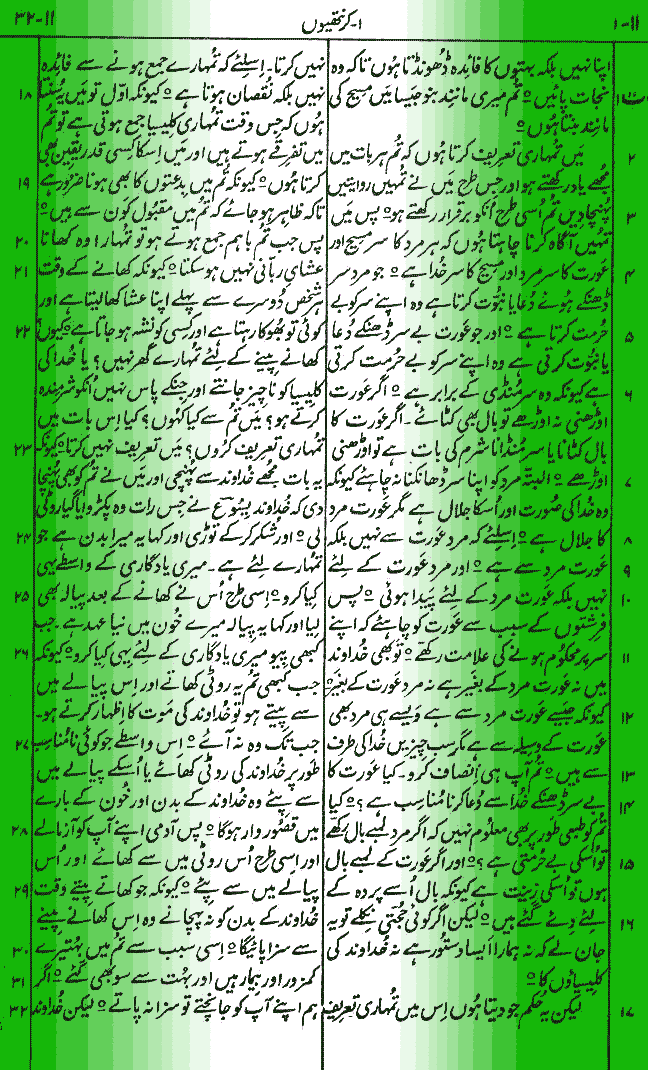
Verse-by-Verse Commentary: 1 Corinthians Chapter 11
Verse 1
Verse: “Be ye followers of me even as I also am of Christ”
English Explanation: Paul establishes a foundational principle of Christian discipleship. He is not asking believers to follow him out of personal pride, but rather because his own life is modeled after Jesus Christ. Leaders are only worth following to the extent that they reflect the character and teachings of Christ.
Urdu Explanation: پولس رسول یہاں مسیحی شاگردی کا ایک بنیادی اصول بیان کر رہے ہیں۔ وہ یہ نہیں کہہ رہے کہ لوگ ان کی ذاتی بڑائی کی وجہ سے ان کے پیچھے چلیں، بلکہ اس لیے کیونکہ ان کی اپنی زندگی یسوع مسیح کے نمونے کے مطابق ہے۔ رہنما صرف اسی حد تک پیروی کے قابل ہوتے ہیں جہاں تک وہ مسیح کے کردار اور تعلیمات کی عکاسی کرتے ہیں۔
Verse 2
Verse: “Now I praise you brethren that ye remember me in all things and keep the ordinances as I delivered them to you”
English Explanation: Paul commends the Corinthian church for their willingness to remember his teachings and hold fast to the traditions and Christian ordinances he initially passed down to them. This highlights the importance of maintaining doctrinal purity and apostolic traditions.
Urdu Explanation: پولس کرنتھیوں کی کلیسیا کی تعریف کرتے ہیں کہ وہ ان کی باتوں کو یاد رکھتے ہیں اور ان اصولوں اور ریتوں پر قائم ہیں جو انہوں نے انہیں سکھائی تھیں۔ یہ آیت ایمانداری سے عقائد اور رسولوں کی روایات کو برقرار رکھنے کی اہمیت پر زور دیتی ہے۔
Verse 3
Verse: “But I would have you know that the head of every man is Christ and the head of the woman is the man and the head of Christ is God”
English Explanation: This verse outlines a divine order of authority and relationship established by God. It sets up a spiritual hierarchy: God the Father is the head of Christ, Christ is the head of man, and man is the head of woman. This order is based on divine structure and functioning, not on a difference in human worth or value.
Urdu Explanation: یہ آیت خدا کی طرف سے قائم کردہ اختیار اور رشتے کے ایک الٰہی نظام کو واضح کرتی ہے۔ یہ ایک روحانی ترتیب پیش کرتی ہے: خدا باپ مسیح کا سر ہے، مسیح مرد کا سر ہے، اور مرد عورت کا سر ہے۔ یہ ترتیب الٰہی انتظام اور کام کاج کے لیے ہے، نہ کہ انسانوں کی ذاتی قدر و قیمت میں کسی فرق کی وجہ سے۔
Verse 4
Verse: “Every man praying or prophesying having his head covered dishonoureth his head”
English Explanation: In the cultural and spiritual context of the early church, a man praying or prophesying with his head covered was considered a sign of shame, as it obscured the glory of Christ, who is the spiritual head of man. It dishonored both his own position and Christ.
Urdu Explanation: ابتدائی کلیسیا کے ثقافتی اور روحانی پس منظر میں، اگر کوئی مرد سر ڈھانپ کر دعا کرتا یا نبوت کرتا تو اسے شرمندگی کی علامت سمجھا جاتا تھا، کیونکہ یہ مسیح کے جلال کو چھپاتا تھا جو مرد کا روحانی سر ہے۔ یہ عمل خود مرد اور مسیح دونوں کی بے حرمتی کا باعث بنتا تھا۔
Verse 5
Verse: “But every woman that prayeth or prophesieth with her head uncovered dishonoureth her head for that is even all one as if she were shaven”
English Explanation: Conversely, for a woman in Corinthian culture, praying or prophesying with an uncovered head was a sign of disrespect and rebellion against the established social and divine order. Paul compares an uncovered head to having her hair shaved off, which was a mark of disgrace or punishment at that time.
Urdu Explanation: اس کے برعکس، کرنتھیوں کی ثقافت میں ایک عورت کے لیے سر کھول کر دعا یا نبوت کرنا، قائم کردہ سماجی اور الٰہی نظام کے خلاف بے حرمتی اور سرکشی کی علامت تھا۔ پولس اس کی تشبیہ سر منڈوانے سے دیتے ہیں، جو اس دور میں ذلت یا سزا کی نشانی سمجھا جاتا تھا۔
Verse 6
Verse: “For if the woman be not covered let her also be shorn but if it be a shame for a woman to be shorn or shaven let her be covered”
English Explanation: Paul uses strong rhetoric to make his point. If a woman chooses to reject the cultural custom of covering her head during worship, she might as well go all the way and cut her hair short or shave it. Since society recognizes that a shaved head is shameful for a woman, she should willingly wear the covering.
Urdu Explanation: پولس اپنی بات کو واضح کرنے کے لیے سخت دلیل استعمال کرتے ہیں۔ اگر کوئی عورت عبادت کے دوران سر ڈھانپنے کے رواج کو رد کرتی ہے، تو وہ اپنے بال بھی کٹوا لے یا سر منڈوا لے۔ چونکہ معاشرے میں عورت کا سر منڈوانا شرمندگی کی بات سمجھا جاتا ہے، اس لیے اسے خوشی سے سر ڈھانپنا چاہیے۔
Verse 7
Verse: “For a man indeed ought not to cover his head forasmuch as he is the image and glory of God but the woman is the glory of the man”
English Explanation: Paul references the creation order. Man reflects the direct creative image and glory of God in his role, while woman reflects the glory of man. Therefore, the man’s head remains uncovered during worship to symbolize this direct reflection of God’s glory.
Urdu Explanation: پولس پیدائش کی ترتیب کا حوالہ دیتے ہیں۔ مرد اپنی ذمہ داری میں براہِ راست خدا کی صورت اور جلال کی عکاسی کرتا ہے، جبکہ عورت مرد کے جلال کی عکاسی کرتی ہے۔ اسی لیے عبادت کے دوران مرد کا سر نہ ڈھانپا جانا خدا کے جلال کی براہِ راست عکاسی کو ظاہر کرتا ہے۔
Verse 8
Verse: “For the man is not of the woman but the woman of the man”
English Explanation: Paul points back to the Genesis account of creation to support his teaching on gender relationships. Chronologically and structurally, the first man (Adam) did not come from a woman, but the first woman (Eve) was created out of the man.
Urdu Explanation: پولس صنفی تعلقات پر اپنی تعلیم کی تائید کے لیے کتابِ پیدائش کے واقعے کی طرف اشارہ کرتے ہیں۔ تخلیق کی ترتیب کے لحاظ سے، پہلا مرد (آدم) عورت سے نہیں بلکہ پہلی عورت (حوا) مرد سے بنائی گئی تھی۔
Verse 9
Verse: “Neither was the man created for the woman but the woman for the man”
English Explanation: Continuing with the creation narrative, Paul notes that Eve was created to be a companion and suitable helper for Adam, addressing man’s need for community and partnership. This defines the purpose of cooperation and mutual reliance from the beginning.
Urdu Explanation: تخلیق کے سلسلے کو جاری رکھتے ہوئے، پولس بتاتے ہیں کہ حوا کو آدم کی ساتھی اور مناسب مددگار کے طور پر تخلیق کیا گیا تھا تاکہ مرد کی اکیلے پن اور شراکت داری کی ضرورت پوری ہو۔ یہ شروع ہی سے باہمی تعاون اور ایک دوسرے پر انحصار کے مقصد کو ظاہر کرتا ہے۔
Verse 10
Verse: “For this cause ought the woman to have power on her head because of the angels”
English Explanation: Because of this divine order, a woman should wear a symbol of authority (a covering) on her head. The mention of “because of the angels” suggests that celestial beings witness human worship and value the maintenance of God’s established order and decency in the church.
Urdu Explanation: اس الٰہی نظام کی وجہ سے، عورت کے سر پر اختیار کی ایک علامت (پردہ یا سر ڈھانپنا) ہونی چاہیے۔ “فرشتوں کی خاطر” کا ذکر یہ ظاہر کرتا ہے کہ نوری مخلوق انسانوں کی عبادت کا مشاہدہ کرتی ہے اور کلیسیا میں خدا کے قائم کردہ نظام اور شائستگی کی قدر کرتی ہے۔
Verse 11
Verse: “Nevertheless neither is the man without the woman neither the woman without the man in the Lord”
English Explanation: Lest anyone misunderstand his words as promoting the superiority of men, Paul balance things out. In the kingdom of God (“in the Lord”), men and women are completely interdependent. Neither can exist or fulfill God’s purpose without the other.
Urdu Explanation: تاکہ کوئی ان کی باتوں کا غلط مطلب نکال کر مرد کی برتری نہ سمجھے، پولس یہاں توازن پیدا کرتے ہیں۔ وہ کہتے ہیں کہ خداوند میں مرد اور عورت ایک دوسرے پر منحصر ہیں۔ کوئی بھی ایک دوسرے کے بغیر نہ تو وجود برقرار رکھ سکتا ہے اور نہ ہی خدا کے مقصد کو پورا کر سکتا ہے۔
Verse 12
Verse: “For as the woman is of the man even so is the man also by the woman but all things of God”
English Explanation: While the original woman came from man, every subsequent man is born of a woman. This biological reality establishes equality and mutual necessity, with Paul concluding that ultimately, everything originates from God Himself.
Urdu Explanation: اگرچہ پہلی عورت مرد سے آئی تھی، لیکن اس کے بعد ہر مرد عورت سے پیدا ہوتا ہے۔ یہ حیاتیاتی حقیقت برابری اور باہمی ضرورت کو ثابت کرتی ہے، اور پولس نتیجہ نکالتے ہیں کہ نیتجتاً ہر چیز کا سرچشمہ خود خدا کی ذات ہے۔
Verse 13
Verse: “Judge in yourselves is it comely that a woman pray unto God uncovered”
English Explanation: Paul appeals to the cultural consensus and common sense of the Corinthian believers. He asks them to evaluate based on their own social standards of decency whether it is appropriate for a woman to pray to God in public worship without covering her head.
Urdu Explanation: پولس کرنتھیوں کے ایمانداروں کی اپنی سمجھ بوجھ اور ثقافتی شعور کو پکارتے ہیں۔ وہ ان سے کہتے ہیں کہ وہ شائستگی کے اپنے سماجی معیاروں کے مطابق خود فیصلہ کریں کہ کیا کسی عورت کے لیے سر کھول کر عوامی عبادت میں خدا سے دعا کرنا مناسب ہے؟
Verse 14
Verse: “Doth not even nature itself teach you that if a man have long hair it is a shame unto him”
English Explanation: Paul points to the general social perceptions of “nature” or long-standing custom in that culture, where men keeping long, elaborately styled hair was generally viewed as a departure from traditional masculinity and considered dishonorable.
Urdu Explanation: پولس اس دور کی ثقافت میں “فطرت” یا دیرینہ روایات کے عمومی سماجی تصورات کی طرف اشارہ کرتے ہیں، جہاں مردوں کا لمبے اور سنوارے ہوئے بال رکھنا عام طور پر مردانگی کے خلاف اور بے عزتی کی بات سمجھا جاتا تھا۔
Verse 15
Verse: “But if a woman have long hair it is a glory to her for her hair is given her for a covering”
English Explanation: In contrast to men, a woman’s long hair is celebrated as her natural beauty and glory. It serves as a natural covering that reflects her feminine role and dignity in God’s creation.
Urdu Explanation: مردوں کے برعکس، عورت کے لمبے بال اس کی قدرتی خوبصورتی اور جلال کے طور پر سراہے جاتے ہیں۔ یہ ایک فطری پردے کا کام کرتے ہیں جو خدا کی تخلیق میں اس کے نسوانی کردار اور وقار کو ظاہر کرتا ہے۔
Verse 16
Verse: “But if any man seem to be contentious we have no such custom neither the churches of God”
English Explanation: Paul closes the discussion on head coverings by addressing anyone who wants to argue about it. He states that neither the apostles nor any of the other global churches of God practice or accept practices that defy these principles of order and decency.
Urdu Explanation: پولس سر ڈھانپنے کی بحث کو ختم کرتے ہوئے ان لوگوں کو مخاطب کرتے ہیں جو حجت بازی کرنا چاہتے ہیں۔ وہ واضح کرتے ہیں کہ نہ تو رسولوں اور نہ ہی خدا کی دیگر کلیسیاؤں میں اس قسم کا کوئی رواج ہے جو نظم و ضبط اور شائستگی کے خلاف ہو۔
Verse 17
Verse: “Now in this that I declare unto you I praise you not that ye come together not for the better but for the worse”
English Explanation: Paul shifts the topic to the Lord’s Supper. Unlike verse 2 where he offered praise, here he firmly rebukes them. Their church gatherings, instead of bringing spiritual growth and blessing, were actually causing harm and spiritual decline due to their bad behavior.
Urdu Explanation: پولس یہاں سے اپنا موضوع عشاۓ ربانی کی طرف موڑتے ہیں۔ آیت 2 کے برعکس جہاں انہوں نے تعریف کی تھی، یہاں وہ سخت ملامت کرتے ہیں۔ ان کے کلیسیائی اجتماعات روحانی ترقی اور برکت کا باعث بننے کے بجائے، ان کے غلط رویے کی وجہ سے نقصان اور روحانی زوال کا سبب بن رہے تھے۔
Verse 18
Verse: “For first of all when ye come together in the church I hear that there be divisions among you and I partly believe it”
English Explanation: The first major issue Paul addresses regarding their gatherings is factionalism. He has received reports that when the congregation meets, they split into divided groups rather than standing united in faith, and he believes these reports are largely true.
Urdu Explanation: پہلا بڑا مسئلہ جس پر پولس بات کرتے ہیں وہ کلیسیا کے اندر تفرقہ بازی ہے۔ انہیں یہ خبریں ملی تھیں کہ جب جماعت اکٹھی ہوتی ہے تو وہ ایمان میں متحد ہونے کے بجائے گروہوں میں بٹ جاتی ہے، اور وہ ان خبروں کو بڑی حد تک درست مانتے ہیں۔
Verse 19
Verse: “For there must be also heresies among you that they which are approved may be made manifest among you”
English Explanation: Paul acknowledges that divisions and false teachings (“heresies”) will inevitably surface. However, God uses these difficult situations to test the community, making it clear who the true, faithful, and approved believers are.
Urdu Explanation: پولس تسلیم کرتے ہیں کہ فرقے اور غلط تعلیمات کا سامنے آنا ناگزیر ہے۔ لیکن، خدا ان مشکل حالات کو جماعت کو پرکھنے کے لیے استعمال کرتا ہے تاکہ یہ واضح ہو جائے کہ کون سے ایماندار سچے، وفادار اور مقبول ہیں۔
Verse 20
Verse: “When ye come together therefore into one place this is not to eat the Lord’s supper”
English Explanation: Because of their selfish behavior and deep divisions, Paul bluntly states that when they gather, they are not truly participating in the Lord’s Supper. Their actions violate the very meaning of unity and love that the sacred meal represents.
Urdu Explanation: ان کے خود غرضانہ رویے اور گہرے اختلافات کی وجہ سے، پولس صاف الفاظ میں کہتے ہیں کہ جب وہ جمع ہوتے ہیں، تو وہ حقیقت میں عشاۓ ربانی نہیں کھاتے۔ ان کے افعال اس اتحاد اور محبت کے معنی ہی کو ختم کر دیتے ہیں جو اس پاک کھانے کا مقصد ہے۔
Verse 21
Verse: “For in eating every one taketh before other his own supper and one is hungry and another is drunken”
English Explanation: Paul exposes their chaotic practice: instead of sharing food, the wealthy eat their own lavish meals early without waiting for others. As a result, the poor believers are left hungry and embarrassed, while others overindulge to the point of drunkenness.
Urdu Explanation: پولس ان کے افرا تفری والے رویے کو بے نقاب کرتے ہیں: کھانا بانٹنے کے بجائے، امیر لوگ دوسروں کا انتظار کیے بغیر اپنا پرتعیش کھانا پہلے ہی کھا لیتے ہیں۔ نتیجہ یہ نکلتا ہے کہ غریب ایماندار بھوکے اور شرمندہ رہ جاتے ہیں، جبکہ دوسرے حد سے زیادہ کھا پی کر متوالے ہو جاتے ہیں۔
Verse 22
Verse: “What have ye not houses to eat and to drink in or despise ye the church of God and shame them that have not What shall I say to you shall I praise you in this I praise you not”
English Explanation: Paul strongly rebukes them, telling them to eat and drink at home if they only care about filling their stomachs. By acting selfishly, they humiliate the poorer members and show utter contempt for the church of God. He emphatically refuses to praise them for this.
Urdu Explanation: پولس انہیں سخت ملامت کرتے ہوئے کہتے ہیں کہ اگر انہیں صرف اپنا پیٹ بھرنے کی فکر ہے تو وہ اپنے گھروں میں کھائیں پیئیں۔ ایسی خود غرضی کا مظاہرہ کر کے وہ غریب ارکان کو ذلیل کرتے ہیں اور خدا کی کلیسیا کی توہین کرتے ہیں۔ وہ اس بات پر ان کی تعریف کرنے سے صاف انکار کرتے ہیں۔
Verse 23
Verse: “For I have received of the Lord that which also I delivered unto you That the Lord Jesus the same night in which he was betrayed took bread”
English Explanation: To correct their abuse, Paul reminds them of the divine origin of the sacrament. He received this directly from the Lord Jesus and had already taught it to them: that on the very night Jesus was betrayed by Judas, He took bread.
Urdu Explanation: ان کی اس غلط روی کی اصلاح کے لیے، پولس انہیں اس پاک رسم کے الٰہی آغاز کی یاد دلاتے ہیں۔ انہوں نے یہ براہِ راست خداوند یسوع سے حاصل کیا اور پہلے بھی انہیں سکھایا تھا کہ جس رات یسوع کو دھوکے سے پکڑوایا گیا، اسی رات انہوں نے روٹی لی۔
Verse 24
Verse: “And when he had given thanks he brake it and said Take eat this is my body which is broken for you this do in remembrance of me”
English Explanation: Paul recounts Jesus’ actions: giving thanks, breaking the bread, and distributing it. The broken bread represents Christ’s body given for the salvation of believers. Christians are commanded to repeat this holy act as a continual memorial of His sacrifice.
Urdu Explanation: پولس یسوع کے عمل کو دہراتے ہیں: شکر گزاری کرنا، روٹی توڑنا، اور اسے تقسیم کرنا۔ ٹوٹی ہوئی روٹی مسیح کے بدن کی علامت ہے جو ایمانداروں کی نجات کے لیے قربان کیا گیا۔ مسیحیوں کو حکم دیا گیا ہے کہ وہ اس کی قربانی کی یادگار کے طور پر اس پاک عمل کو دہراتے رہیں۔
Verse 25
Verse: “After the same manner also he took the cup when he had supped saying This cup is the new testament in my blood this do ye as oft as ye drink it in remembrance of me”
Explanation: Following the meal, Jesus took the cup of wine, identifying it as the “New Covenant” sealed in His blood. This marked the transition from the Old Covenant sacrificial system to eternal salvation through Christ’s shed blood, to be remembered every time believers drink it.
Urdu Explanation: کھانے کے بعد، یسوع نے پیالہ لیا اور اسے اپنے خون میں قائم ہونے والا “نیا عہد” قرار دیا۔ یہ پرانے عہد کے قربانی کے نظام سے مسیح کے بہائے گئے خون کے ذریعے ابدی نجات کی طرف منتقلی کی علامت تھا، جسے ہر بار پیتے وقت یاد رکھنا ضروری ہے۔
Verse 26
Verse: “For as often as ye eat this bread and drink this cup ye do shew the Lord’s death till he come”
English Explanation: Every time a congregation participates in Holy Communion, they are actively proclaiming and testifying to the reality of Christ’s sacrificial death. This proclamation is an ongoing duty of the church until Jesus returns in glory.
Urdu Explanation: جب بھی کوئی جماعت پاک شراکت (عشاۓ ربانی) میں شریک ہوتی ہے، تو وہ عملی طور پر مسیح کی قربانی کی موت کا اعلان اور گواہی دیتی ہے۔ یہ اعلان جلال کے ساتھ یسوع کی واپسی تک کلیسیا کا ایک جاری رہنے والا فریضہ ہے۔
Verse 27
Verse: “Wherefore whosoever shall eat this bread and drink this cup of the Lord unworthily shall be guilty of the body and blood of the Lord”
English Explanation: Paul issues a serious warning. Taking part in communion in an “unworthy manner”—such as harboring bitterness, causing division, or treating the service carelessly—makes a person guilty of disrespecting the very body and blood of Christ.
Urdu Explanation: پولس ایک سنگین انتباہ جاری کرتے ہیں۔ “نامناسب طور پر” عشاۓ ربانی میں شریک ہونا—جیسے دل میں کینہ رکھنا، تفرقہ پیدا کرنا، یا اس رسم کو معمولی سمجھنا—انسان کو مسیح کے بدن اور خون کی بے حرمتی کا گنہگار بناتا ہے۔
Verse 28
Verse: “But let a man examine himself and so let him eat of that bread and drink of that cup”
English Explanation: Before participating in communion, every individual must engage in deep self-examination. Believers must check their hearts, repent of hidden sins, mend broken relationships, and approach the table with a humble and reverent attitude.
Urdu Explanation: پاک شراکت میں شامل ہونے سے پہلے، ہر شخص کو اپنا گہرا خود احتسابی جائزہ لینا چاہیے۔ ایمانداروں کو چاہیے کہ وہ اپنے دلوں کو ٹٹولیں، گناہوں سے توبہ کریں، ٹوٹے ہوئے رشتوں کو بحال کریں، اور عاجزی و احترام کے ساتھ اس میز کے پاس آئیں۔
Verse 29
Verse: “For he that eateth and drinketh unworthily eateth and drinketh damnation to himself not discerning the Lord’s body”
English Explanation: To partake without “discerning the Lord’s body”—meaning failing to respect the sacrifice of Christ and the unity of His church—brings divine judgment and spiritual discipline upon the individual rather than a blessing.
Urdu Explanation: “خداوند کے بدن کو نہ پہچانتے ہوئے” یعنی مسیح کی قربانی اور ان کی کلیسیا کے اتحاد کا احترام کیے بغیر کھانے پینے سے، انسان اپنے اوپر برکت کے بجائے خدا کی عدالت اور تنبیہ کو دعوت دیتا ہے۔
Verse 30
Verse: “For this cause many are weak and sickly among you and many sleep”
English Explanation: Paul points out the physical consequences of the Corinthians’ disrespect toward the holy sacrament. Because they treated communion carelessly, God brought physical illness and even premature death (“sleep”) upon some members as spiritual discipline.
Urdu Explanation: پولس پاک رسم کے ساتھ کرنتھیوں کی بے حرمتی کے جسمانی نتائج کی طرف اشارہ کرتے ہیں۔ چونکہ انہوں نے عشاۓ ربانی کو معمولی سمجھا، اس لیے خدا نے روحانی تنبیہ کے طور پر کچھ ارکان پر جسمانی بیماری اور یہاں تک کہ قبل از وقت موت (“سو جانا”) نازل کی۔
Verse 31
Verse: “For if we would judge ourselves we should not be judged”
English Explanation: Paul shares a proactive solution: if believers routinely practice self-examination, acknowledge their errors, and repent before God, they will align themselves with His will and avoid the necessity of His corrective discipline.
Urdu Explanation: پولس ایک بہترین حل پیش کرتے ہیں: اگر ایماندار مستقل مزاجی سے اپنا محاسبہ کریں، اپنی غلطیوں کا اعتراف کریں اور خدا کے سامنے توبہ کریں، تو وہ اس کی مرضی کے مطابق ہو جائیں گے اور خدا کی اصلاحی تنبیہ اور عدالت سے بچ جائیں گے۔
Verse 32
Verse: “But when we are judged we are chastened of the Lord that we should not be condemned with the world”
English Explanation: When God does judge or discipline His children, it is driven by love, not hatred. This divine chastisement is designed to correct and refine believers so that they are saved from sharing the final condemnation that awaits an unrepentant world.
Urdu Explanation: جب خدا اپنے بچوں کی عدالت یا تنبیہ کرتا ہے، تو یہ نفرت کی وجہ سے نہیں بلکہ محبت کی وجہ سے ہوتی ہے۔ یہ الٰہی تربیت ایمانداروں کی اصلاح اور پاکیزگی کے لیے ہے تاکہ وہ اس آخری سزا سے بچ سکیں جو توبہ نہ کرنے والی دنیا کا مقدر ہے۔