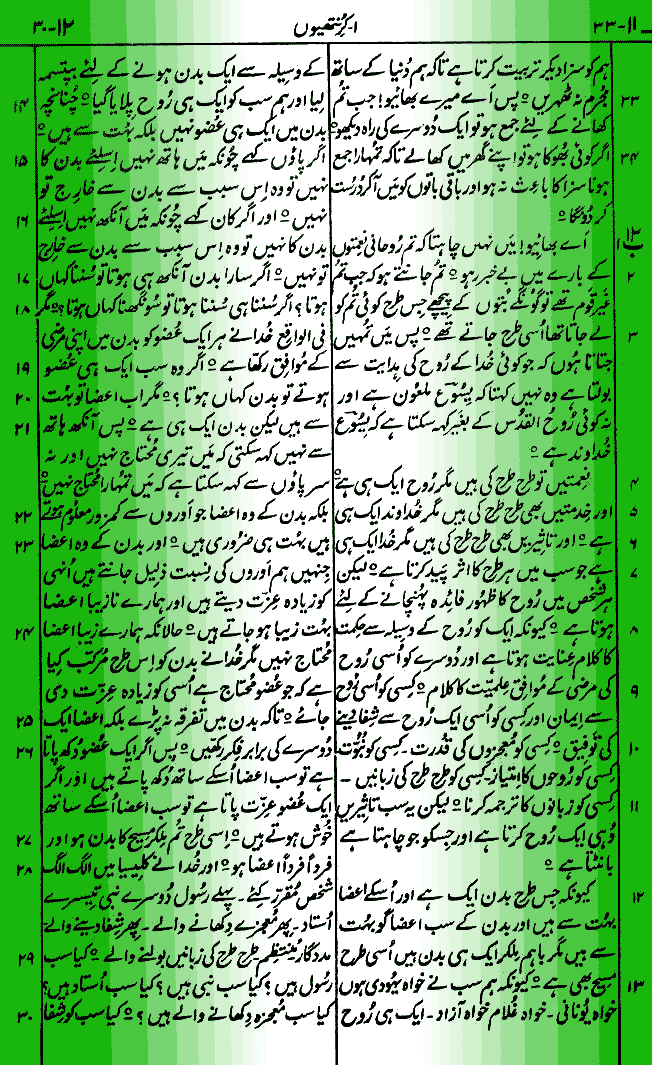
1 Corinthians Chapter 11 (Verses 33-34)
Verse 33
Verse: Wherefore my brethren when ye come together to eat tarry one for another
-
English Explanation: Paul is addressing the chaos surrounding the Agape feasts (Love Feasts) and the Lord’s Supper in Corinth. Wealthy Christians were eating their food early, leaving poorer believers hungry. Paul commands them to wait for one another, emphasizing community, equality, and mutual respect in the house of God.
-
Urdu Explanation (اردو وضاحت): پولس رسول کرنتھیوں کی کلیسیا میں عشاۓ ربانی کے دوران پیدا ہونے والی بے نظمی کو دور کر رہا ہے۔ امیر لوگ غریبوں کا انتظار کیے بغیر اپنا کھانا پہلے ہی کھا لیتے تھے۔ پولس حکم دیتا ہے کہ جب تم کھانے کے لیے جمع ہو تو ایک دوسرے کا انتظار کرو تاکہ کلیسیا میں برابری، محبت اور احترام قائم رہے۔
Verse 34
Verse: And if any man hunger let him eat at home that ye come not together unto condemnation And the rest will I set in order when I come
-
English Explanation: The church assembly is for worship and unity, not a place to satisfy physical gluttony at the expense of others. If someone is starving, they should eat at home first so that the church gathering does not bring judgment (condemnation) upon them due to selfish behavior.
-
Urdu Explanation (اردو وضاحت): کلیسیا کا اجتماع خدا کی عبادت اور یگانگت کے لیے ہے، نہ کہ اپنی نفسانی بھوک مٹانے کے لیے۔ اگر کسی کو زیادہ بھوک لگی ہو تو وہ گھر سے کھا کر آئے تاکہ تمہارا اکٹھا ہونا سزا کا باعث نہ بنے۔ باقی انتظامی معاملات پولس خود آ کر طے کرے گا۔
1 Corinthians Chapter 12 (Verses 1-30)
Verse 1
Verse: Now concerning spiritual gifts brethren I would not have you ignorant
-
English Explanation: Paul transitions to a new topic requested by the Corinthians: spiritual gifts (charismata). He emphasizes that spiritual ignorance leads to confusion and misuse of these supernatural gifts, so clarity is essential.
-
Urdu Explanation (اردو وضاحت): پولس اب ایک نئے موضوع یعنی “روحانی نعمتوں” کا آغاز کر رہا ہے۔ وہ نہیں چاہتا کہ ایماندار ان نعمتوں کے مقصد اور استعمال سے واقف نہ رہیں، کیونکہ لاعلمی کلیسیا میں گمراہی اور انتشار پیدا کرتی ہے۔
Verse 2
Verse: Ye know that ye were Gentiles carried away unto these dumb idols even as ye were led
-
English Explanation: Before accepting Christ, the Corinthians were pagans led astray by speechless, lifeless idols. Paul reminds them of their past to contrast the chaotic, ecstatic worship of paganism with the orderly direction of the living Holy Spirit.
-
Urdu Explanation (اردو وضاحت): مسیح پر ایمان لانے سے پہلے، کرنتھیوں کے لوگ غیر قومیں (بت پرست) تھے جو بے زبان اور بے جان بتوں کے پیچھے چلتے تھے۔ پولس انہیں یاد دلاتا ہے کہ بت پرستی کی اندھی پیروی اور روحِ پاک کی سچی رہنمائی میں بڑا فرق ہے۔
Verse 3
Verse: Wherefore I give you to understand that no man speaking by the Spirit of God calleth Jesus accursed and that no man can say that Jesus is the Lord but by the Holy Ghost
-
English Explanation: The ultimate test of any spiritual utterance or gift is its Christ-centeredness. A person led by God’s Spirit will never dishonor Jesus, and a genuine confession of Jesus as Lord is only possible through the divine illumination of the Holy Spirit.
-
Urdu Explanation (اردو وضاحت): کسی بھی روحانی نعمت کی سچائی کا معیار یہ ہے کہ وہ یسوع کی کتنی تعظیم کرتی ہے۔ خدا کا روح کبھی یسوع پر لعنت نہیں بھیج سکتا، اور کوئی بھی شخص روح القدس کی مدد کے بغیر سچے دل سے یسوع کو “خداوند” تسلیم نہیں کر سکتا۔
Verse 4
Verse: Now there are diversities of gifts but the same Spirit
-
English Explanation: Though there are many different types of supernatural gifts distributed among believers, they all originate from one and the same Source: the Holy Spirit. Diversity does not mean division.
-
Urdu Explanation (اردو وضاحت): ایمانداروں میں مختلف قسم کی روحانی نعمتیں پائی جاتی ہیں، لیکن ان سب کا سرچشمہ ایک ہی ہے یعنی “روح القدس”۔ نعمتوں کا الگ ہونا کلیسیا میں تفرقہ کا سبب نہیں بننا چاہیے۔
Verse 5
Verse: And there are differences of administrations but the same Lord
-
English Explanation: There are various ways to serve and administer ministries within the church body, yet all service is dedicated to the same Master and Lord, Jesus Christ.
-
Urdu Explanation (اردو وضاحت): کلیسیا میں خدمت اور انتظام کے طریقے مختلف ہو سکتے ہیں، لیکن ان تمام خدمات کا مالک اور خداوند ایک ہی ہے، یعنی یسوع مسیح۔
Verse 6
Verse: And there are diversities of operations but it is the same God which worketh all in all
-
English Explanation: There are different effects or operations of power, but it is the same sovereign God the Father who energizes and accomplishes everything through all believers. This highlights the Trinitarian nature of ministry (Spirit, Lord, God).
-
Urdu Explanation (اردو وضاحت): خدا کی قدرت کے کام کرنے کے اثرات اور طریقے الگ ہو سکتے ہیں، لیکن وہ خدا ایک ہی ہے جو سب میں ہر طرح کا اثر پیدا کرتا ہے۔ یہ آیت تثلیثِ پاک (روح، خداوند، خدا) کے کام کو ظاہر کرتی ہے۔
Verse 7
Verse: But the manifestation of the Spirit is given to every man to profit withal
-
English Explanation: The visible manifestation of the Holy Spirit through spiritual gifts is given to every believer. Crucially, these gifts are not for personal pride or entertainment, but for the common good and edification of the entire church.
-
Urdu Explanation (اردو وضاحت): روح القدس کا ظاہر ہونا ہر ایک ایماندار کو بخشا جاتا ہے۔ ان نعمتوں کا مقصد ذاتی فخر یا شو آف نہیں ہے، بلکہ کلیسیا کے فائدے اور اس کی ترقی کے لیے ہے۔
Verse 8
Verse: For to one is given by the Spirit the word of wisdom to another the word of knowledge by the same Spirit
-
English Explanation: Paul begins listing specific gifts. “The word of wisdom” is the supernatural ability to apply divine truth practically. “The word of knowledge” is the supernatural understanding of deep spiritual truths, both granted by the same Spirit.
-
Urdu Explanation (اردو وضاحت): پولس نعمتوں کی فہرست شروع کرتا ہے۔ ایک کو روح کے وسیلے سے “حکمت کا کلام” (الٰہی سچائیوں کو زندگی میں لاگو کرنا) ملتا ہے، اور دوسرے کو اسی روح سے “علم کا کلام” (گہرے روحانی حقائق کو سمجھنا) حاصل ہوتا ہے۔
Verse 9
Verse: To another faith by the same Spirit to another the gifts of healing by the same Spirit
-
English Explanation: “Faith” here is not saving faith, but a supernatural surge of confidence to undertake heroic tasks for God. “Gifts of healing” represent supernatural restorations of physical, mental, or spiritual health without human means.
-
Urdu Explanation (اردو وضاحت): ایک کو اسی روح سے “ایمان” (خدا کے کاموں کے لیے غیر معمولی بھروسہ) ملتا ہے، اور دوسرے کو اسی روح سے “شفا دینے کی نعمتیں” حاصل ہوتی ہیں تاکہ بیماروں کو معجزانہ طور پر تندرستی ملے۔
Verse 10
Verse: To another the working of miracles to another prophecy to another discerning of spirits to another divers kinds of tongues to another the interpretation of tongues
-
English Explanation: Paul lists more gifts: miracles (mighty deeds), prophecy (declaring God’s heart), discerning of spirits (distinguishing true spirits from false ones), tongues (languages unlearned by the speaker), and the interpretation of those tongues.
-
Urdu Explanation (اردو وضاحت): یہاں مزید نعمتوں کا ذکر ہے: معجزات کا کام، نبوت (خدا کا پیغام سنانا)، روحوں کا امتیاز (سچے اور جھوٹے روحوں میں فرق کرنا)، طرح طرح کی زبانیں بولنا، اور زبانوں کا ترجمہ کرنا۔
Verse 11
Verse: But all these worketh that one and the selfsame Spirit dividing to every man severally as he will
-
English Explanation: The Holy Spirit is the sole distributor of these gifts. He distributes them according to His own sovereign will and choice, meaning no one can boast about their gift, nor should anyone feel inferior.
-
Urdu Explanation (اردو وضاحت): ان تمام نعمتوں کو وہی ایک روح سرانجام دیتا ہے اور وہ جس کو جو چاہتا ہے اپنی مرضی کے مطابق بانٹ دیتا ہے۔ اس لیے کسی کو اپنی نعمت پر غرور نہیں کرنا چاہیے اور نہ ہی کمتری کا شکار ہونا چاہیے۔
Verse 12
Verse: For as the body is one and hath many members and all the members of that one body being many are one body so also is Christ
-
English Explanation: Paul uses the analogy of the human body to illustrate unity in diversity. Just as a physical body has many distinct parts but remains a single organism, the global church forms the unified spiritual body of Christ.
-
Urdu Explanation (اردو وضاحت): پولس انسانی جسم کی مثال دیتا ہے۔ جیسے جسم ایک ہے مگر اس کے اعضا بہت سے ہیں، اور وہ سب مل کر ایک ہی جسم بنتے ہیں، اسی طرح مسیح کی کلیسیا بھی بہت سے ایمانداروں سے مل کر ایک ہی بدن بنتی ہے۔
Verse 13
Verse: For by one Spirit are we all baptized into one body whether we be Jews or Gentiles whether we be bond or free and have been all made to drink into one Spirit
-
English Explanation: Regardless of racial, cultural, or social backgrounds (Jews/Gentiles, slaves/free), all believers are united into one spiritual body through Spirit baptism. We all draw our spiritual life from the same Holy Spirit.
-
Urdu Explanation (اردو وضاحت): خواہ ہم یہودی ہوں یا یونانی، غلام ہوں یا آزاد، ہم سب کو ایک ہی روح کے وسیلے سے ایک بدن ہونے کے لیے بپتسمہ دیا گیا اور ایک ہی روح پلایا گیا۔ ہماری سماجی حیثیت کچھ بھی ہو، ہم مسیح میں ایک ہیں۔
Verse 14
Verse: For the body is not one member but many
-
English Explanation: A functioning body cannot consist of just one giant part; it requires diversity. Similarly, a healthy church needs individuals with different roles and callings to function correctly.
-
Urdu Explanation (اردو وضاحت): انسانی جسم صرف ایک ہی عضو سے نہیں بنتا بلکہ اس میں بہت سے اعضا ہوتے ہیں۔ اسی طرح کلیسیا میں بھی مختلف لوگوں کا ہونا ضروری ہے تاکہ وہ کام کر سکے۔
Verse 15
Verse: If the foot shall say Because I am not the hand I am not of the body is it therefore not of the body
-
English Explanation: Paul addresses the issue of envy and feelings of insignificance. If a less prominent member (like a foot) compares itself to a more prominent member (like a hand), its comparison does not change the fact that it is still vital to the body.
-
Urdu Explanation (اردو وضاحت): پولس کمتری اور حسد کے احساس کو دور کرتے ہوئے کہتا ہے کہ اگر پاؤں کہے کہ ‘میں ہاتھ نہیں ہوں اس لیے جسم کا حصہ نہیں’، تو کیا وہ جسم سے الگ ہو جائے گا؟ بالکل نہیں۔ ہر چھوٹے عضو کی اپنی اہمیت ہے۔
Verse 16
Verse: And if the ear shall say Because I am not the eye I am not of the body is it therefore not of the body
-
English Explanation: Continuing the analogy, an ear might envy the eye’s vision, but it is still fundamentally part of the body. Believers with quieter, less visible gifts must not disqualify themselves from the community.
-
Urdu Explanation (اردو وضاحت): اگر کان کہے کہ ‘میں آنکھ نہیں ہوں اس لیے جسم کا حصہ نہیں’، تو اس کے کہنے سے وہ جسم سے باہر نہیں ہو جاتا۔ پوشیدہ یا خاموش خدمت کرنے والے ایماندار بھی کلیسیا کے لیے اتنے ہی اہم ہیں۔
Verse 17
Verse: If the whole body were an eye where were the hearing If the whole were hearing where were the smelling
-
English Explanation: If everyone had the exact same gift (like everyone being an eye), the church would be mutated and dysfunctional, losing other essential senses like hearing or smelling. Uniformity destroys functionality.
-
Urdu Explanation (اردو وضاحت): اگر پورا جسم صرف آنکھ ہی ہوتا تو سننے کا کام کون کرتا؟ اور اگر پورا جسم کان ہوتا تو سونگھنے کا کام کہاں سے ہوتا؟ یکسانیت جسم کو ناکارہ بنا دیتی ہے۔
Verse 18
Verse: But now hath God set the members every one of them in the body as it hath pleased him
-
English Explanation: God is the divine architect. He placement of each believer within the Church—and the specific gift He gave them—is exactly according to His divine pleasure and wisdom. Discontentment with one’s gift is ultimately discontentment with God.
-
Urdu Explanation (اردو وضاحت): مگر خدا نے اپنی مرضی اور حکمت کے مطابق جسم کے ہر ایک عضو کو جہاں چاہا وہاں رکھ دیا۔ خدا نے آپ کو کلیسیا میں جو مقام اور نعمت دی ہے، وہ اس کی مرضی کے مطابق ہے، اس لیے ہمیں شاکر ہونا چاہیے۔
Verse 19
Verse: And if they were all one member where were the body
-
English Explanation: Paul restates the absurdity of a monochromatic church. If there was no variation among the members, a cohesive body simply could not exist.
-
Urdu Explanation (اردو وضاحت): اگر کلیسیا کے تمام ارکان ایک جیسے ہوتے اور ایک ہی کام کرتے، تو بدن کا وجود ہی ختم ہو جاتا۔ تنوع ہی بدن کو خوبصورت بناتا ہے۔
Verse 20
Verse: But now are they many members yet but one body
-
English Explanation: This is the core thesis: plurality in unity. There are many members, each with unique gifts and assignments, yet they comprise only one single, undivided body of Christ.
-
Urdu Explanation (اردو وضاحت): حقیقت یہ ہے کہ اعضا تو بہت سے ہیں لیکن بدن ایک ہی ہے۔ یعنی کلیسیا میں لوگ الگ الگ صلاحیتوں کے مالک ہیں مگر سب مل کر ایک ہی وجود ہیں۔
Verse 21
Verse: And the eye cannot say unto the hand I have no need of thee nor again the head to the feet I have no need of you
-
English Explanation: Paul now targets pride and independence. Prominent or visually active members (the “eye” or “head”) cannot look down on hands-on or supportive workers (the “hand” or “feet”) and claim they are unneeded. We are interdependent.
-
Urdu Explanation (اردو وضاحت): اب پولس مغرور لوگوں کو مخاطب کرتا ہے۔ آنکھ ہاتھ سے یہ نہیں کہہ سکتی کہ ‘مجھے تیری ضرورت نہیں’ اور نہ ہی سر پاؤں سے کہہ سکتا ہے کہ ‘مجھے تمہاری ضرورت نہیں’۔ ہم سب ایک دوسرے کے محتاج ہیں۔
Verse 22
Verse: Nay much more those members of the body which seem to be more feeble are necessary
-
English Explanation: In fact, internal organs (like the heart or lungs) seem weaker and more fragile than external limbs, yet they are absolutely indispensable for survival. Similarly, “hidden” or seemingly weak believers are vital to the church’s spiritual survival.
-
Urdu Explanation (اردو وضاحت): بلکہ جسم کے وہ اعضا جو بظاہر کمزور معلوم ہوتے ہیں (جیسے اندرونی اعضا: دل، پھیپھڑے)، وہ زندگی کے لیے سب سے زیادہ ضروری ہیں۔ اسی طرح کلیسیا کے عام ایماندار بھی بہت اہم ہیں۔
Verse 23
Verse: And those members of the body which we think to be less honourable upon these we bestow more abundant honour and our uncomely parts have more abundant comeliness
-
English Explanation: We cover and dress our less glamorous body parts with great care and beautiful clothing. In the church, we should deliberately pour out honor, care, and protection upon those who are marginalized or lack public standing.
-
Urdu Explanation (اردو وضاحت): جسم کے جن حصوں کو ہم کم عزت دار سمجھتے ہیں، انہیں ہم زیادہ اچھا لباس پہنا کر چھپاتے ہیں اور ان کی دیکھ بھال کرتے ہیں۔ اسی طرح کلیسیا میں بھی پسماندہ اور سادہ لوگوں کو زیادہ عزت دی جانی چاہیے۔
Verse 24
Verse: For our comely parts have no need but God hath tempered the body together having given more abundant honour to that part which lacked
-
English Explanation: Naturally presentable parts (like the face) do not need special coverings. God has constructed (“tempered”) the church in such a way that honors are naturally shifted to those who lack them, leveling the social playing field.
-
Urdu Explanation (اردو وضاحت): ہمارے خوبصورت حصوں (جیسے چہرے) کو کسی بناؤ سنگھار یا پردے کی ضرورت نہیں ہوتی۔ لیکن خدا نے جسم کی ترکیب ایسی دی ہے کہ جس عضو میں کمی تھی، اسے زیادہ عزت دی تاکہ برابری پیدا ہو۔
Verse 25
Verse: That there should be no schism in the body but that the members should have the same care one for another
-
English Explanation: God’s ultimate goal in designing diversity is to prevent “schism” (divisive factions) within the church. Every member must possess the exact same heartbeat of love and mutual concern for every other member.
-
Urdu Explanation (اردو وضاحت): خدا کا مقصد یہ ہے کہ بدن میں کوئی تفرقہ یا پھوٹ نہ پڑے، بلکہ جسم کے تمام اعضا ایک دوسرے کی یکساں فکر اور دیکھ بھال کریں۔
Verse 26
Verse: And whether one member suffer all the members suffer with it or one member be honoured all the members rejoice with it
-
English Explanation: The church should share an empathetic connection. If you stub your toe, your entire body hurts. If one Christian is suffering, the whole church should grieve. If one excels, everyone should celebrate without jealousy.
-
Urdu Explanation (اردو وضاحت): کلیسیا میں ہمدردی ہونی چاہیے۔ اگر جسم کے ایک حصے کو تکلیف پہنچے تو پورا جسم درد محسوس کرتا ہے۔ اگر ایک ایماندار دکھ میں ہے تو سب اس کے ساتھ دکھ اٹھائیں، اور اگر ایک کی عزت ہو تو سب خوش ہوں۔
Verse 27
Verse: Now ye are the body of Christ and members in particular
-
English Explanation: Paul sums up the metaphor: collectively, the congregation makes up Christ’s physical representation on earth today, and individually, each person is an explicitly designated, vital component of it.
-
Urdu Explanation (اردو وضاحت): اب تم سب مل کر مسیح کا بدن ہو اور الگ الگ طور پر اس کے اعضا ہو۔ یعنی ہر شخص کی اپنی انفرادی پہچان اور ذمہ داری ہے۔
Verse 28
Verse: And God hath set some in the church first apostles secondarily prophets thirdly teachers after that miracles then gifts of healings helps governments diversities of tongues
-
English Explanation: Paul outlines an order of functional priority within the church structure based on the proclamation of the Word: foundational leaders (apostles, prophets, teachers) followed by signs (miracles, healings), and supportive services (helping others, administration, tongues).
-
Urdu Explanation (اردو وضاحت): خدا نے کلیسیا میں مختلف لوگوں کو مقرر کیا: پہلے رسول، دوسرے نبی، تیسرے استاد، پھر معجزات دکھانے والے، پھر شفا دینے والے، مدد کرنے والے، انتظام کرنے والے، اور طرح طرح کی زبانیں بولنے والے۔
Verse 29
Verse: Are all apostles are all prophets are all teachers are all workers of miracles
-
English Explanation: Paul poses rhetorical questions expecting a negative answer (“No”). Not everyone is called to be an apostle, prophet, teacher, or miracle worker. Universal uniformity is not God’s plan.
-
Urdu Explanation (اردو وضاحت): پولس یہاں سوال پوچھتا ہے جن کا جواب ‘نہیں’ ہے۔ کیا سب رسول ہیں؟ کیا سب نبی ہیں؟ کیا سب استاد ہیں؟ کیا سب معجزے دکھانے والے ہیں؟ ظاہر ہے کہ سب کا ایک ہی عہدہ یا کام نہیں ہو سکتا۔
Verse 30
Verse: Have all the gifts of healing do all speak with tongues do all interpret
-
English Explanation: He concludes his rhetorical questions. Not everyone has the gift of healing, nor does everyone speak in tongues or interpret. No single spiritual gift is given to every individual believer, proving that we must rely on each other.
-
Urdu Explanation (اردو وضاحت): کیا سب کے پاس شفا دینے کی نعمت ہے؟ کیا سب غیر زبانیں بولتے ہیں؟ کیا سب ترجمہ کرتے ہیں؟ نہیں! خدا نے نعمتیں تقسیم کی ہیں تاکہ ہم اپنی ضروریات کے لیے ایک دوسرے پر منحصر رہیں۔