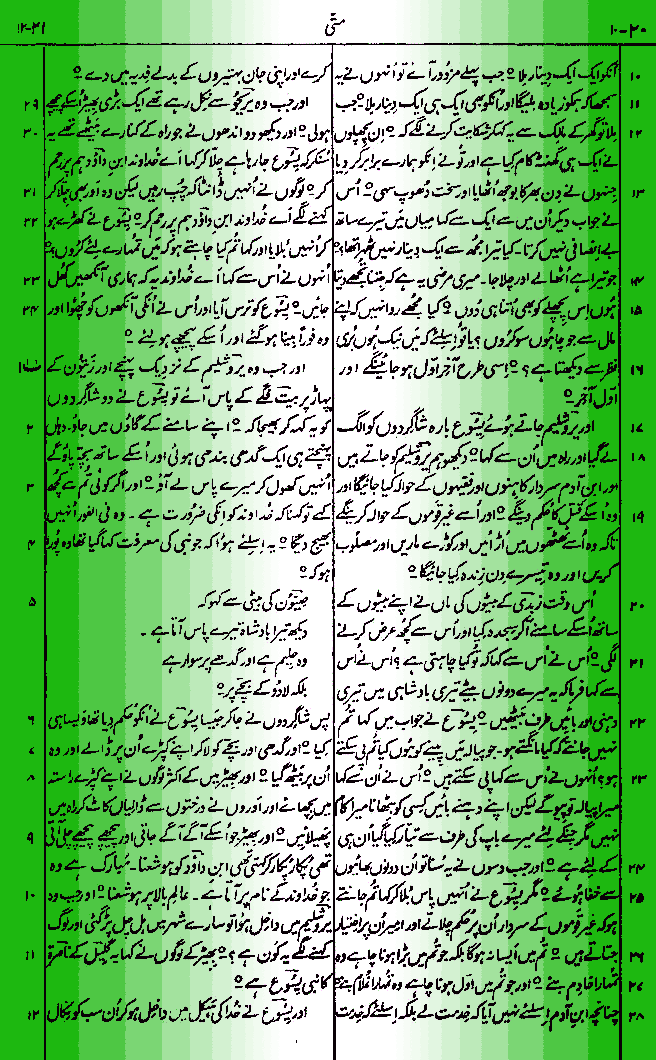
Verse-by-Verse Commentary & Explanation (Matthew 20:10 – Matthew 21:12)
Matthew 20:10
Verse: But when the first came they supposed that they should have received more and they likewise received every man a penny
-
English Explanation: This verse concludes the narrative portion of the Parable of the Workers in the Vineyard. The laborers who were hired first assumed that because they worked longer hours in the heat, their compensation would scale proportionally above the agreed-upon contract. However, God’s grace operates on divine sovereignty and generosity rather than human legalism or merit metrics. Every worker received the exact same grace (represented by the penny/denarius).
-
Urdu Explanation: یہ آیت انگور کے باغ کے مزدوروں کی تمثیل کا نتیجہ ظاہر کرتی ہے۔ پہلے آنے والے مزدوروں نے گمان کیا کہ چونکہ انہوں نے سخت دھوپ میں زیادہ کام کیا ہے، اس لیے انہیں طے شدہ مزدوری سے زیادہ ملے گا۔ لیکن خدا کا فضل انسانی حساب کتاب یا میرٹ پر نہیں بلکہ اس کی اپنی حاکمیت اور سخاوت پر چلتا ہے۔ سب کو برابر فضل (ایک دینار) ملا۔
Matthew 20:11
Verse: And when they had received it they murmured against the goodman of the house
-
English Explanation: Upon receiving their lawful, agreed wage, the early workers began to grumble against the landowner. This exposes human envy and a sense of entitlement. In a spiritual sense, it represents religious traditionalists who resent God’s immediate and equal acceptance of latecomers, outcasts, or Gentiles into the Kingdom of Heaven.
-
Urdu Explanation: اپنی جائز اور طے شدہ مزدوری حاصل کرنے کے بعد، پہلے مزدوروں نے گھر کے مالک کے خلاف بڑبڑانا شروع کر دیا۔ یہ انسانی حسد اور حق جتانے کی عادت کو ظاہر کرتا ہے۔ روحانی طور پر، یہ ان لوگوں کی عکاسی کرتا ہے جو خدا کی طرف سے نئے آنے والوں یا گنہگاروں کو برابر کا درجہ دینے پر اعتراض کرتے ہیں۔
Matthew 20:12
Verse: Saying These last have wrought but one hour and thou hast made them equal unto us which have borne the burden and heat of the day
-
English Explanation: The disgruntled workers complain that those who worked only one hour received the same reward as those who endured a full day of grueling physical labor. They measure value strictly by human effort and time, failing to understand that the landowner’s generosity to others does not diminish the fairness shown to them.
-
Urdu Explanation: ناراض مزدوروں نے شکایت کی کہ جنہوں نے صرف ایک گھنٹہ کام کیا، انہیں ان کے برابر کر دیا گیا جنہوں نے دن بھر کی سخت گرمی اور مشقت برداشت کی۔ وہ اپنی قدر کا اندازہ صرف انسانی محنت سے لگاتے ہیں اور یہ نہیں سمجھتے کہ دوسروں پر مالک کا کرم ان کے ساتھ ناانصافی نہیں ہے۔
Matthew 20:13
Verse: But he answered one of them and said Friend I do thee no wrong didst not thou agree with me for a penny
-
English Explanation: The landowner addresses the critic respectfully as “Friend,” but firmly holds him to the reality of their original covenant. Justice was perfectly served because they received exactly what they agreed upon. God breaks no promises; human dissatisfaction often stems from comparing our blessings to the blessings of others.
-
Urdu Explanation: مالک نے شکایت کرنے والے کو “دوست” کہہ کر مخاطب کیا لیکن اسے اصل معاہدے کی یاد دلائی۔ انصاف پوری طرح قائم رہا کیونکہ انہیں وہی ملا جس پر وہ راضی ہوئے تھے۔ خدا اپنے وعدوں کے خلاف نہیں کرتا، انسان کی بے اطمینانی اکثر دوسروں سے موازنہ کرنے کی وجہ سے پیدا ہوتی ہے۔
Matthew 20:14
Verse: Take that thine is and go thy way I will give unto this last even as unto thee
-
English Explanation: The master commands the envious worker to take his wages and depart. He asserts his sovereign right to dispense his wealth as he sees fit. This highlights that salvation and divine rewards are gifts of grace, not a commercial transaction where humans can dictate God’s budget of mercy.
-
Urdu Explanation: مالک نے حسد کرنے والے مزدور کو اپنی مزدوری لے کر جانے کا حکم دیا۔ اس نے اپنے مال کو اپنی مرضی کے مطابق تقسیم کرنے کے اپنے خودمختار حق پر زور دیا۔ یہ ظاہر کرتا ہے کہ نجات اور الٰہی انعامات فضل کا تحفہ ہیں، کوئی تجارتی سودا نہیں جہاں انسان خدا کو سکھائے۔
Matthew 20:15
Verse: Is it not lawful for me to do what I will with mine own Is thine eye evil because I am good
-
English Explanation: This rhetorical question strikes at the heart of legalism. The phrase “Is thine eye evil” is a Hebraic idiom for jealousy or envy. The master challenges the worker’s moral outlook: why should someone be angry or envious simply because God chooses to be exceptionally generous and good to others?
-
Urdu Explanation: یہ سوال انسانی قانون پسندی کی جڑ پر ضرب لگاتا ہے۔ “بری آنکھ” سے مراد حسد ہے۔ مالک مزدور کے اخلاقی رویے کو چیلنج کرتا ہے کہ اگر خدا دوسروں پر حد سے زیادہ مہربان اور سخی ہے تو کسی کو اس سے حسد یا تکلیف کیوں ہونی چاہیے؟
Matthew 20:16
Verse: So the last shall be first and the first last for many be called but few chosen
-
English Explanation: This is the core spiritual maxim of the parable. In the Kingdom of God, status is completely inverted. Those who think they are first due to status, heritage, or lengthy religious service may find themselves last, while late converts who rely entirely on God’s grace are elevated. The invitation is universal, but true alignment with God’s heart is rare.
-
Urdu Explanation: یہ اس تمثیل کا بنیادی اخلاقی سبق ہے۔ خدا کی بادشاہی میں انسانی رتبے الٹ جاتے ہیں۔ جو لوگ اپنے حسب نسب یا طویل مذہبی خدمات کی وجہ سے خود کو اول سمجھتے ہیں وہ آخر ہو سکتے ہیں، اور آخری آنے والے اول۔ بلاوا تو سب کے لیے ہے لیکن خدا کے دل کے مطابق چلنے والے کم ہیں۔
Matthew 20:17
Verse: And Jesus going up to Jerusalem took the twelve disciples apart in the way and said unto them
-
English Explanation: As Jesus journeys toward Jerusalem for the final Passover, he pulls his core twelve disciples away from the larger crowds. He does this to deliver a private, sober prophecy about his impending death, ensuring they understand the true, sacrificial purpose of his messianic mission.
-
Urdu Explanation: جب یسوع آخری عیدِ فسح کے لیے یروشلم جا رہے تھے، تو انہوں نے بارہ شاگردوں کو ہجوم سے الگ کر لیا۔ انہوں نے ایسا اس لیے کیا تاکہ انہیں اپنی آنے والی موت کے بارے میں چھپ کر آگاہ کریں اور وہ ان کے مشن کے حقیقی اور قربانی کے مقصد کو سمجھ سکیں۔
Matthew 20:18
Verse: Behold we go up to Jerusalem and the Son of man shall be betrayed unto the chief priests and unto the scribes and they shall condemn him to death
-
English Explanation: Jesus explicitly details the sequence of his upcoming betrayal. He notes that the religious establishment of Israel—the chief priests and scribes—will be the ones to reject their own Messiah and officially pass a sentence of death upon him, fulfilling Old Testament typologies.
-
Urdu Explanation: یسوع نے اپنی گرفتاری اور دھوکے کی تفصیلات واضح کیں۔ انہوں نے بتایا کہ اسرائیل کے مذہبی رہنما—سردار کاہن اور فقیہ—اپنے ہی مسیحا کو مسترد کر دیں گے اور اسے موت کے گھاٹ اتارنے کا فیصلہ سنائیں گے۔
Matthew 20:19
Verse: And shall deliver him to the Gentiles to mock and to scourge and to crucify him and the third day he shall rise again
-
English Explanation: This is a remarkably precise prophecy. Jesus foretells that the Jewish leaders will hand him over to the Roman authorities (Gentiles) for execution, detailing the steps of public humiliation: mockery, scourging, and crucifixion. Crucially, he finishes with the ultimate victory: his resurrection on the third day.
-
Urdu Explanation: یہ ایک انتہائی واضح پیشن گوئی ہے۔ یسوع نے بتایا کہ یہودی رہنما انہیں رومیوں (غیر قوموں) کے حوالے کریں گے تاکہ ان کا مذاق اڑایا جائے، کوڑے مارے جائیں اور مصلوب کیا جائے۔ لیکن انہوں نے سب سے بڑی فتح کی نوید بھی دی کہ وہ تیسرے دن جی اٹھیں گے۔
Matthew 20:20
Verse: Then came to him the mother of Zebedee’s children with her sons worshipping him and desiring a certain thing of him
-
English Explanation: Immediately after Jesus predicts his horrific suffering, the mother of James and John (Zebedee’s sons) approaches him. Her gesture of worship is combined with an ambitious request for worldly prestige, illustrating how deeply the disciples still misunderstood the self-sacrificing nature of Christ’s kingdom.
-
Urdu Explanation: یسوع کی طرف سے اپنی موت کی پیشین گوئی کے فوراً بعد، زبدی کے بیٹوں (یعقوب اور یوحنا) کی ماں ان کے پاس آئی۔ اس نے سجدہ تو کیا لیکن ساتھ ہی دنیاوی رتبے کی خواہش کی، جس سے ظاہر ہوتا ہے کہ شاگرد ابھی تک مسیح کی بادشاہی کے اصل مقصد کو نہیں سمجھے تھے۔
Matthew 20:21
Verse: And he said unto her What wilt thou She saith unto him Grant that these my two sons may sit the one on thy right hand and the other on the left in thy kingdom
-
English Explanation: When asked what she wants, she requests the two highest positions of authority and honor flanking Jesus in his political kingdom. She assumes Christ is about to overthrow Rome and set up an earthly administration, showcasing an ongoing desire for personal elevation over spiritual service.
-
Urdu Explanation: جب اس سے پوچھا گیا کہ وہ کیا چاہتی ہے، تو اس نے درخواست کی کہ اس کے دونوں بیٹوں کو یسوع کی بادشاہی میں دائیں اور بائیں ہاتھ پر سب سے اونچے رتبے ملیں۔ اس کا خیال تھا کہ یسوع کوئی دنیاوی حکومت قائم کرنے والے ہیں۔
Matthew 20:22
Verse: But Jesus answered and said Ye know not what ye ask Are ye able to drink of the cup that I shall drink of and to be baptized with the baptism that I am baptized with They say unto him We are able
-
English Explanation: Jesus confronts their ignorance directly. The “cup” and “baptism” he refers to are metaphors for overwhelming suffering, wrath, and death. James and John confidently declare they are able, blind to the sheer magnitude of the spiritual and physical agony Jesus was about to endure.
-
Urdu Explanation: یسوع نے ان کی نادانی کو واضح کیا۔ “پیالے” اور “بپتسمہ” سے مراد وہ شدید دکھ اور موت تھی جو یسوع پر آنے والی تھی۔ یعقوب اور یوحنا نے فخر سے کہا کہ “ہم کر سکتے ہیں،” جبکہ وہ اس درد کی شدت سے ناواقف تھے۔
Matthew 20:23
Verse: And he saith unto them Ye shall drink indeed of my cup and be baptized with the baptism that I am baptized with but to sit on my right hand and on my left is not mine to give but it shall be given to them for whom it is prepared of my Father
-
English Explanation: Jesus confirms that they will indeed share in his suffering (James became the first martyred apostle; John suffered exile). However, he teaches that kingdom rewards and positions are not distributed via earthly favoritism or lobbying; they are sovereignly designated by God the Father.
-
Urdu Explanation: یسوع نے تصدیق کی کہ وہ ان کے دکھوں میں ضرور شریک ہوں گے (یعقوب پہلے شہید رسول بنے اور یوحنا کو جلاوطنی جھیلنی پڑی)۔ لیکن انہوں نے واضح کیا کہ بادشاہی میں رتبے کسی سفارش یا دنیاوی طریقے سے نہیں بلکہ باپ کی طرف سے مقررہ لوگوں کو ملتے ہیں۔
Matthew 20:24
Verse: And when the ten heard it they were moved with indignation against the two brethren
-
English Explanation: The resentment of the remaining ten disciples reveals that they shared the exact same ambitious, competitive spirit as James and John. They were not upset because a spiritual principle was violated, but because they were jealous that the brothers tried to secure the top positions first.
-
Urdu Explanation: باقی دس شاگردوں کا ناراض ہونا یہ ظاہر کرتا ہے کہ ان کے اندر بھی وہی رتبے کی بھوک اور حسد تھا جو یعقوب اور یوحنا میں تھا۔ وہ کسی اصول کی وجہ سے نہیں بلکہ اس لیے ناراض تھے کہ ان دونوں نے پہلے بازی لے جانے کی کوشش کی۔
Matthew 20:25
Verse: But Jesus called them unto him and said Ye know that the princes of the Gentiles exercise dominion over them and they that are great exercise authority upon them
-
English Explanation: Jesus uses this moment to deliver a foundational lesson on Christian leadership. He points out that secular, pagan Gentile structures rely on top-down dominance, tyranny, and heavy-handed authority to control others and display greatness.
-
Urdu Explanation: یسوع نے اس موقع پر مسیحی قیادت کا ایک بنیادی اصول سکھایا۔ انہوں نے اشارہ کیا کہ دنیاوی اور غیر قوموں کے حکمران لوگوں پر رعب جماتے ہیں اور طاقت کے زور پر اپنی بڑائی ظاہر کرتے ہیں۔
Matthew 20:26
Verse: But it shall not be so among you but whosoever will be great among you let him be your minister
-
English Explanation: Christ completely redefines greatness for his followers. He states “it shall not be so among you.” In God’s kingdom, the pyramid of authority is inverted; if a believer desires true greatness, they must assume the role of a “minister” (diakonos), meaning a practical servant to others.
-
Urdu Explanation: مسیح نے اپنے پیروکاروں کے لیے بڑائی کا معیار بالکل بدل دیا۔ انہوں نے فرمایا کہ “تم میں ایسا نہیں ہوگا”۔ خدا کی بادشاہی میں اگر کوئی بڑا بننا چاہتا ہے تو اسے دوسروں کا “خادم” بننا پڑے گا۔
Matthew 20:27
Verse: And whosoever will be chief among you let him be your servant
-
English Explanation: Taking the previous statement a step further, Jesus declares that to be “chief” or first in ranking, one must become a slave (“doulos”) to all. True leadership under Christ is characterized by voluntary lowliness, absolute humility, and selfless devotion to the well-being of others.
-
Urdu Explanation: اس بات کو مزید آگے بڑھاتے ہوئے، یسوع نے فرمایا کہ جو تم میں اول ہونا چاہے، وہ سب کا غلام بنے۔ مسیح کے تحت سچی قیادت کا مطلب خود کو عاجز کرنا اور دوسروں کی خدمت میں مٹ جانا ہے۔
Matthew 20:28
Verse: Even as the Son of man came not to be ministered unto but to minister and to give his life a ransom for many
-
English Explanation: Jesus offers himself as the ultimate archetype of this upside-down leadership. Though he is the King of kings, his mission was not to receive royal pampering, but to serve humanity and execute the ultimate act of servthood: offering his life as a substitutionary price (“ransom”) to liberate humanity from sin.
-
Urdu Explanation: یسوع نے خود کو اس خادمانہ قیادت کی سب سے بڑی مثال کے طور پر پیش کیا۔ باوجود اس کے کہ وہ بادشاہوں کا بادشاہ ہے، وہ اپنی خدمت کروانے نہیں بلکہ خدمت کرنے اور بہتیروں کی مخلصی کے لیے اپنی جان فدیہ میں دینے آیا۔
Matthew 20:29
Verse: And as they departed from Jericho a great multitude followed him
-
English Explanation: Leaving the ancient city of Jericho on his final ascent toward Jerusalem, Jesus attracts a massive crowd. This growing multitude reflects the intense public anticipation surrounding him, with many wondering if he will declare his earthly kingship in Jerusalem.
-
Urdu Explanation: یروشلم کی طرف اپنے آخری سفر کے دوران جب یسوع اریحا کے قدیم شہر سے نکلے تو ایک بڑا ہجوم ان کے پیچھے ہولیا۔ یہ بڑا ہجوم لوگوں کی اس امید کو ظاہر کرتا ہے کہ شاید یسوع اب اپنی بادشاہی کا اعلان کرنے والے ہیں۔
Matthew 20:30
Verse: And behold two blind men sitting by the way side when they heard that Jesus passed by cried out saying Have mercy on us O Lord thou Son of David
-
English Explanation: Two marginalized blind men demonstrate profound spiritual insight despite their physical darkness. By calling Jesus “Son of David,” they publicly recognize his rightful identity as the promised Messianic King. Their desperate cry is an appeal strictly to his mercy, not their own merits.
-
Urdu Explanation: دو اندھے آدمیوں نے جسمانی طور پر نابینا ہونے کے باوجود گہری روحانی بصیرت کا ثبوت دیا۔ یسوع کو “ابنِ داؤد” کہہ کر انہوں نے ان کے مسیحا ہونے کا اعتراف کیا۔ ان کی پکار صرف رحم کی اپیل تھی، کسی استحقاق کی نہیں۔
Matthew 20:31
Verse: And the multitude rebuked them because they should hold their peace but they cried the more saying Have mercy on us O Lord thou Son of David
-
English Explanation: The crowd views the blind beggars as an annoying distraction to Jesus’ high-profile journey and tries to silence them. However, opposition only intensifies their faith and desperation; they shout even louder, refusing to miss their moment with the Savior.
-
Urdu Explanation: ہجوم نے ان اندھے بھکاریوں کو یسوع کے اس اہم سفر میں ایک رکاوٹ سمجھا اور انہیں خاموش کرانے کی کوشش کی۔ لیکن اس مخالفت نے ان کے ایمان کو مزید تیز کر دیا اور وہ مزید اونچی آواز میں پکارنے لگے تاکہ موقع ہاتھ سے نہ نکل جائے۔
Matthew 20:32
Verse: And Jesus stood still and called them and said What will ye that I shall do unto you
-
English Explanation: Despite the grand scale of his mission to Jerusalem to die for the world, Jesus halts for the marginalized. He “stood still,” showing that individual suffering matters intimately to God. His question invites them to articulate their specific faith and desire openly.
-
Urdu Explanation: دنیا کی نجات کے لیے یروشلم جانے کے اس عظیم مشن کے باوجود، یسوع ان بے بس لوگوں کے لیے رک گئے۔ انہوں نے ثابت کیا کہ خدا کی نظر میں ہر فرد کا دکھ اہمیت رکھتا ہے۔ ان کے سوال کا مقصد ان کے ایمان کو ظاہر کروانا تھا۔
Matthew 20:33
Verse: They say unto him Lord that our eyes may be opened
-
English Explanation: The blind men respond with a direct, uncomplicated prayer born of pure faith. They do not ask for money or social status; they ask for the impossible—the physical restoration of their sight, recognizing Jesus as the absolute master over creation and physical infirmity.
-
Urdu Explanation: اندھوں نے خالص ایمان سے بھرپور ایک سیدھا اور سادہ جواب دیا۔ انہوں نے پیسے یا رتبے کی بھیک نہیں مانگی، بلکہ ایک ناممکن چیز مانگی—اپنی آنکھوں کی بینائی، کیونکہ وہ جانتے تھے کہ یسوع ہر بیماری پر اختیار رکھتے ہیں۔
Matthew 20:34
Verse: So Jesus had compassion on them and touched their eyes and immediately their eyes received sight and they followed him
-
English Explanation: Moved by genuine empathy, Jesus touches their eyes, and an immediate supernatural healing occurs. Their response to this miraculous gift of grace is profound: they do not simply run off to enjoy their new sight, but instantly become disciples, following Jesus on the path to Jerusalem.
-
Urdu Explanation: یسوع نے دل سے ترس کھا کر ان کی آنکھوں کو چھوا اور وہ فوراً بینا ہو گئے۔ اس معجزے کے بعد ان کا ردعمل قابلِ غور تھا؛ وہ صرف اپنی بینائی کا جشن منانے نہیں بھاگے بلکہ فوراً یسوع کے پیچھے ہو لیے اور ان کے شاگرد بن گئے۔
Matthew 21:1
Verse: And when they drew nigh unto Jerusalem and were come to Bethphage unto the mount of Olives then sent Jesus two disciples
-
English Explanation: Moving into Chapter 21, the narrative reaches its climax outside Jerusalem. Arriving at Bethphage near the Mount of Olives—a location deeply associated with prophetic events concerning the Messiah—Jesus takes deliberate, sovereign control of the events leading to his entry.
-
Urdu Explanation: باب 21 کے آغاز میں، کہانی یروشلم کے باہر اپنے عروج پر پہنچتی ہے۔ زیتون کے پہاڑ کے قریب بیت فگے پہنچ کر—جو مسیحا کے بارے میں نبوتوں کا مرکز ہے—یسوع نے اپنے داخلے کے انتظامات کو خود سنبھالا۔
Matthew 21:2
Verse: Saying unto them Go into the village over against you and straightway ye shall find an ass tied and a colt with her loose them and bring them unto me
-
English Explanation: Jesus gives highly specific instructions to two disciples, demonstrating his divine omniscience. He knows exactly where the animals are and that they are tied up. The choosing of a donkey and its unridden colt is a calculated setup to fulfill ancient prophecy.
-
Urdu Explanation: یسوع نے دو شاگردوں کو انتہائی مخصوص ہدایات دیں جو ان کے غیب کے علم کو ظاہر کرتی ہیں۔ وہ جانتے تھے کہ جانور کہاں اور کس حال میں بندھے ہیں۔ گدھی اور اس کے بچے کا انتخاب پرانی نبوتوں کو پورا کرنے کے لیے تھا۔
Matthew 21:3
Verse: And if any man say ought unto you ye shall say The Lord hath need of them and straightway he will send them
-
English Explanation: Jesus commands authority even over the property of strangers. The phrase “The Lord hath need of them” indicates his divine right as King. He assures the disciples that his authority will open the hearts of the owners to cooperate immediately without resistance.
-
Urdu Explanation: یسوع نے اجنبیوں کی ملکیت پر بھی اپنے اختیار کا اظہار کیا۔ یہ جملہ کہ “خداوند کو ان کی ضرورت ہے” ان کے شاہی حق کو ظاہر کرتا ہے۔ انہوں نے شاگردوں کو تسلی دی کہ مالک بغیر کسی مزاحمت کے جانور بھیج دے گا۔
Matthew 21:4
Verse: All this was done that it might be fulfilled which was spoken by the prophet saying
-
English Explanation: Matthew emphasizes a central theme of his Gospel: Jesus is the literal fulfillment of Old Testament Messianic prophecies. Nothing happening during Passion Week is accidental; it is a meticulously choreographed divine plan foretold centuries prior.
-
Urdu Explanation: متی اپنی انجیل کے مرکزی تھیم پر زور دیتے ہیں کہ یسوع پرانے عہد نامے کی پیشین گوئیوں کی عین تکمیل ہیں۔ مصلوبیت کے اس ہفتے میں کچھ بھی حادثاتی نہیں تھا، بلکہ سب کچھ خدا کے ازلی منصوبے کے مطابق ہو رہا تھا۔
Matthew 21:5
Verse: Tell ye the daughter of Sion Behold thy King cometh unto thee meek and sitting upon an ass and a colt the foal of an ass
-
English Explanation: This quotes Zechariah 9:9. Instead of arriving on a warhorse like a conquering earthly general, Israel’s true King comes in absolute humility (“meek”), riding a humble beast of burden. This signaled that his kingdom was built on peace, reconciliation, and humility rather than military violence.
-
Urdu Explanation: یہ زکریا 9:9 کی نبوت کا حوالہ ہے۔ ایک فاتح جرنیل کی طرح جنگی گھوڑے پر آنے کے بجائے، اسرائیل کا سچا بادشاہ انتہائی عاجزی کے ساتھ ایک گدھے پر سوار ہو کر آیا۔ یہ اس بات کی علامت تھی کہ ان کی بادشاہی جنگ پر نہیں بلکہ امن اور عاجزی پر قائم ہے۔
Matthew 21:6
Verse: And the disciples went and did as Jesus commanded them
-
English Explanation: The simple, unquestioning obedience of the disciples is highlighted here. They acted exactly as commanded, demonstrating faith in Christ’s word and playing their part in setting the stage for the dramatic and historic Triumphant Entry.
-
Urdu Explanation: یہاں شاگردوں کی سادہ اور غیر مشروط اطاعت دکھائی گئی ہے۔ انہوں نے بالکل ویسا ہی کیا جیسا حکم دیا گیا تھا، جس سے مسیح کے کلام پر ان کے ایمان کی عکاسی ہوتی ہے۔
Matthew 21:7
Verse: And brought the ass and the colt and put on them their clothes and they set him thereon
-
English Explanation: The disciples bring the animals and drape their outer garments over them to improvise a saddle. This act represents submission and personal honor offered to Jesus, treating him as royalty as he prepares to ride into the city.
-
Urdu Explanation: شاگرد جانوروں کو لے آئے اور ان پر اپنے کپڑے ڈال دیے تاکہ ایک عارضی زین بنائی جا سکے۔ یہ عمل یسوع کے سامنے سرِ تسلیم خم کرنے اور انہیں بادشاہ کی طرح عزت دینے کو ظاہر کرتا ہے۔
Matthew 21:8
Verse: And a very great multitude spread their garments in the way others cut down branches from the trees and strawed them in the way
-
English Explanation: The massive crowds react with ancient royal protocol. Spreading garments and palm/tree branches along the road was a traditional practice reserved for welcoming a victorious military conqueror or monarch (similar to a modern red carpet), signaling public recognition of his kingship.
-
Urdu Explanation: جمع ہونے والے ہجوم نے قدیم شاہی روایت کے مطابق ردعمل دیا۔ راستے میں اپنے کپڑے اور درختوں کی ڈالیاں بچھانا ایک روایتی طریقہ تھا جو کسی فاتح بادشاہ کے استقبال کے لیے استعمال کیا جاتا تھا، جو ان کی بادشاہی کے عوامی اعتراف کو ظاہر کرتا ہے۔
Matthew 21:9
Verse: And the multitudes that went before and that followed cried saying Hosanna to the Son of David Blessed is he that cometh in the name of the Lord Hosanna in the highest
-
English Explanation: The crowds quote Psalm 118:25-26. “Hosanna” translates to “Save us now, we pray!” They hail him explicitly as the “Son of David,” demanding political and spiritual salvation. “Hosanna in the highest” calls upon heaven itself to ratify the salvation arriving through Jesus.
-
Urdu Explanation: لوگوں نے زبور 118:25-26 کا نعرہ لگایا۔ “ہوشعنا” کا مطلب ہے “اب بچا لے، ہم دعا کرتے ہیں!” انہوں نے کھل کر انہیں “ابنِ داؤد” کہہ کر پکارا، جس کا مطلب تھا کہ وہ زمین اور آسمان دونوں سے نجات کی دہائی دے رہے تھے۔
Matthew 21:10
Verse: And when he was come into Jerusalem all the city was moved saying Who is this
-
English Explanation: The dramatic nature of Jesus’ entry creates a massive stir throughout the entire capital city. The word “moved” implies a seismic shaking or deep agitation. The ruling elite and ordinary citizens are confronted with a historic question that every human must answer: “Who is this?”
-
Urdu Explanation: یسوع کے اس ڈرامائی داخلے نے دارالحکومت میں ہلچل مچا دی۔ لفظ “ہل گیا” ایک بڑے زلزلے یا ارتعاش کی عکاسی کرتا ہے۔ وہاں کے حکام اور عام لوگ ایک ایسے تاریخی سوال کے سامنے کھڑے تھے جس کا جواب ہر انسان کو دینا ہے: “یہ کون ہے؟”
Matthew 21:11
Verse: And the multitude said This is Jesus the prophet of Nazareth of Galilee
-
English Explanation: The crowds accompanying Jesus respond to the city’s inquiries. While they correctly identify his name and earthly hometown, calling him a “prophet” falls short of his full, divine identity as the Son of God and ultimate Savior, reflecting the incomplete understanding of the masses.
-
Urdu Explanation: یسوع کے ساتھ آنے والے ہجوم نے شہر والوں کو جواب دیا۔ اگرچہ انہوں نے ان کا نام اور دنیاوی شہر درست بتایا، لیکن انہیں محض ایک “نبی” کہنا ان کی کامل الٰہی شناخت (خدا کے بیٹے) سے کم تھا، جو عوام کی ادھوری سمجھ کو ظاہر کرتا ہے۔
Matthew 21:12
Verse: And Jesus went into the temple of God and cast out all them that sold and bought in the temple and overthrew the tables of the moneychangers and the seats of them that sold doves
-
English Explanation: Immediately upon entering Jerusalem, Jesus asserts his divine authority by cleansing the Temple. He targets the commercial corruption running rampant in the Court of the Gentiles, where religious merchants exploited worshippers. By overthrowing the moneychangers’ tables, Jesus judges a corrupt religious system and reclaims the temple as holy ground.
-
Urdu Explanation: یروشلم میں داخل ہوتے ہی، یسوع نے ہیکل کو پاک کر کے اپنے الٰہی اختیار کا مظاہرہ کیا۔ انہوں نے غیر قوموں کے صحن میں جاری تجارتی بدعنوانی کو نشانہ بنایا، جہاں مذہبی تاجر زائرین کو لوٹتے تھے۔ صرافوں کے تختے الٹ کر یسوع نے اس بدعنوان مذہبی نظام کی عدالت کی اور ہیکل کے تقدس کو بحال کیا۔